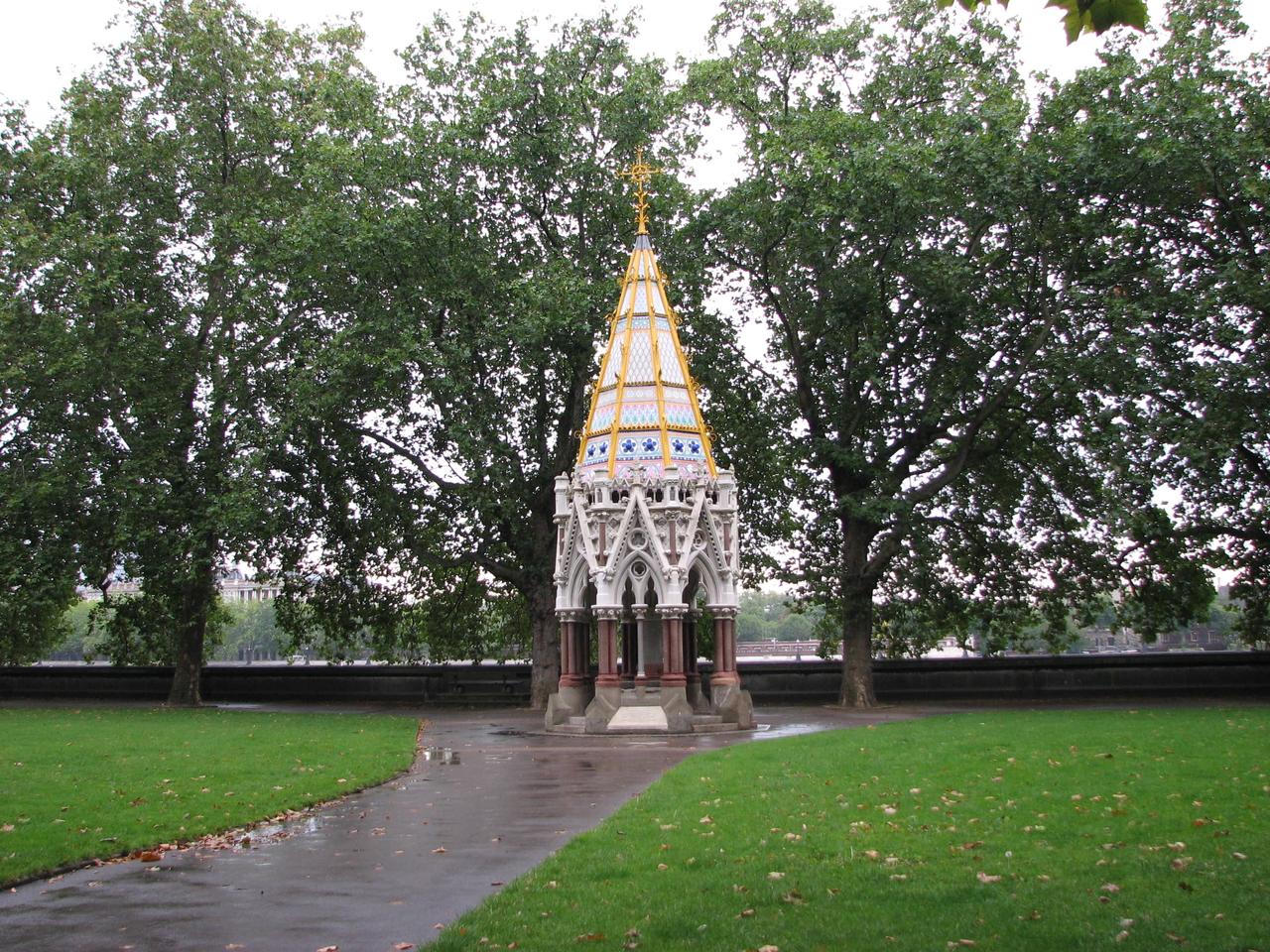
Buxton Memorial Fountain
In the serene Victoria Tower Gardens of London stands a notable monument, the Buxton Memorial Fountain. This fountain is more than just a decorative feature; it symbolizes a significant chapter in the fight against slavery. Erected by Charles Buxton in 1866, it was meant to honor his father, Thomas Fowell Buxton, and his relentless efforts towards the abolition of slavery. Thomas Fowell Buxton, born in 1786, played a crucial role in the anti-slavery movement in Britain. The seeds of this movement were sown in 1783, when the British Quakers formed the first organized anti-slavery campaign after Britain lost its influence in America post-1776. Buxton, influenced by the Quakers' meetings, took up the cause passionately.
His commitment to abolishing slavery led to his election to Parliament, where he continued the work begun by William Wilberforce and others. In 1807, a significant victory was achieved with the abolition of the slave trade. Buxton, however, did not rest on his laurels. He continued his campaign to eradicate slavery altogether. His persistent efforts bore fruit when, in 1833, the British Parliament passed legislation that effectively abolished slavery throughout the British Empire, excluding India and Ceylon. Charles Buxton, inspired by his father's dedication and success, commissioned the Buxton Memorial Fountain to commemorate this monumental achievement.
Initially, in 1866, the fountain was installed in Parliament Square, a central and symbolic location. However, the landscape of London was constantly evolving, and after World War II, Parliament Square underwent a redesign by George Grey Wornum. Consequently, the fountain was removed and placed in storage. It wasn't until 1957 that the Buxton Memorial Fountain found its current home in the tranquil surroundings of Victoria Tower Gardens, where it stands today. This picturesque location, adjacent to the Houses of Parliament and overlooking the River Thames, provides a peaceful backdrop for the monument, allowing visitors to reflect on the progress of human rights and the enduring struggle for equality.
The Buxton Memorial Fountain is a Gothic Revival structure adorned with colorful mosaics and intricate stonework, making it a striking and historically significant feature in the gardens. It stands as a testament to the tireless efforts of those who fought against the inhumanity of slavery and reminds us of the enduring importance of liberty and justice for all.
Any feedback for this story?