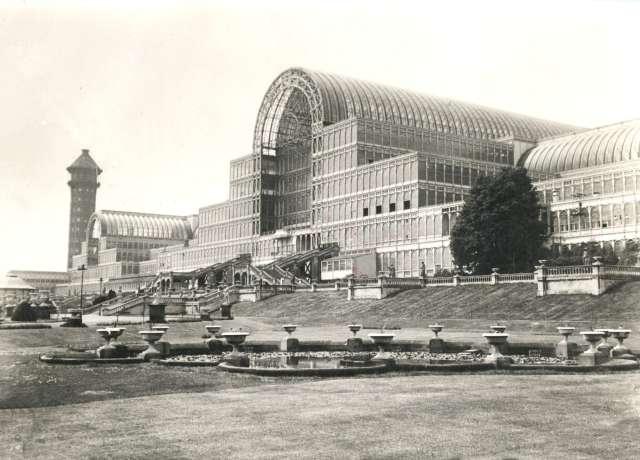
Crystal Palace
The Crystal Palace was a dazzling marvel of architecture and engineering that became the centerpiece of the 1851 Great Exhibition in London. Conceived as a showcase for Britain’s industrial prowess and cultural heritage, the exhibition also aimed to introduce British industrialists to innovations from around the world. It marked a pivotal moment in the Victorian era, drawing millions of visitors and leaving a lasting legacy. Prince Albert, Henry Cole, and key members of the British Royal Society organized the event, inspired by the French Industrial Exposition of 1844.
They enlisted Joseph Paxton, a pioneering architect, to design a grand, temporary structure in Hyde Park. Paxton’s design was revolutionary, using glass and iron to create a vast, light-filled space that spanned 563 meters in length and 138 meters in width. The building, known as the Crystal Palace, was constructed in just nine months and became an iconic symbol of the exhibition. During its six-month run, the Great Exhibition welcomed over six million visitors, who marveled at displays of technological advancements, cultural artifacts, and art from across the globe. Exhibits included cutting-edge steam engines, telegraphs, and a wide array of international crafts and goods. The event celebrated the innovations of the Industrial Revolution, offering a glimpse into the future of technology and design.
After the exhibition, the Crystal Palace was dismantled and reassembled at Sydenham Hill in South London. Reopened in 1854, the new Crystal Palace served as a cultural and educational venue, featuring gardens, fountains, and exhibits. It became a popular destination for public events and gatherings until it was destroyed by fire on November 30, 1936. Despite the devastation, the Crystal Palace was never rebuilt. Today, Crystal Palace Park stands on the site of the former structure, preserving its memory through statues, terraces, and the remains of the palace’s footprint. The park serves as a tribute to the ambitious vision of the Great Exhibition and the remarkable ingenuity of the Crystal Palace, which continue to inspire and captivate imaginations long after its physical presence has vanished.
Any feedback for this story?