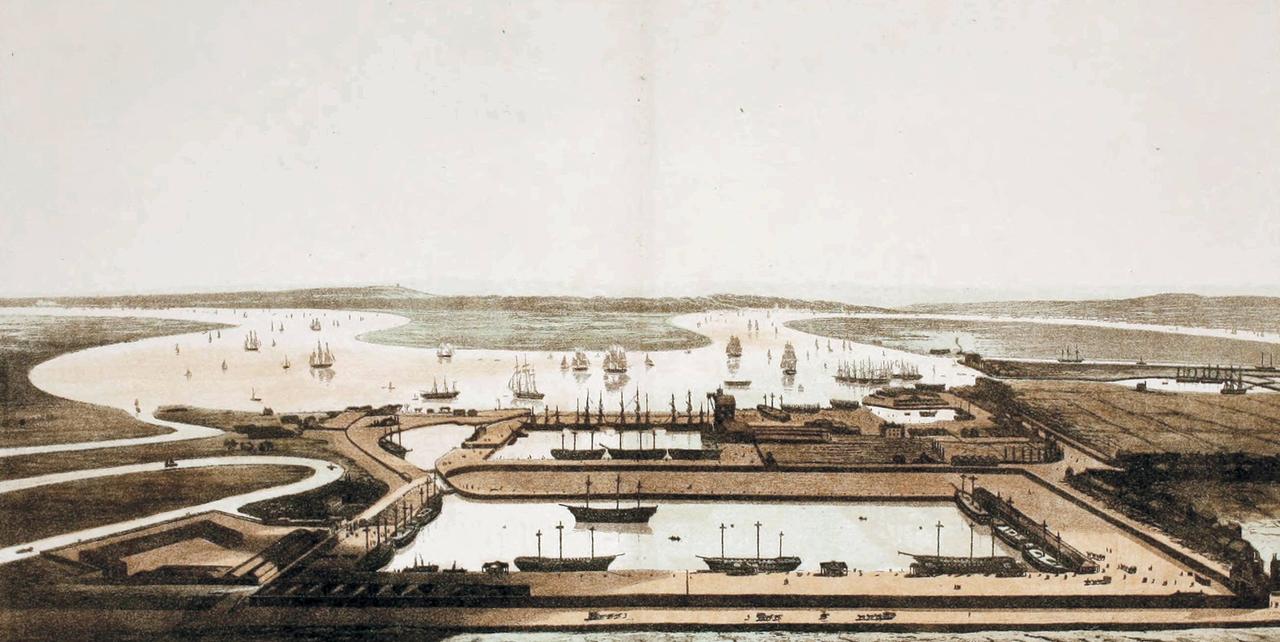
East India Docks
The British Parliament authorized the creation of the East India Dock Company in 1803 to support the operations of the East India Company, founded in 1600 as a competitor to the Dutch East India Company. This new dock was to handle the vast quantities of goods flowing in from Asia, providing a dedicated space for the booming trade. The first stone was laid on March 11, 1805, and the dock's locks were operational by July 26, 1806. Engineered by Ralph Walker, the East India Docks were situated northeast of Canary Wharf on the River Thames, becoming a vital part of London's maritime infrastructure.
In the 19th century, the East India Company primarily traded in tea, a commodity that had become increasingly popular in Britain. Other significant imports included spices, silk, indigo, and Persian carpets. The docks facilitated a thriving economy, attracting businesses like spice and herb traders, pepper mills, and factories that processed the imported goods. This economic activity turned the docks into a bustling commercial hub. During World War II, the docks and surrounding industries suffered extensive damage from bombing raids.
The post-war period saw further changes, including the construction of the Brunswick Wharf Power Station, which operated until it was demolished in 1984. As shipping technology advanced and containerization took hold in the 1960s, traditional dockside industries began to decline. This shift led to the closure of many dock facilities as the maritime economy modernized and moved to larger ports better suited to contemporary shipping needs. Today, little remains of the original industrial activity that once characterized the East India Docks.
The area has been redeveloped and transformed, with modern office spaces like the Republic complex now occupying the site. This transition from a bustling dock to a business district reflects the broader changes in London's economic landscape over the centuries, highlighting the city’s ability to adapt and reinvent itself in response to global trends and technological advancements.
Any feedback for this story?