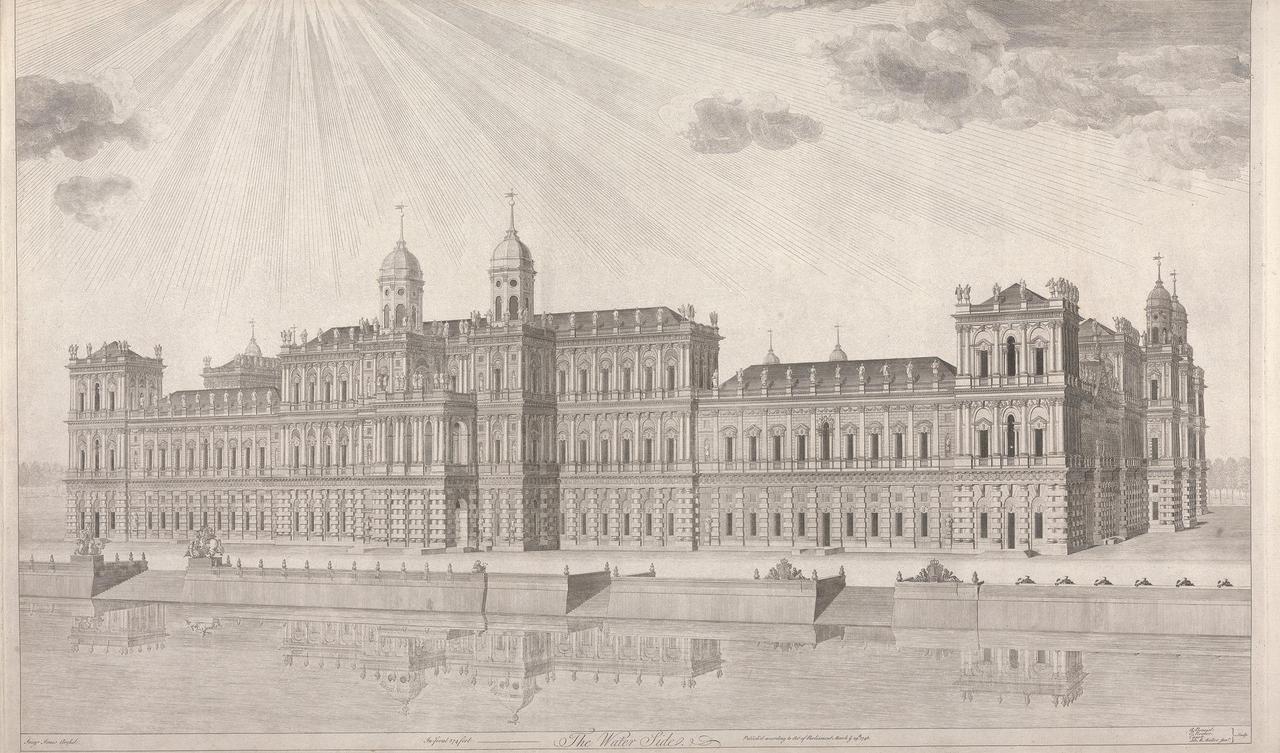
Fire at the Palace of Whitehall
The Palace of Whitehall, once the main residence of English monarchs and the epicenter of royal administration, met a tragic end in a catastrophic fire in 1698. This grand complex, sprawling over 23 acres with more than 1,500 rooms, was one of the largest and most significant buildings in Europe during its time. Whitehall began as York Place, the residence of Cardinal Wolsey. After his fall from grace, King Henry VIII seized the property in 1530 and transformed it into a royal palace. It became known as Whitehall and expanded to include luxurious lodgings, gardens, tennis courts, and even a cockpit. For over a century, it was the heart of royal life and government. On January 4, 1698, a small fire broke out in a wooden apartment in the palace.
Despite initial efforts to control it, the flames quickly spread due to the dry wooden structures. Strong winds fanned the fire, causing it to rage uncontrollably. By the next day, most of the palace was reduced to ashes. The fire destroyed irreplaceable artworks, including Holbein’s mural of Henry VIII, and many other treasures. Remarkably, the Banqueting House, designed by Inigo Jones and completed in 1622, survived the inferno. This building, with its magnificent Rubens ceiling, was spared thanks to its stone construction and quick-thinking residents who took measures to protect it.
The Banqueting House stands today as a lone witness to the former glory of Whitehall. The fire not only obliterated a key architectural and cultural heritage site but also marked the end of an era. The monarchy's main residence moved to St. James's Palace, and later, Buckingham Palace. The site where Whitehall once stood is now occupied by government buildings, and only the Banqueting House remains as a testament to the splendor that once defined the Palace of Whitehall.
Any feedback for this story?