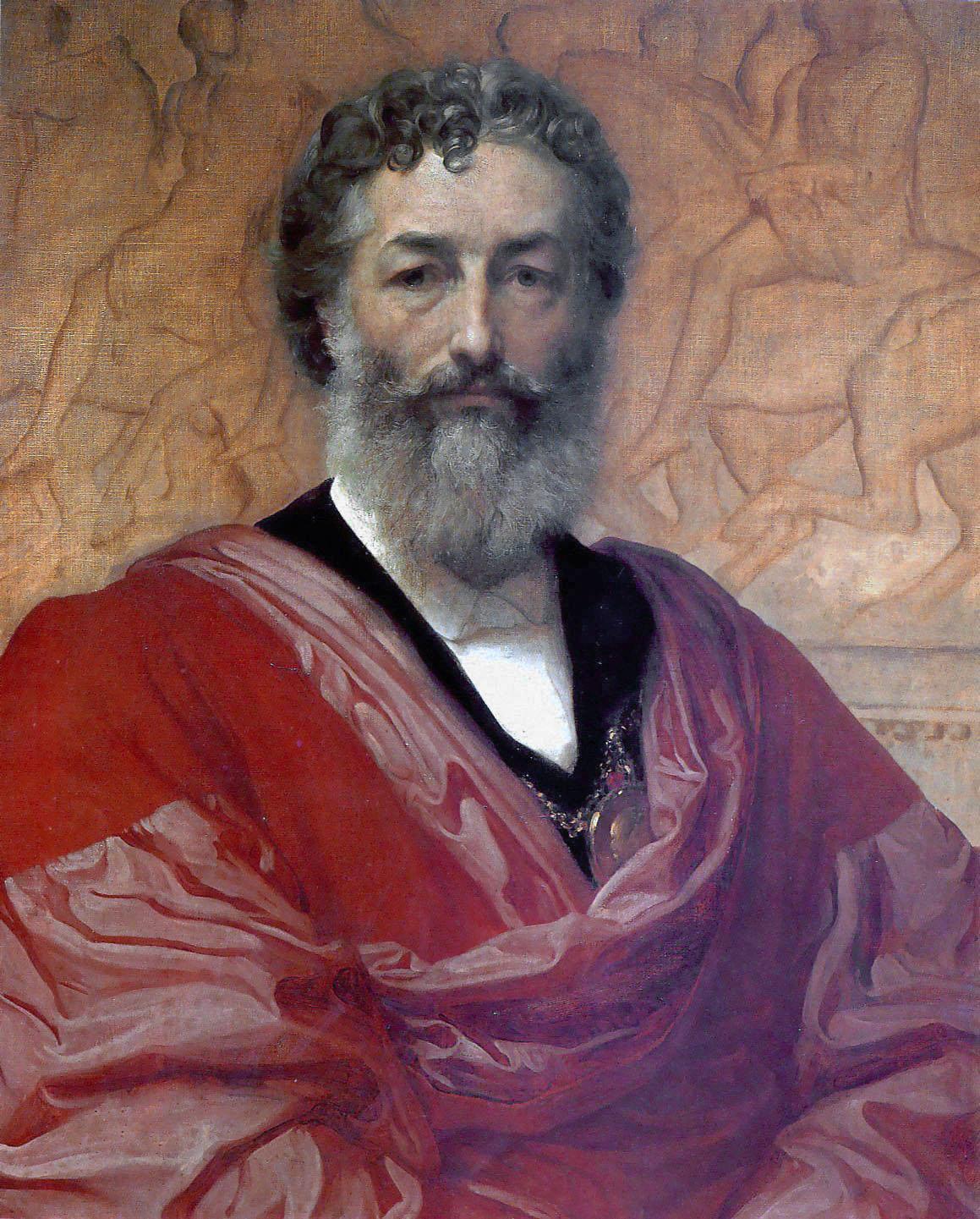
Frederic Leighton
In the world of Victorian art, few names carried as much weight as Frederic Leighton. Born in 1830, Leighton rose to prominence with his evocative paintings and sculptures, which often explored themes drawn from history, mythology, and religion. His ability to merge classical influences with a distinct emotional depth set him apart from his contemporaries, making him one of the most celebrated artists of his time. Leighton’s work was widely admired, and in 1896, he achieved a rare honor for an artist: a peerage, making him Baron Leighton.
Tragically, he passed away just one day after receiving the title, but his influence on the art world had already been firmly established. He had served as president of the Royal Academy of Arts for nearly 20 years, helping to shape the direction of British art during the late 19th century. One of his most famous works, Cimabue’s Celebrated Madonna, took two years to complete and became a sensation when it was exhibited in 1855 at the Royal Academy. The painting was later purchased by Queen Victoria, further cementing Leighton’s reputation as a leading figure in British art.
His works were known for their classical compositions, lush colors, and intricate detailing, evoking the spirit of the Renaissance while also appealing to the tastes of his Victorian audience. Leighton’s artistic vision extended beyond the canvas. His home, Leighton House, in London’s Holland Park, became a reflection of his eclectic tastes and cultural influences. Designed over the course of 30 years, it incorporated elements from the Middle East and classical Europe, most famously in the Arab Hall, which featured stunning Islamic tiles.
Today, Leighton House is a museum, showcasing 81 of his oil paintings and preserving his artistic legacy for future generations. Leighton’s brief time as a peer may have been fleeting, but his contributions to art continue to inspire. His ability to blend diverse influences into his work, and his role in shaping British art, ensure that Frederic Leighton’s legacy remains vibrant.
Any feedback for this story?