Freud Museum
In the spring of 1938, following the annexation of Austria by Nazi Germany, the eminent psychiatrist Sigmund Freud made the difficult decision to flee his home country. Accompanied by his youngest daughter, Anna, Freud journeyed first to Paris before settling in London. The city offered refuge and a place to continue his groundbreaking work in psychoanalysis. Freud initially took up residence on Elsworthy Road but soon moved to 20 Maresfield Gardens in Hampstead.
Despite suffering from advanced cancer, Freud remained intellectually active, completing his final book and continuing to receive patients and guests at his London home. This house became his last sanctuary, where he passed away on September 23, 1939. Anna Freud, herself an influential psychologist, continued to live in the Maresfield Gardens home after her father's death. Recognizing the importance of preserving his legacy, she envisioned transforming the house into a museum.
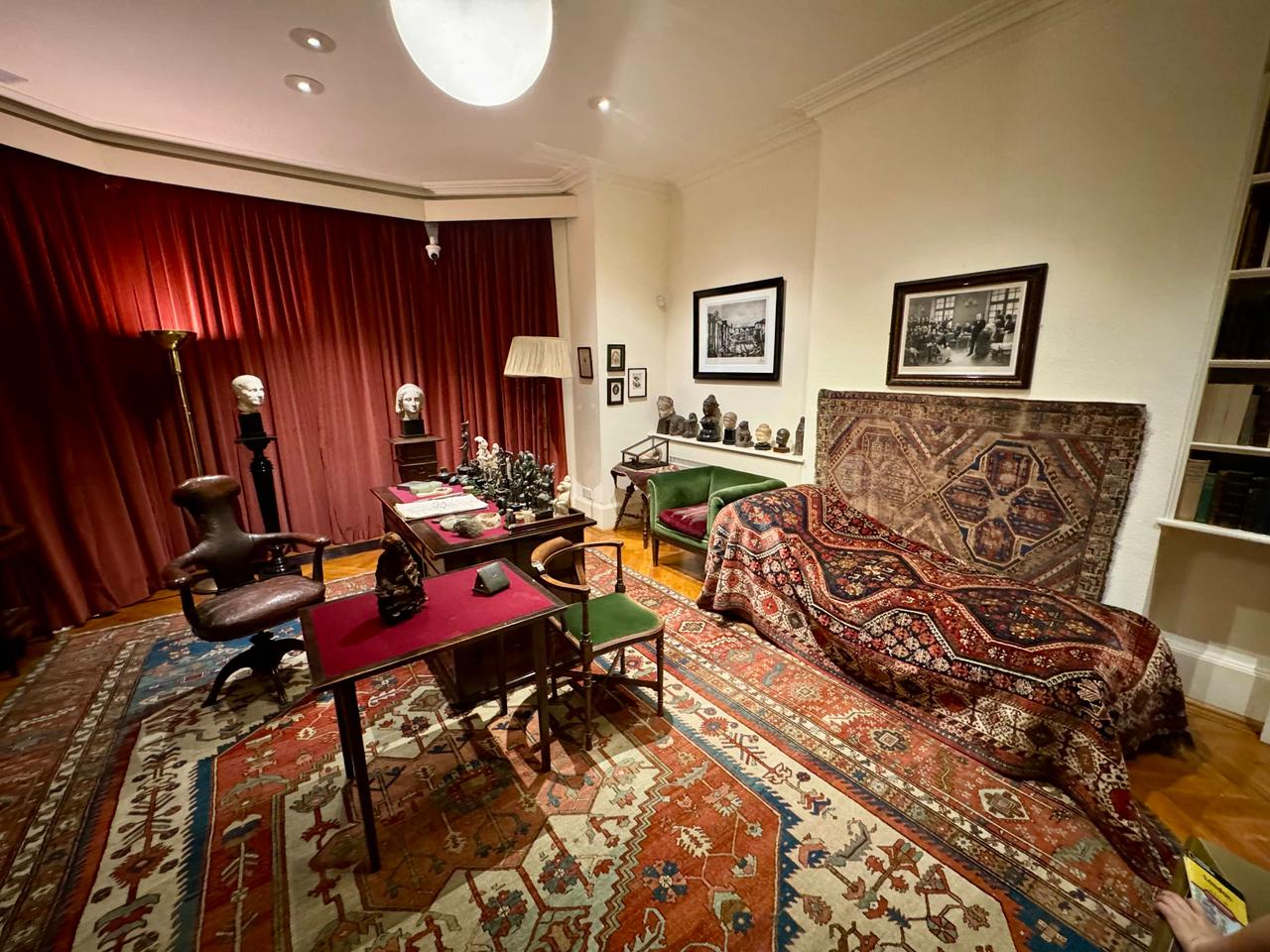
After Anna’s death, her dream was realized when the Freud Museum opened to the public in July 1986. The museum provides a unique glimpse into Freud’s personal and professional life, as it houses many of his belongings, meticulously transported from Vienna. Among these is Freud’s iconic couch, gifted to him in 1890 by a grateful patient named Madame Benvenisti. This couch became a symbol of his practice, where patients would lie and recount their dreams, exploring their unconscious thoughts and desires. Dream interpretation was one of Freud’s pioneering contributions to psychology, and this practice became central to the therapeutic process he developed.
The museum also boasts an impressive collection of 18th and 19th-century Austrian painted furniture and Freud’s extensive library. One of the notable pieces in the museum's collection is a drawing by Salvador Dalí from 1938, highlighting Freud's influence beyond psychology and into the realms of art and culture. Today, the Freud Museum stands as a testament to Sigmund Freud’s enduring impact on modern thought. It not only preserves the environment in which he worked but also serves as a center for psychoanalytic study and discussion, ensuring that his revolutionary ideas continue to inspire and challenge future generations.
Any feedback for this story?