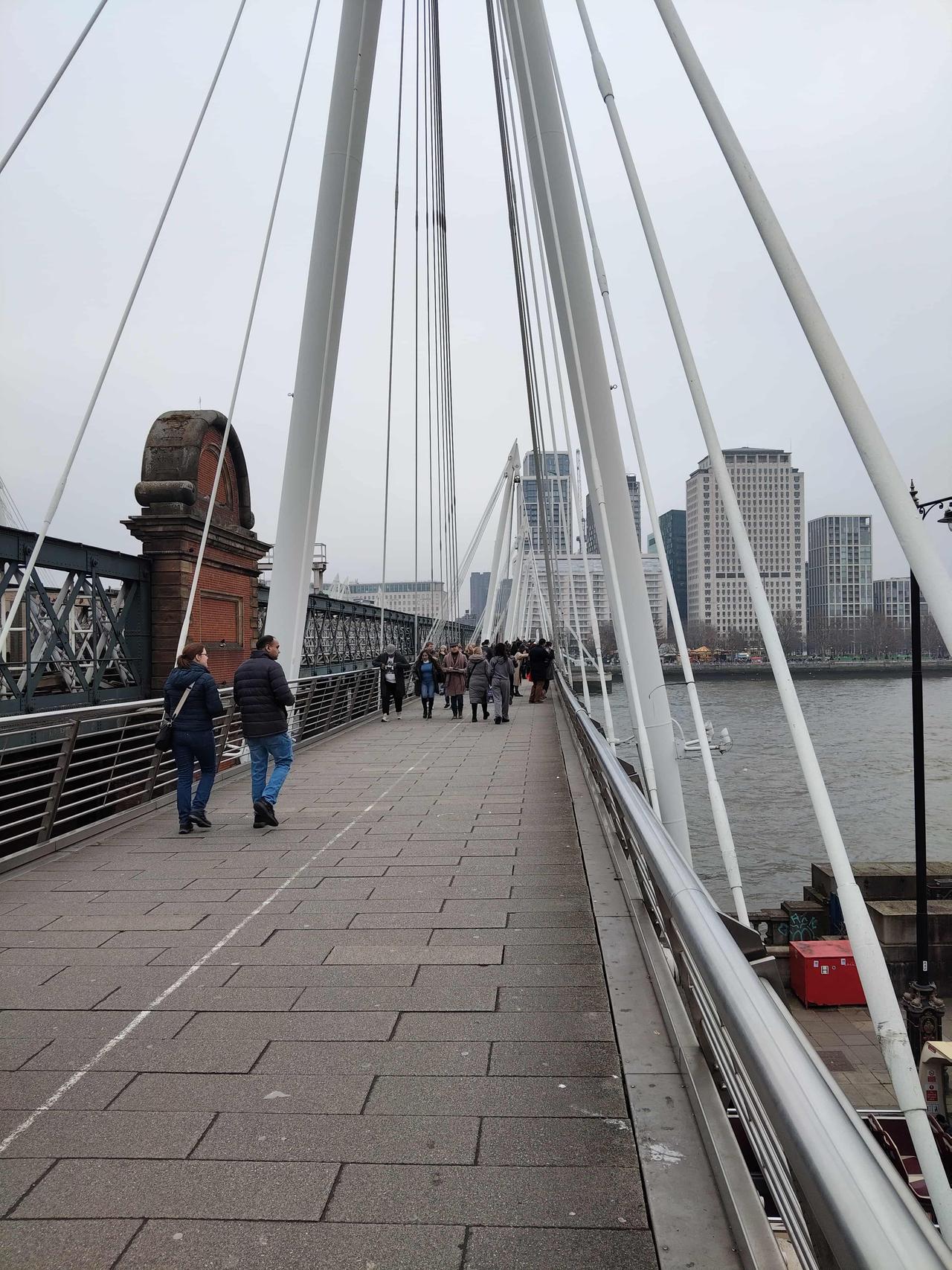
Golden Jubilee Bridges
In the 1990s, London decided to construct new pedestrian bridges next to the existing Hungerford Bridge. These four-meter-wide bridges, known as the Golden Jubilee Bridges, were completed in 2002 to commemorate the 50th anniversary of Queen Elizabeth II's reign. Offering pedestrians a scenic route across the River Thames, they provide stunning views of landmarks like the London Eye and the Houses of Parliament. The project, however, was not without its challenges.
Designed by the architectural firm Lifschutz Davidson Sandilands and engineering firm WSP Group, the construction required careful planning to avoid disrupting the train traffic on the Hungerford Bridge. Engineers also had to work around the Bakerloo underground line, which runs just beneath the Thames at a shallow depth. Another significant challenge was the discovery of unexploded bombs from World War II in the riverbed, which caused delays as debates arose over who would take responsibility for their removal.
Despite these hurdles, the bridges were successfully completed and have since become an important feature of London’s river crossings. Though officially named after the Queen’s Golden Jubilee, locals often refer to them as the "Hungerford pedestrian bridges" due to their proximity to the railway bridge. These elegant footbridges have become a beloved part of London’s landscape, offering both practical passage and a chance for thousands of daily walkers to enjoy breathtaking views of the city and the Thames.
Any feedback for this story?