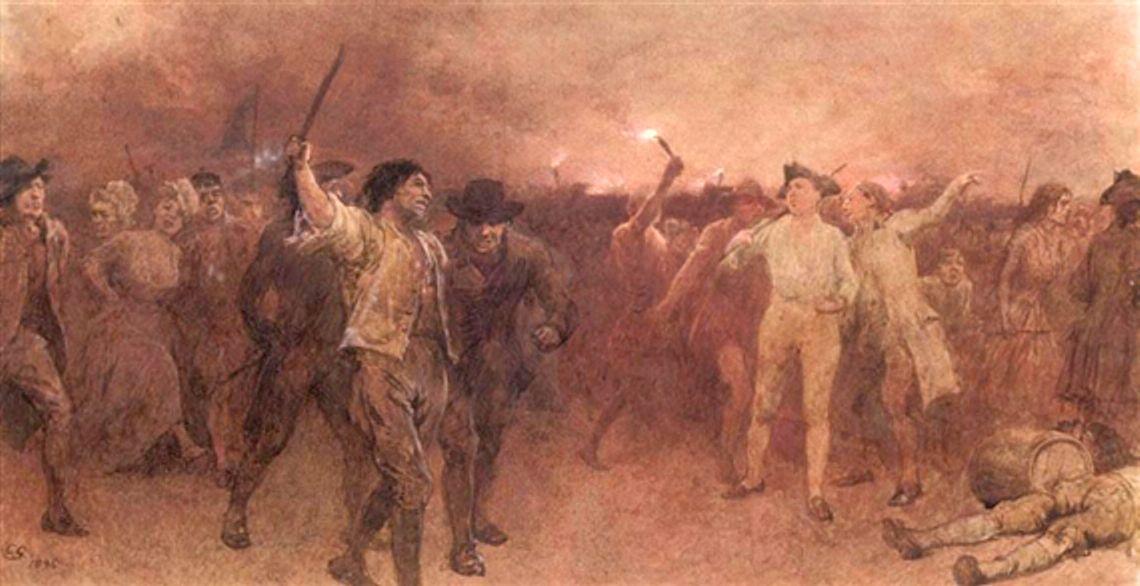
Gordon Riots
In June 1780, these streets erupted into the most destructive riots in British history. The Gordon Riots were a week of violence that began as a protest against Catholic rights and ended with the city ablaze and hundreds dead. The Catholic Relief Act of 1778 had lifted restrictions on Catholics, allowing them to join the army and own property. Many Protestants feared this would strengthen Catholic power during the American War of Independence. Lord George Gordon, an eccentric politician, led the Protestant Association in demanding the law be repealed.
On June 2, over 60,000 protesters marched to Parliament near the Thames, presenting a petition with 44,000 signatures. When Parliament refused to debate it, peaceful protest turned violent. Mobs attacked Catholic churches, foreign embassies, and homes of politicians who supported the Act. June 7 became known as Black Wednesday. Rioters stormed Newgate Prison in the Old Bailey area, burning it down and freeing 300 inmates.
Fleet Prison and King's Bench Prison in Southwark were also destroyed. Langdale's distillery in Holborn was set ablaze, creating flames visible thirty miles away. Rioters even attempted to storm the Bank of England in Threadneedle Street. The army finally opened fire on the crowds. An estimated 285 people were shot dead and 200 wounded. Around 450 rioters were arrested, with 25 later executed for their role in the violence.
Any feedback for this story?