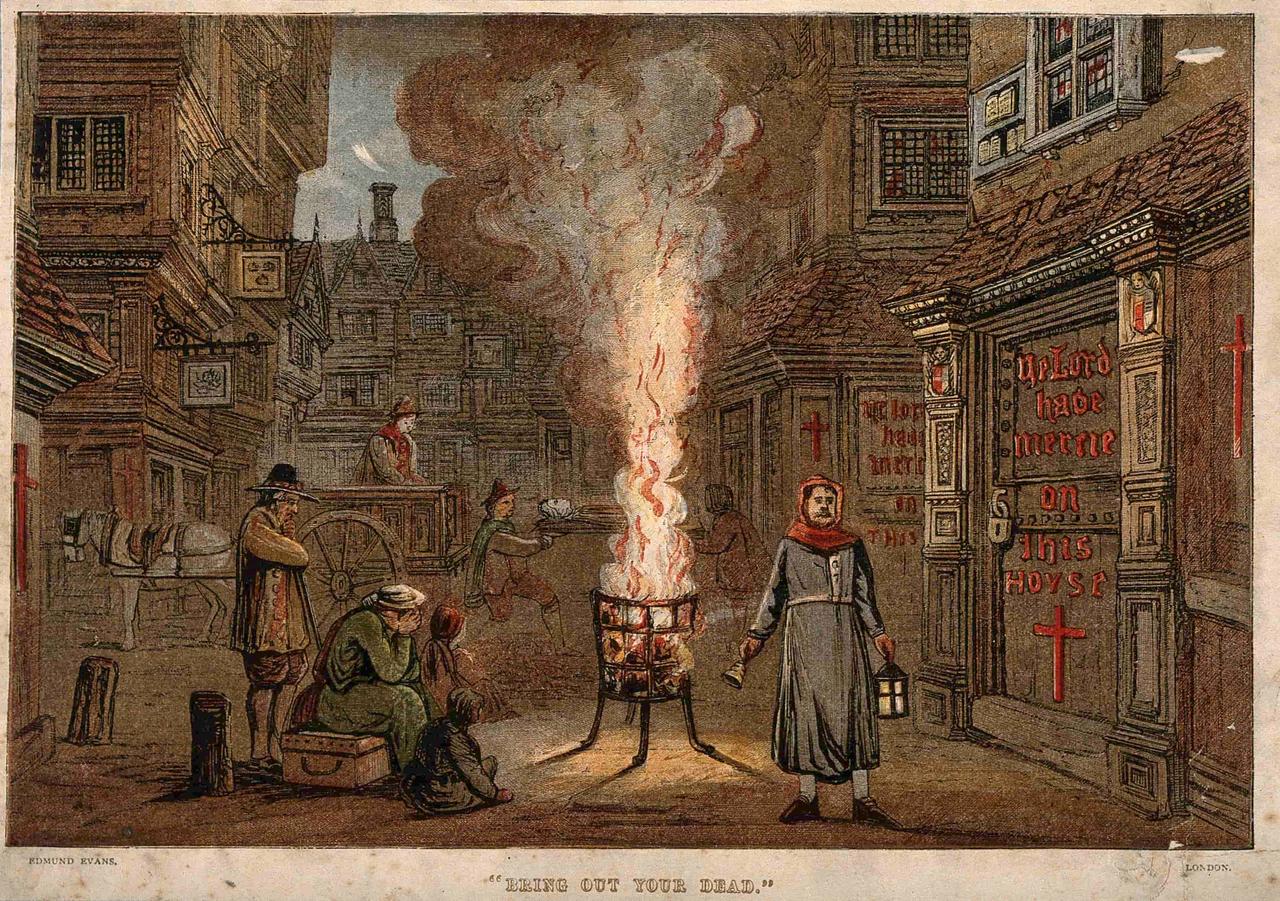
Great Plague (1655)
In 1665, the narrow streets and crowded tenements of St Giles in the Fields became ground zero for England's most devastating plague outbreak in over three centuries. This impoverished parish just beyond the old city walls was where the Great Plague began that spring, spreading through cramped alleyways where poor workers lived in squalor. The epidemic killed over 100,000 people within eighteen months, wiping out nearly a quarter of the population. By September 1665, more than 7,000 victims died every single week.
The disease was caused by Yersinia pestis bacteria, transmitted through bites from fleas living on black rats that thrived in the filthy streets filled with rubbish and open sewage. Authorities painted red crosses on infected houses and locked entire families inside, leaving them to die together. Wealthy residents fled to the countryside while the poor had no choice but to stay. Carts collected bodies at night for burial in mass plague pits.
Officials ordered thousands of dogs and cats killed, mistakenly believing they spread the disease, which only allowed rat populations to explode. The death toll mysteriously plummeted by December 1665. Historians remain uncertain why the outbreak ended, though improved immunity and colder weather likely played roles.
Any feedback for this story?