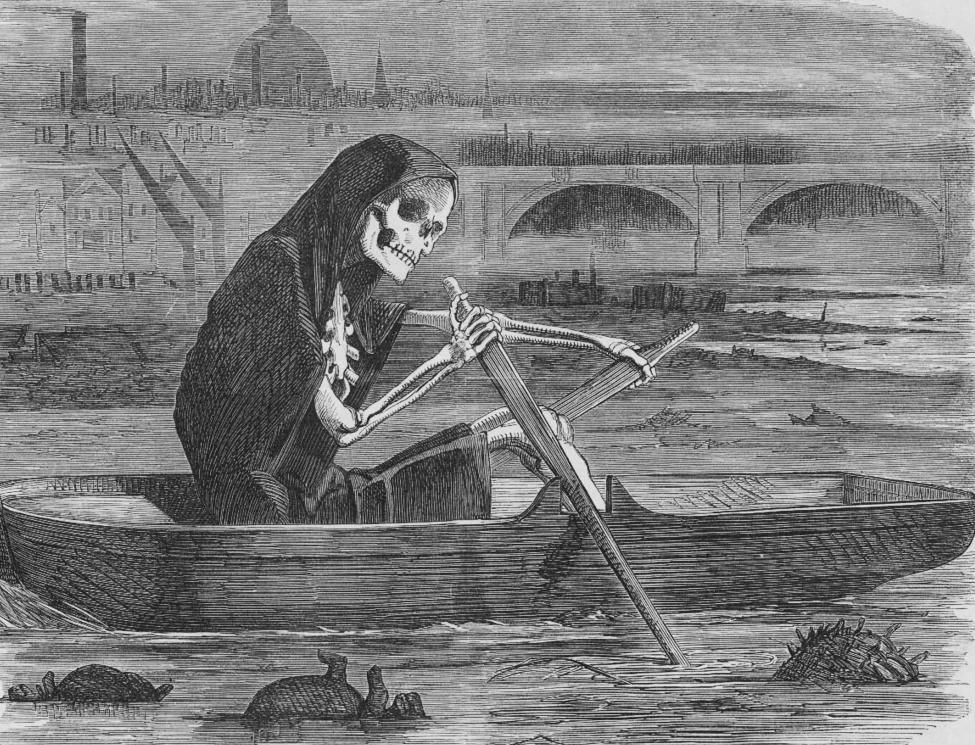
Great Stink
In the heat of the summer of 1858, London faced a crisis that would change the city forever—an event now known as the Great Stink. The source of the overwhelming stench was the River Thames, which had become a dumping ground for untreated human and industrial waste. Without a proper sewage system, waste flowed directly into the river and other waterways, intensifying the problem during the warmer months. As the smell worsened, it became impossible to ignore. Even inside the Houses of Parliament, lawmakers were overwhelmed by the foul air.
Wealthy Londoners sought refuge in the countryside to escape the unbearable conditions, but for most residents, the pollution was inescapable. Worse still, the contamination of drinking water led to frequent outbreaks of cholera, a deadly consequence of the city’s inadequate infrastructure. The severity of the situation finally pushed the government to act. Joseph Bazalgette, a pioneering civil engineer, was appointed to tackle the problem. His solution was ambitious: a vast underground sewer system that would divert waste far eastward, away from the city’s center. Construction on the system began in 1859 and continued until 1875.
One of the most important features of this new network was the Crossness Pumping Station, which began operation in 1865, officially opened by Prince Edward, later King Edward VII. Along with the Abbey Mills Pumping Station, it played a crucial role in solving the city's waste problems and stands today as a symbol of Victorian ingenuity. Bazalgette’s sewage system not only put an end to the stench but also curbed the cholera outbreaks, dramatically improving public health and reshaping the city of London for generations to come.
Any feedback for this story?