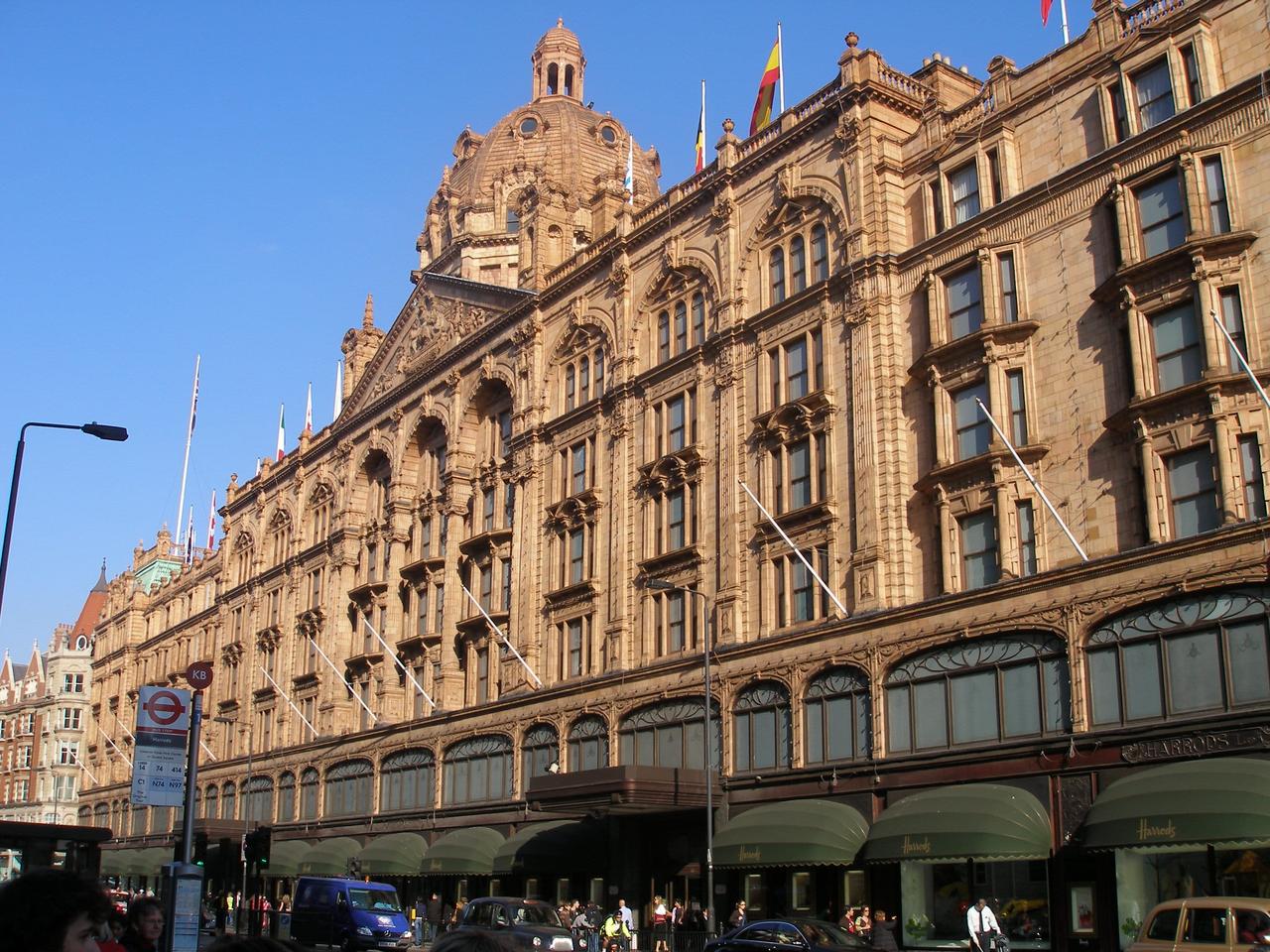
Harrods
In the heart of Knightsbridge, London’s bustling upscale district, stands a retail giant that has become synonymous with luxury and elegance. What began as a small grocery shop in 1835, founded by Charles Henry Harrod, transformed over the decades into the world-famous Harrods department store. During the cholera epidemic of 1849, Harrod relocated his business to Brompton Road, where he steadily expanded his enterprise, buying up neighboring buildings as trade grew. By 1861, Harrods was passed down to Charles Digby Harrod, Charles Henry’s son, who took the store to new heights.
Under his leadership, the store underwent major renovations, adapting to the needs of its growing clientele and expanding its range of goods. By 1889, Harrods had become an established institution, and when Charles Digby Harrod retired, the business was sold to investors. This marked the beginning of Harrods' long history of being owned by various stakeholders. From 1889 until 1959, it was listed as a publicly traded company, remaining true to its motto, "Omnia Omnibus Ubique" — "all things for all people, everywhere." A significant chapter in Harrods' history came in 1985 when Egyptian businessman Mohamed Al-Fayed purchased the store. Under Al-Fayed's ownership, Harrods retained its prestige while also becoming the site of a poignant memorial.
Following the tragic deaths of Princess Diana and Al-Fayed's son, Dodi, in 1997, a tribute to the couple was installed inside the store. Al-Fayed believed that Diana and Dodi had been secretly engaged before the accident, and the memorial stands as a testament to this belief. In 2010, the ownership of Harrods changed once again when Qatar Holding, the investment arm of the Qatari royal family, purchased the store from Al-Fayed. Despite these shifts, Harrods has remained a symbol of opulence and an essential stop for visitors and locals alike, continuing to offer everything from luxury goods to unique experiences, living up to its storied motto.
Any feedback for this story?