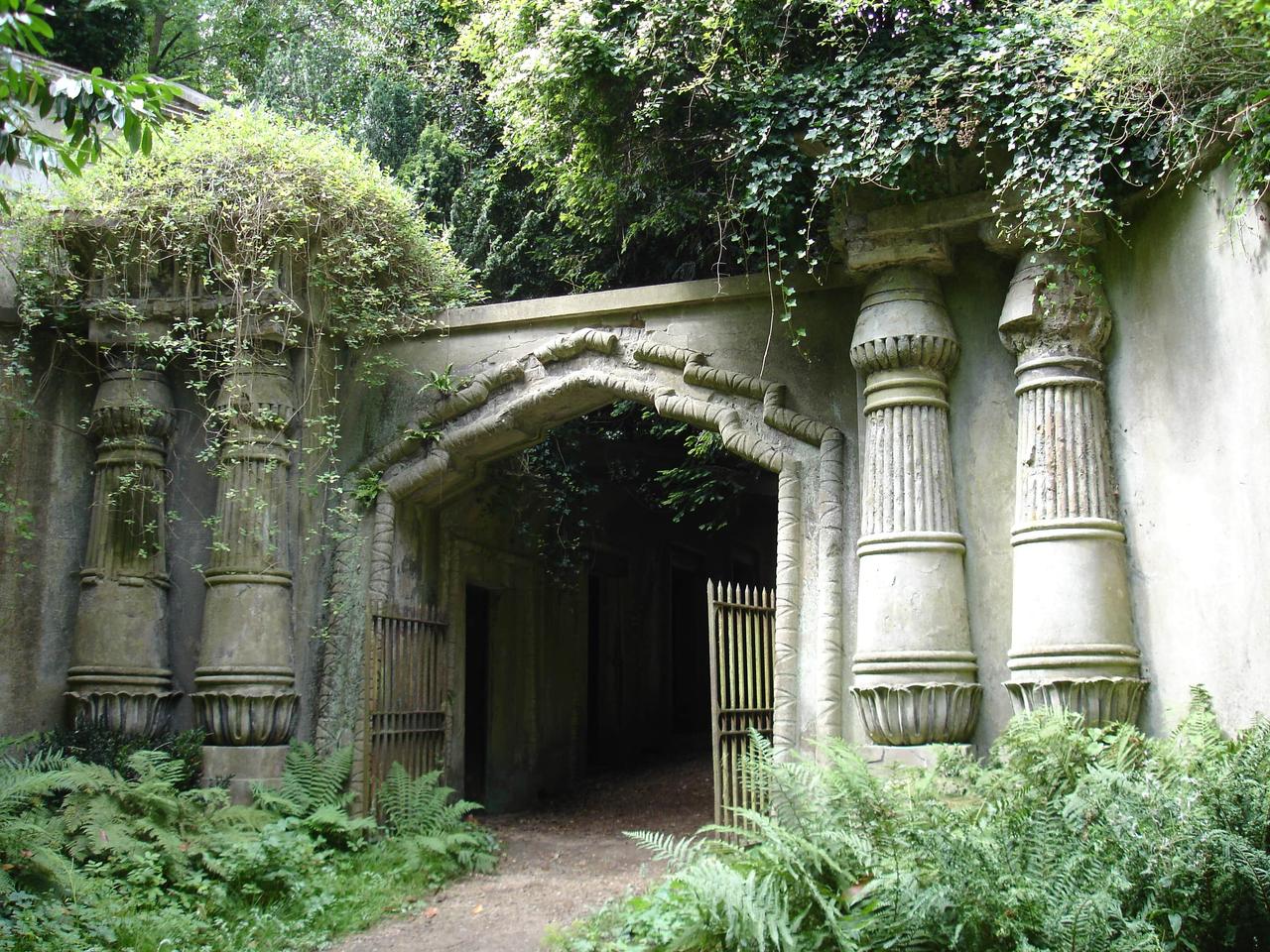
Highgate Cemetery
Highgate Cemetery, located on Swain’s Lane in North London, is the city’s most famous resting place, known for its rich history and Victorian charm. Established in 1839, it was designed to alleviate the overcrowded graveyards in London and took inspiration from Paris's famous Père-Lachaise Cemetery. Perched on a hill, Highgate's elevated position was seen as a spiritual advantage in Victorian times, symbolizing a closer proximity to heaven and God. During the 19th century, Highgate became a popular burial site, especially among the wealthy elite of Victorian society.
Many sought to be buried in this prestigious location, and the cemetery quickly became a showcase of elaborate tombs and mausoleums. Its lush landscape, adorned with grand monuments, reflected the social status of those laid to rest there. Highgate became the final resting place for many prominent figures, particularly those who couldn’t be interred in Westminster Abbey or St Paul’s Cathedral. Writers, artists, and scientists found their place among the graves of Highgate, making it a hub for cultural significance even in death. As London’s population grew, so did the demand for more burial space. In 1854, Highgate Cemetery expanded across Swain’s Lane, adding more ground to accommodate the increasing number of burials.
Despite its Victorian origins, the cemetery continues to be an active burial ground today. In recent years, Highgate has welcomed some well-known figures into its hallowed grounds. The famous actress Jean Simmons, historian Eric Hobsbawm, and pop icon George Michael were all laid to rest here, joining a long list of notable personalities. Today, Highgate Cemetery remains a place where visitors come not only to honor the dead but also to explore its beautiful, melancholic landscape, which captures the essence of a bygone era in London’s history.
Any feedback for this story?