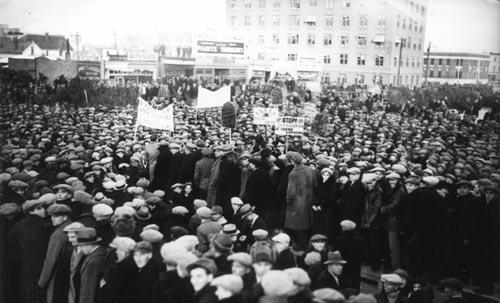
Hunger march 1926
In November 1927, 270 unemployed coal miners walked over 170 miles from the South Wales valleys to this square, where Nelson's Column stands as witness to one of Britain's most desperate protests. These were former soldiers and working men who had fought in the Great War, now facing starvation after the failed General Strike of 1926 left 241 pits closed across South Wales. The government refused relief payments to unemployed miners and their families, forcing entire communities into severe poverty.
The miners carried their safety lamps as symbols of their trade, walking nearly two weeks through Bristol, Bath and Swindon. Local workers offered food and shelter along the route. On 20 November, they arrived at Trafalgar Square in pouring rain, joining 8,000 supporters for a mass demonstration beneath the monument. Two miners died during the march. Arthur Howe of Trealaw was killed in a traffic accident, while John Supple of Tonyrefail contracted pneumonia at the rain soaked rally.
In his final letter home, Supple wrote to his wife: Think of me as a soldier in the Workers' Army. Sympathetic Londoners paid for coffins to send their bodies home. The march received little support from trade unions or the Labour Party, who feared its Communist organizers. Yet it began a decade of hunger marches that forced the government to recognize the human cost of mass unemployment.
Any feedback for this story?