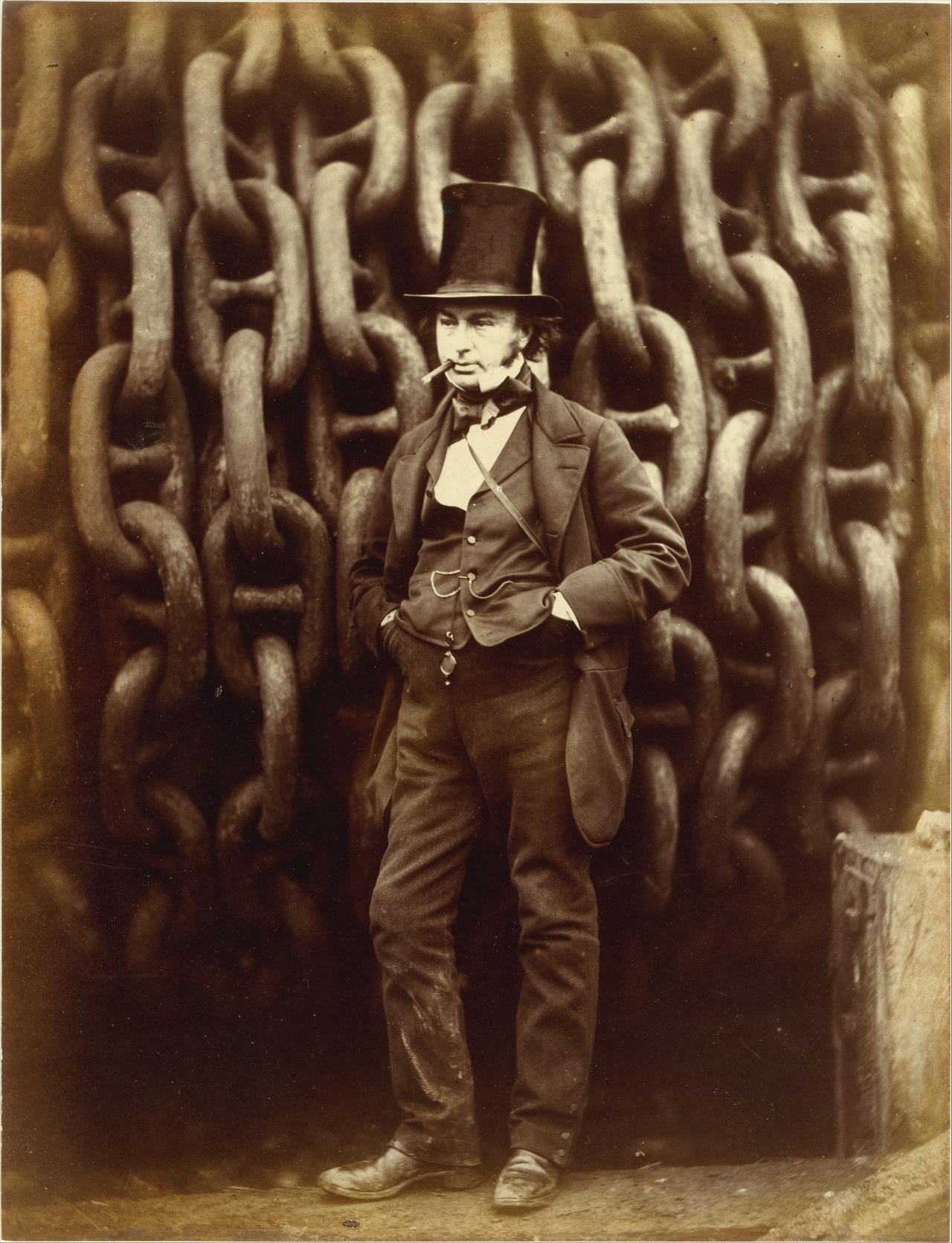
Isambard Kingdom Brunel
Right here is the soaring iron and glass cathedral that changed travel forever. The massive arched roof above this railway terminus was designed by Isambard Kingdom Brunel, a 27 year old engineer who became one of the greatest minds of the Industrial Revolution. Brunel was born in Portsmouth in 1806 to a French engineer father who taught him drawing and mathematics from age four. By his early twenties, he was already working on the Thames Tunnel between Wapping and Rotherhithe, the world's first underwater tunnel through soft ground.
The project nearly killed him when the tunnel flooded in 1828, trapping him beneath the river. He survived but spent months recovering. When he designed this terminus in the early 1850s, Brunel wanted to solve a problem. Railway stations built below street level were dark and gloomy. His answer was breathtaking. He created three enormous wrought iron arches covered in glass, each spanning more than 20 meters wide and stretching over 200 meters long. It was the largest train shed roof in the world when it opened on 29 May 1854.
Brunel based his design on the Crystal Palace, which had dazzled visitors at the Great Exhibition just three years earlier. He even hired the same iron foundry that built the Crystal Palace. This terminus became the gateway to the Great Western Railway, connecting passengers to Bristol and the entire west of the country. The route included dozens of bridges, tunnels and viaducts that Brunel designed himself, many still carrying trains at speeds he never imagined.
Any feedback for this story?