Kensington Gardens
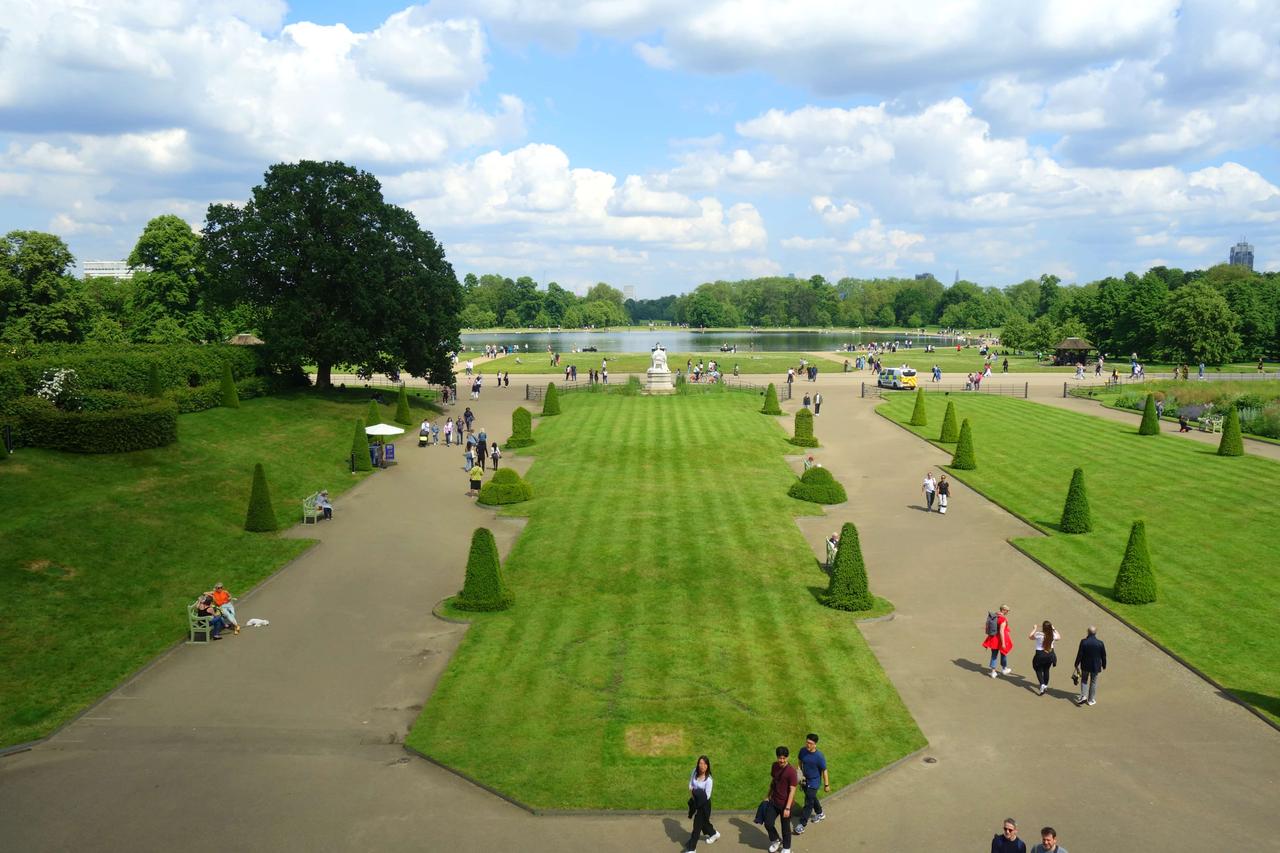
Once the private gardens of royalty, Kensington Gardens is now a beloved public park in London with a fascinating history. Originally the palace grounds of King William III, it was transformed in 1728 under the direction of Queen Caroline of Brandenburg-Ansbach, wife of King George II. She commissioned the renowned landscapers Henry Wise and Charles Bridgeman to redesign the area, shaping much of the park’s current layout. Though today it is distinct from Hyde Park, the two were once part of a single royal hunting ground dating back to 1536. The western section, near Kensington Palace, became Kensington Gardens, while the eastern side remained Hyde Park.
A defining feature of this area is The Serpentine, a lake created by Bridgeman in 1731 by damming the Westbourne River. This artificial waterway continues to divide the two parks while adding to their scenic charm. Kensington Gardens is home to numerous landmarks, including the grand Albert Memorial on its southern edge, a towering monument to Prince Albert, husband of Queen Victoria. Close by, the Serpentine Gallery has hosted modern art exhibitions since 1970, housed in a former tea pavilion. Each year, a temporary pavilion is constructed beside it, offering a fresh artistic experience to visitors.
Several other notable monuments can be found throughout the park, such as the Peter Pan Statue, the Speke Monument, and a statue of Queen Victoria herself. A highlight for younger visitors is the Diana, Princess of Wales Memorial Playground, an enchanting tribute to the late princess. With its blend of history and contemporary culture, Kensington Gardens offers a serene yet vibrant space that reflects London’s royal heritage and modern spirit.
Any feedback for this story?