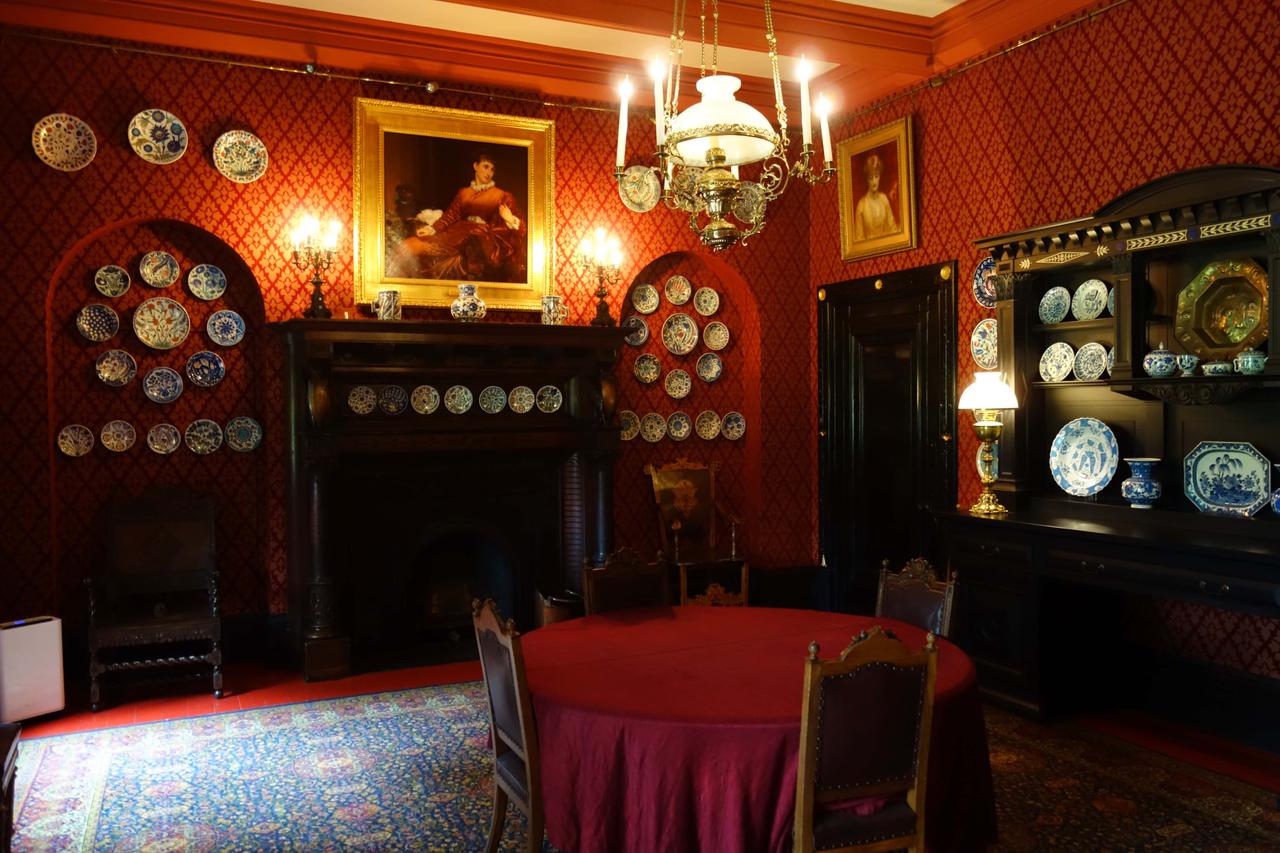
Leighton House Museum
In the heart of London’s Holland Park lies Leighton House, the former home and studio of renowned British artist Frederic Leighton. As the first British artist to be granted a peerage, Leighton’s rise to nobility was short-lived—he passed away just one day after receiving the honor in 1896. His residence, however, remains as a lasting tribute to his life and artistic legacy. Leighton House was constructed in stages over a span of 30 years by architect George Aitchison, evolving into a masterpiece of design that reflected Leighton’s artistic vision. The house was not only a living space but also a working studio, filled with the artist's creations.
Following his death, it was transformed into the Leighton House Museum, where 81 of his oil paintings are now displayed, showcasing his fascination with historical, religious, and mythological subjects. One of his most famous works, Cimabue’s Celebrated Madonna, took two years to complete and made a significant impact when it was exhibited at the Royal Academy of Arts in 1855. The painting was eventually purchased by Queen Victoria, cementing Leighton’s status in the art world. Leighton was also an avid collector, amassing works by major artists such as John Constable, Eugène Delacroix, and Lourens Alma Tadema.
Though much of this collection was sold off by his sisters after his death, a substantial portion remains within the museum. In addition to Leighton’s own works, the permanent collection includes pieces by notable artists like Edward Burne-Jones and John Everett Millais, further enriching the museum’s offerings. Today, Leighton House stands as a testament to the artist’s influence and a glimpse into the world of Victorian art, where creativity and grandeur came together in one extraordinary space.
Any feedback for this story?