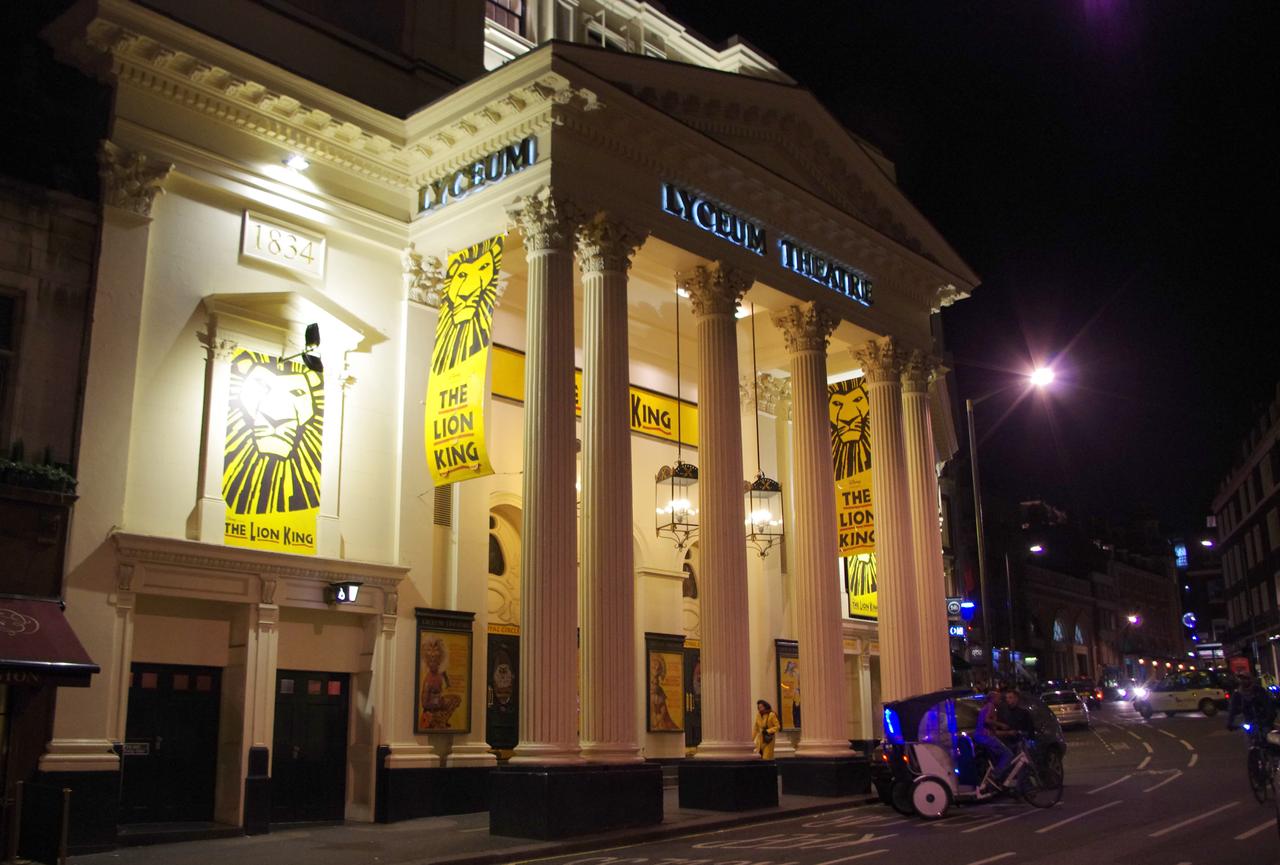
Lyceum Theatre
First envisioned as an exhibition hall in 1765, the Lyceum Theatre soon became a major stage for London’s vibrant performing arts scene. By 1794, it began hosting plays and events, but a fire destroyed much of the original structure. In 1834, architect Samuel Beazley led its reconstruction, transforming the Lyceum into a grand space for opera and literary adaptations, particularly those based on the works of Charles Dickens. The theater’s reputation soared between 1871 and 1902, thanks to the celebrated actor Henry Irving, whose powerful renditions of Shakespearean characters like Hamlet and Macbeth drew crowds night after night.
Irving’s performances helped cement the Lyceum as a cultural icon and brought a new level of prestige to the theater. In 1904, the Lyceum underwent a major renovation by architect Bertie Crewe, who reimagined the interior in opulent Rococo style, while preserving Beazley’s classic façade and grand portico on Wellington Street. This balance between old and new design elements gave the theater a unique architectural charm that endures today. The Lyceum’s modern identity took shape in 1999 with the arrival of The Lion King, which has become one of the longest-running and most popular musicals in the world. Based on Disney’s beloved 1994 film, the production features imaginative animal costumes, African-inspired music by Elton John and Tim Rice, and vibrant storytelling that delights audiences of all ages.
The show’s success has been global, with over 1,000 performances in venues like the Circus Theatre in Scheveningen. Blending historical grandeur with contemporary performances, the Lyceum Theatre remains a landmark of London’s West End, celebrating centuries of artistry and theater innovation.
Any feedback for this story?