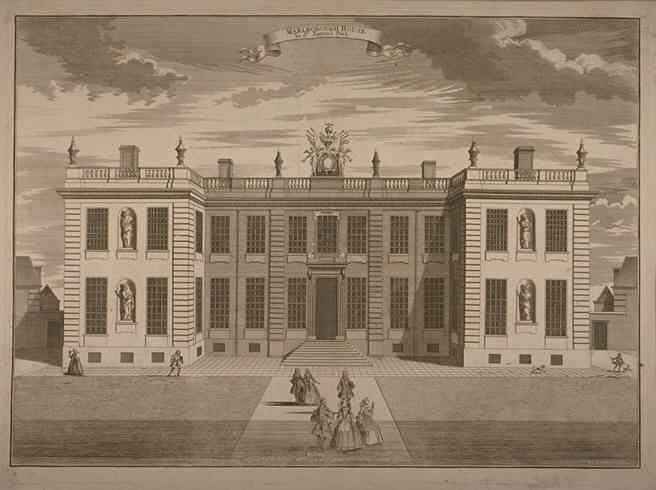
Marlborough House
Commissioned in 1711 by Sarah Churchill, Duchess of Marlborough, Marlborough House was designed by the acclaimed architect Sir Christopher Wren and his son as a residence that would reflect the Duchess’s high social standing and her close connection to Queen Anne. Constructed with elegant proportions and surrounded by gardens, the house remained in the Churchill family for nearly a century. In 1817, it was sold to the British royal family, marking the beginning of its new life as a royal residence. After the purchase, significant modifications were made to adapt Marlborough House for royal use. Its wings received additional floors, and a grand entryway was added to enhance its ceremonial feel.
In the 1850s, Prince Albert arranged for the Royal College of Art to use the space, showing his commitment to education and the arts. Shortly afterward, in 1861, architect James Pennethorne was commissioned to expand and modernize the house for the Prince of Wales (later Edward VII) and his wife, Alexandra of Denmark. Pennethorne’s renovations included a series of new rooms along the northern side and a wide veranda that suited the royal couple’s frequent social gatherings. Under Edward and Alexandra, Marlborough House became a lively social venue, where prominent political figures, artists, and members of high society regularly gathered for receptions, dinners, and balls.
Their active social calendar gave the house a vibrant reputation, establishing it as a key center of aristocratic life in London. Following its use as a royal residence, Marlborough House found a new purpose as the headquarters of the Commonwealth, an organization of 54 member nations with shared historical ties to Britain. Positioned close to St. James’s Park, Marlborough House now bridges Britain’s noble heritage with its commitment to fostering international dialogue, maintaining its legacy as both a symbol of British history and a space dedicated to global cooperation.
Any feedback for this story?