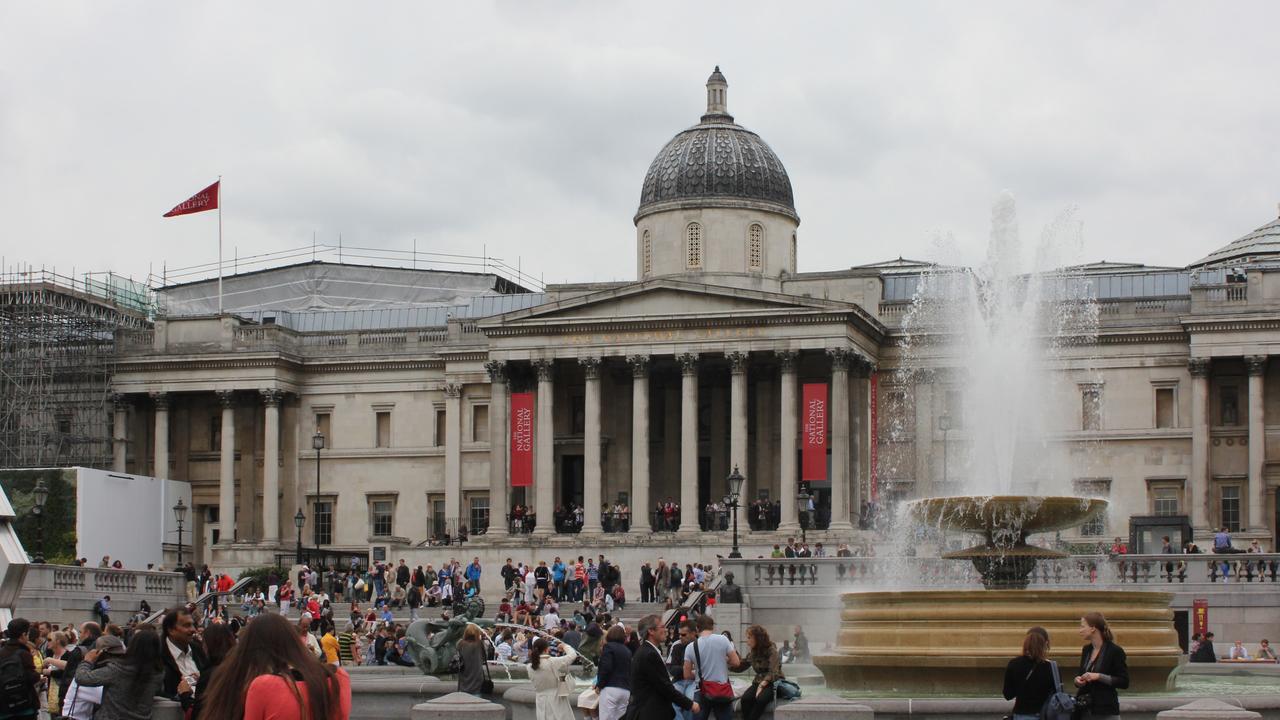
National Gallery
What started with just 38 paintings in a townhouse has grown into one of the world's greatest art collections right here on the north side of Trafalgar Square. The National Gallery houses over 2,300 masterpieces spanning seven centuries, from medieval altarpieces to Impressionist treasures. Unlike most European galleries that began as royal collections, this one started differently. In 1824, the British government purchased 38 paintings from banker John Julius Angerstein's private collection.
His modest house at 100 Pall Mall became the first temporary home, quickly outgrown as donations poured in. By 1838, architect William Wilkins designed this grand neoclassical building you see today. The location was chosen deliberately. It sat at the very heart of the city, easily reached by working people from the east and wealthy patrons from the west. Art for everyone, not just the privileged. Here's what makes this place remarkable: two thirds of the collection came from private donors, not government purchases.
Collectors like Sir George Beaumont believed great art should belong to the nation. You can see works by Leonardo da Vinci, Raphael, Van Gogh, and Monet. The gallery welcomed over 4.7 million visitors in 2024 during its 200th anniversary. Entry has always been free, staying true to its founding mission of making art accessible to all.
Any feedback for this story?