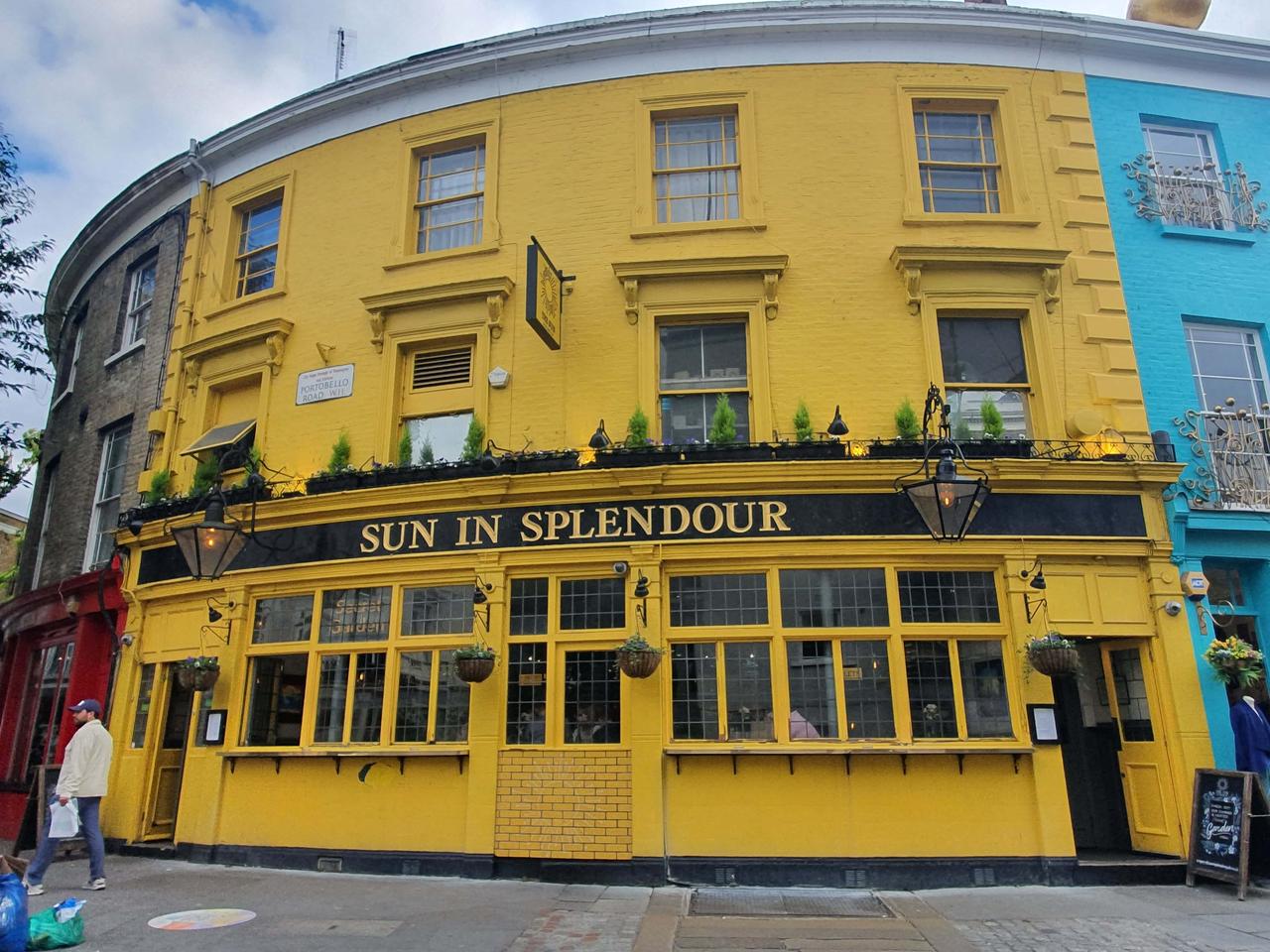
Portobello Street
You are standing on a street named after a distant naval battle fought thousands of miles away in the Caribbean Sea. In 1739, British Admiral Edward Vernon captured the Spanish town of Porto Bello in Panama during the War of Jenkins Ear. A farmer was so proud of this victory that he named his farm after it the following year. The winding country lane that led to his farm, originally called Green's Lane, slowly became known as Portobello Road. This path meandered through hayfields and orchards in what was then rural countryside north of Kensington.
For over a century, it remained nothing more than a muddy track connecting farmland. Everything changed in the 1860s when Victorian property developers arrived. The farmhouse was demolished in 1862 and its 170 acres were sold off. Rows of terraced houses and shops quickly replaced the fields. The street market started in the 19th century, with traders selling fresh food to serve the kitchens of wealthy households in the surrounding area.
The transformation came in the 1940s and 1950s when antique dealers and secondhand traders began setting up stalls. These dealers gradually turned the market into what became the world's largest antiques market. Every Saturday, over 1,000 dealers gather here in the colorful streets of Notting Hill, selling everything from Victorian furniture to vintage clothing.
Any feedback for this story?