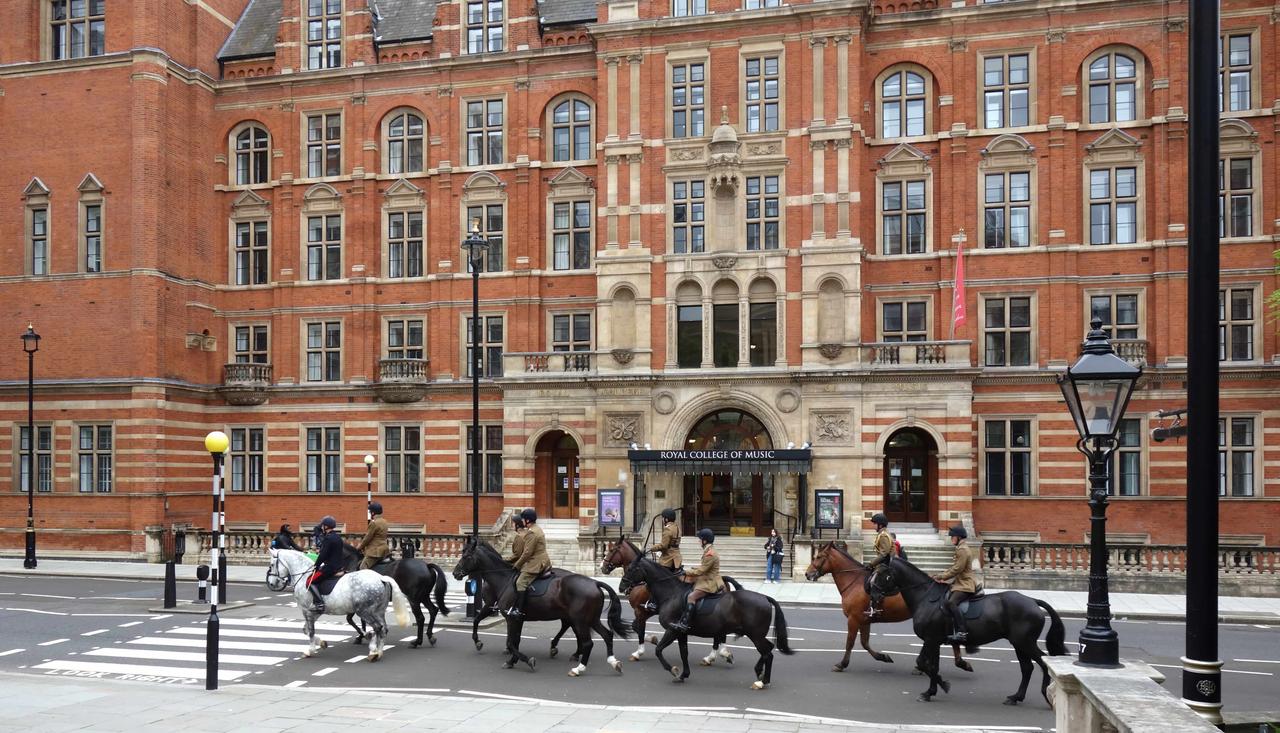
Royal College of Music
In 1882, the Royal College of Music was established in London with a mission to cultivate the finest musical talent in the world. Founded by the then Prince of Wales, later King Edward VII, the college quickly became a cornerstone of the city’s cultural and artistic life. By 1894, it had moved into its magnificent new building, situated next to the Royal Albert Hall, in a location that would inspire generations of musicians. The iconic building was designed by Sir Arthur Blomfield, who utilized red brick and intricate stone detailing to create a structure that was both functional and elegant.
The project was largely funded by industrialist Samson Fox from Yorkshire, whose support is commemorated by a statue in the building's entrance hall alongside one of the Prince of Wales. This collaboration between the arts and industry set the tone for the college’s legacy of excellence. The Royal College of Music has maintained a close relationship with the British royal family throughout its history. Prince Charles currently serves as honorary president, following in the footsteps of Queen Elizabeth II. This royal connection highlights the college's esteemed status and its importance in promoting musical achievement. Among its many facilities, the Royal College of Music features several prominent performance venues.
The Amaryllis Fleming Concert Hall, built in 1901, seats 468 people and is renowned for its excellent acoustics. The Britten Theatre, opened in 1986 by Queen Elizabeth II, seats 400 and hosts a variety of performances, including opera, ballet, and theater. The college also houses a smaller hall and intimate recital rooms, three of which feature organs. Throughout its history, the Royal College of Music has been a training ground for many of the world’s leading musicians, composers, and conductors, such as Benjamin Britten and Sir Roger Norrington. It continues to serve as a vibrant center for musical education and performance, drawing talented students from across the globe and enriching London's cultural landscape.
Any feedback for this story?