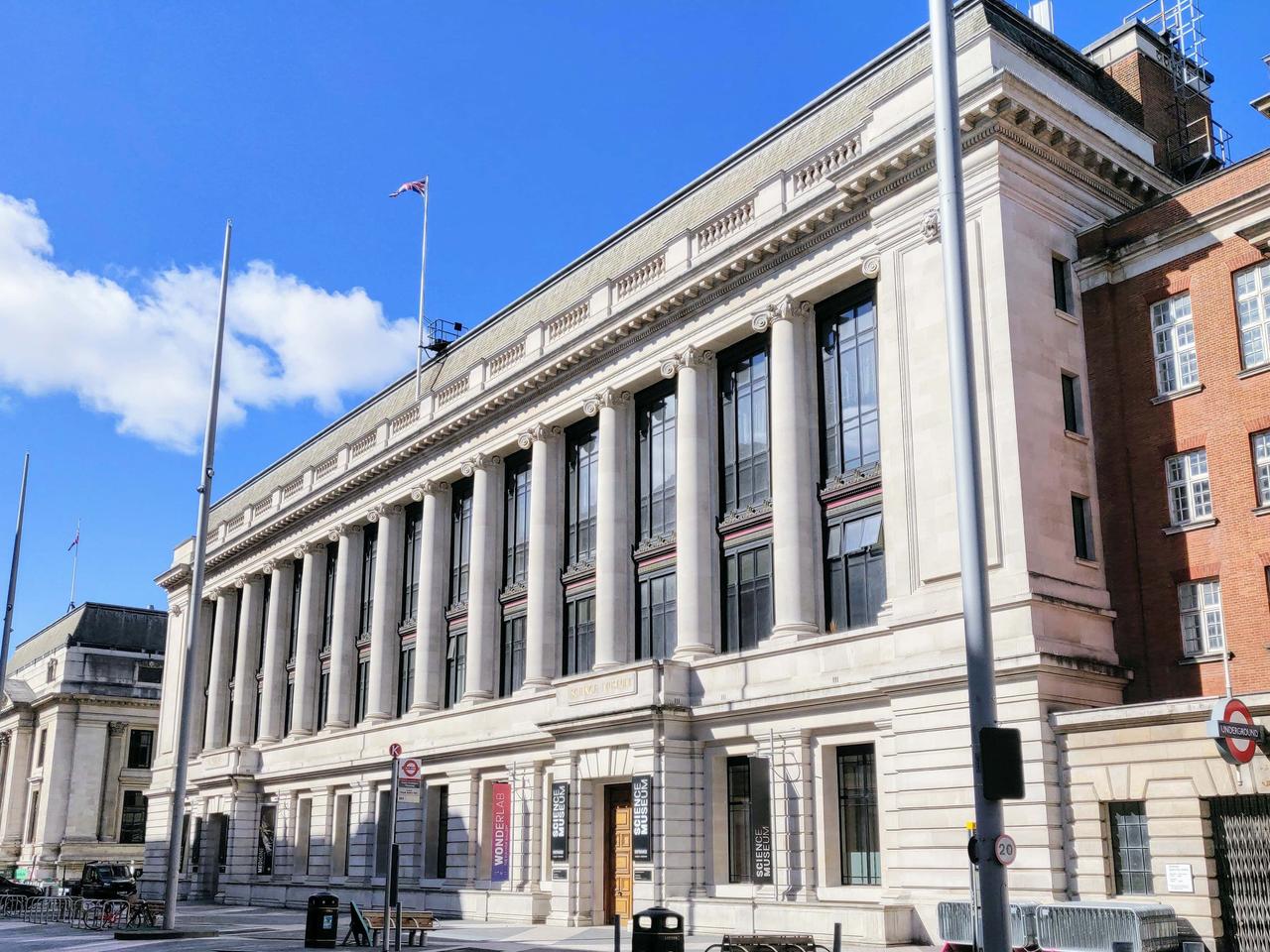
Science Museum
This building on Exhibition Road holds Stephenson's Rocket, the Apollo 10 command capsule, and over 300,000 objects that changed the world. What you see here began as a radical idea: science should belong to everyone, not just scholars. In 1851, the Great Exhibition filled Hyde Park with the world's greatest inventions. When it ended, Prince Albert refused to let those treasures disappear. He insisted the leftover exhibits and profits should educate the public.
By 1857, these collections opened right here in South Kensington as part of a larger museum complex, sharing space with art collections that later became the Victoria and Albert Museum next door. For decades, science and art lived under one roof until 1909, when this became an independent institution. The grand building you stand before, designed by Sir Richard Allison, rose in stages between 1919 and 1928.
Inside, you will find the actual locomotive that set speed records in 1829, the capsule that took astronauts around the moon in 1969, and the world's first interactive children's gallery, opened in 1931. This was the first major museum anywhere to let visitors touch and experiment, transforming how people learn. The Patent Office Museum that stood here in 1863 displayed working machinery when other museums only showed paintings and sculptures.
Any feedback for this story?