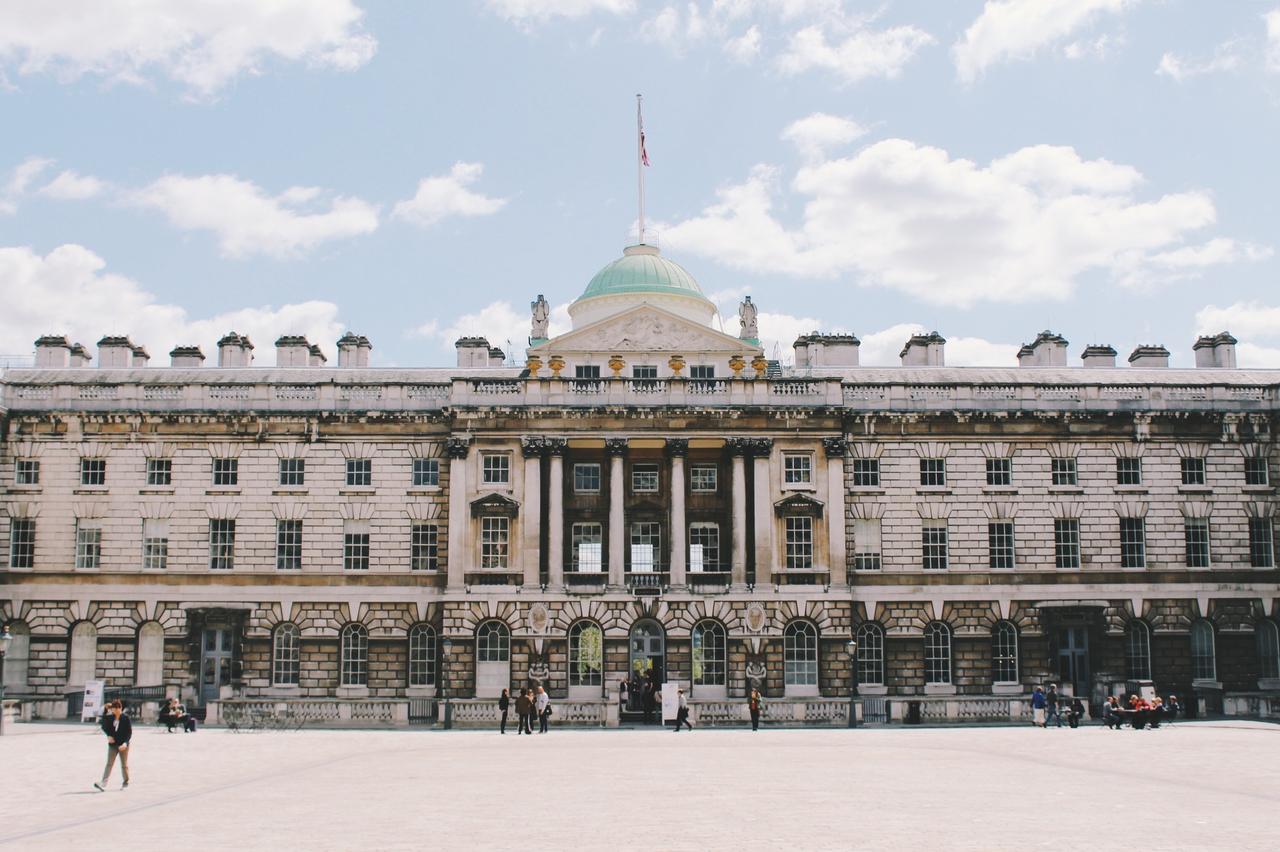
Somerset House
This building on the Strand, overlooking the River Thames just east of Waterloo Bridge, was built on stolen stones from demolished churches and graveyards. Somerset House is a grand neoclassical complex with a dark beginning that stretches back nearly 500 years. In 1547, Edward Seymour, Duke of Somerset and uncle to the young King Edward VI, seized this prime riverside land to build himself a palace. He ruthlessly tore down churches, including parts of St Paul's Cathedral, even disposing of bodies from graveyards to use their stones.
Before he could enjoy his grand home, Somerset was executed for treason in 1552. The unfinished palace became home to 20 year old Princess Elizabeth from 1553 to 1558, before she became queen. The building remained incomplete for decades. The current structure, designed by Sir William Chambers and begun in 1776, served as the heart of British government administration.
The Navy Board occupied a third of the building, and Admiral Nelson attended meetings here. Until 1855, every newspaper printed in Britain had to be physically brought here to be stamped and taxed. The building originally stood directly on the Thames until the Victoria Embankment was constructed in the 1860s.
Any feedback for this story?