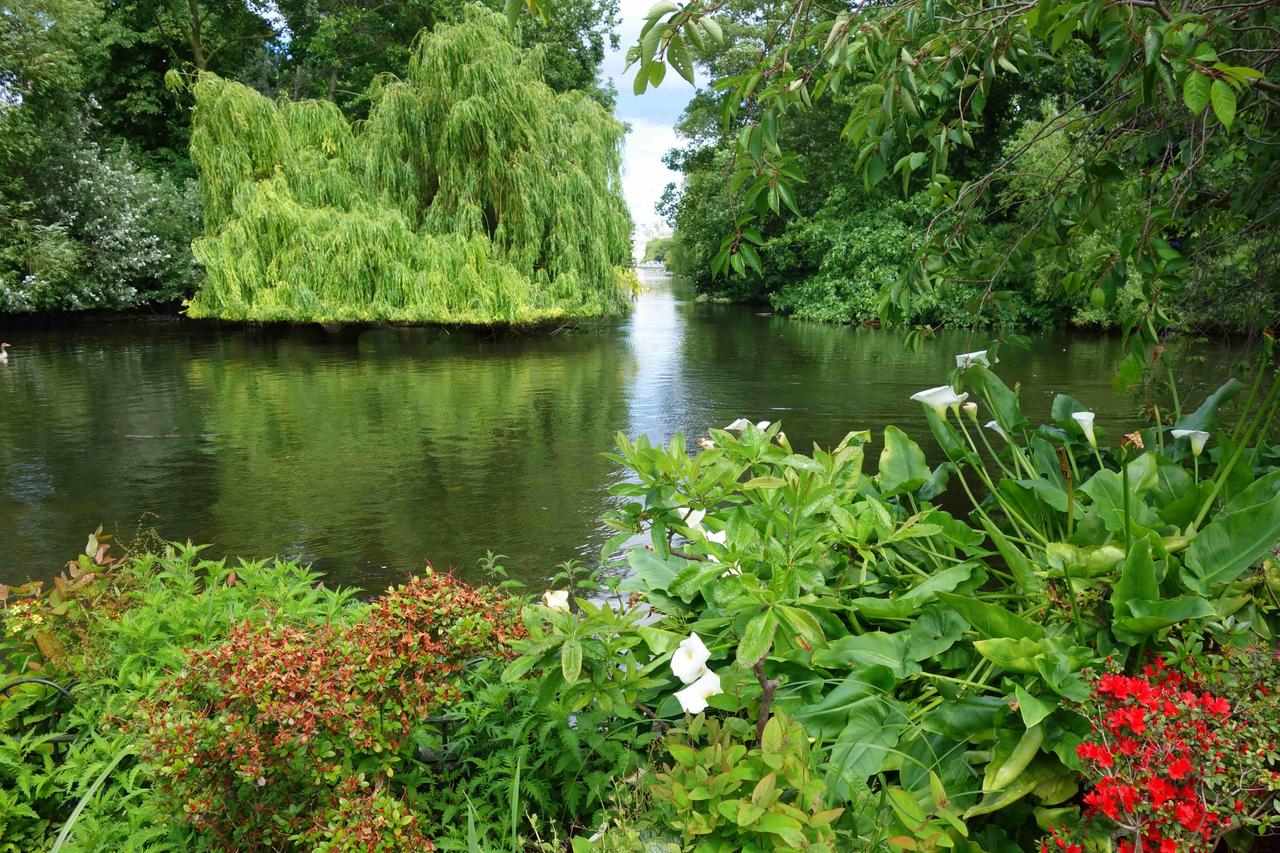
St James's Park
Originally the site of a leper hospital dedicated to St. James the Less, St. James’s Park has a history that dates back to the early 16th century. In 1532, Henry VIII acquired the land from Eton College to expand the grounds around York Place, which later became Whitehall Palace. Initially used as a royal hunting ground, the park was a private space, serving the monarchy’s needs. The first major transformation of the park came under Charles II in the 17th century, after the monarchy was restored.
Charles, influenced by the grandeur of French gardens, commissioned a redesign in the formal French style, possibly overseen by French landscape gardener André Mollet. The new layout featured strict geometric designs and ordered pathways, aligning with European tastes of the time. Despite its elegance, the park developed a controversial reputation as a site for secretive meetings and fleeting romantic encounters, which tarnished its refined image. In the early 19th century, John Nash, one of Britain’s most celebrated architects, undertook a major overhaul of the park. Nash’s design moved away from the rigid formality of the French style, creating a more romantic and naturalistic landscape.
He introduced winding paths, serene lakes, and carefully crafted vistas. This redesign coincided with his larger vision for the area, which included renovations to Buckingham Palace and the creation of The Mall, a grand avenue that runs alongside the park. Between 1906 and 1934, the park saw its last major addition: the Victoria Memorial, placed directly in front of Buckingham Palace. This monument reinforced the park’s connection to royal ceremonies and state occasions, adding another layer of history to the park’s evolving role. Today, St. James’s Park is a tranquil oasis in the heart of London, offering stunning views of Buckingham Palace, lush gardens, and a variety of wildlife. Its rich history, combined with its serene atmosphere, makes it a beloved spot for both locals and visitors.
Any feedback for this story?