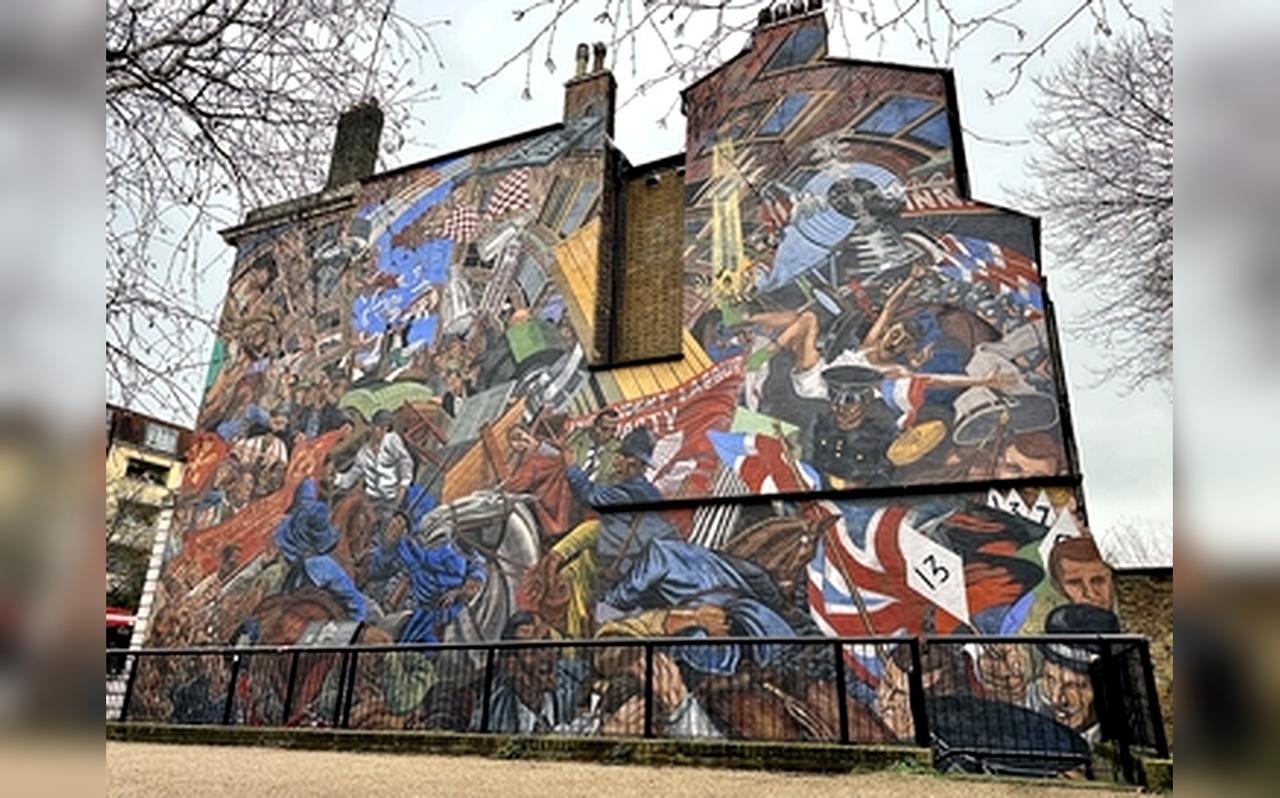
The Battle of Cable Street
On 4 October 1936, this narrow street in the East End became the battleground where ordinary people stopped fascism in its tracks. The Battle of Cable Street was the day a community said no to hatred. Sir Oswald Mosley led the British Union of Fascists, a movement that copied Hitler's ideas and blamed Jewish people for Britain's problems. He planned to march 3,000 uniformed Blackshirts through Whitechapel, the heart of the Jewish community. It was meant to intimidate and terrorize. Local leaders collected 100,000 signatures begging the government to ban the march, but officials refused.
The community took matters into their own hands. Up to 300,000 people poured into Cable Street and the surrounding roads near the Tower of London. Jewish families stood alongside Irish dockers, Somali seamen, communists and trade unionists. They chanted "They shall not pass!" borrowed from anti fascist fighters in Spain. Barricades went up using mattresses, furniture and abandoned trams. Women hurled rubbish and chamber pot contents from upper windows.
People scattered marbles across the cobblestones to trip charging police horses. Despite 6,000 police trying to clear the route, the barriers held. After hours of fighting, Mosley was forced to call off his march. The victory led Parliament to ban political uniforms the following year.
Any feedback for this story?