The Blitz
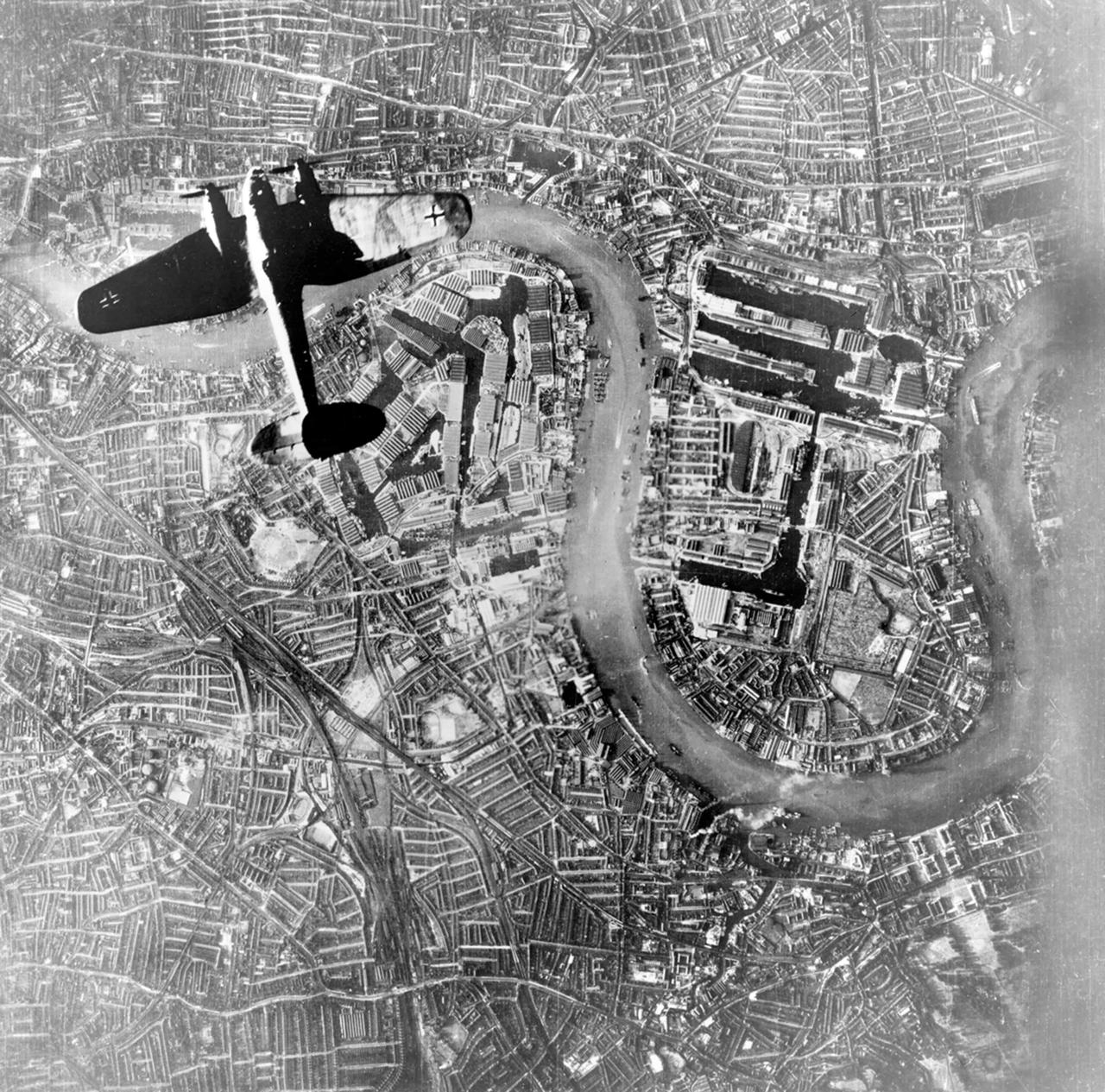
On 7 September 1940, the sky above the Thames turned black with 348 German bombers and 617 fighter planes. This marked the beginning of The Blitz, an eight month bombing campaign by Nazi Germany that would forever change this riverside city and its people. The Blitz was the name given to sustained aerial attacks against Britain during World War II. The word comes from the German term Blitzkrieg, meaning lightning war. That first day became known as Black Saturday when bombers targeted the docks and warehouses along the river bends, killing 430 people and injuring 1,600 in a single afternoon and evening.
The East End, where working class families lived around the port area, suffered the most. For 57 consecutive nights, German aircraft returned to drop bombs on the densely packed streets and industrial zones. Around 25,000 bombs fell on the docklands alone, aiming to destroy the supply lines that kept Britain fighting. Families sheltered wherever they could.
Thousands slept in Underground stations each night while others used Anderson shelters in their gardens or huddled under staircases. The deadliest raid came on 10 May 1941 when 711 tons of explosives killed 1,436 people. By the time the bombing ended in May 1941, over 20,000 residents had been killed and 25,000 wounded. Yet the docks continued operating and the city refused to surrender.
Any feedback for this story?