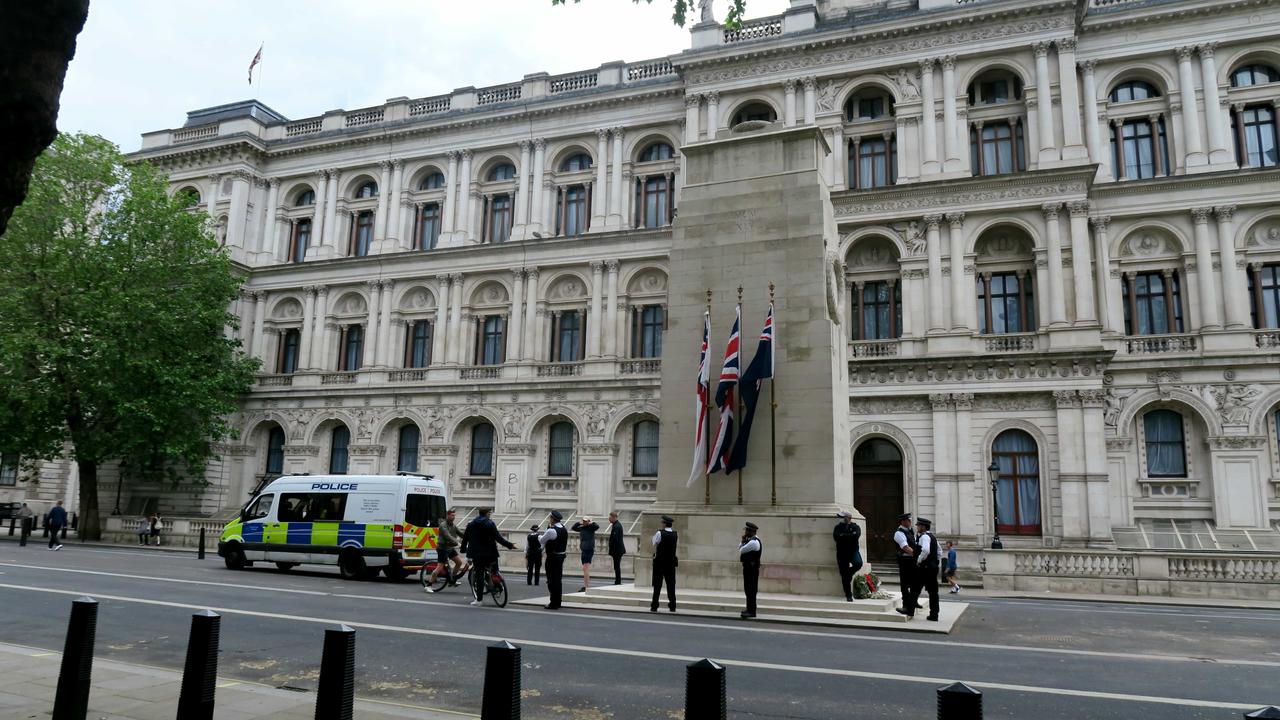
The Cenotaph
The pale stone structure standing before you on Whitehall is called the Cenotaph, and its name tells you everything. It comes from the Greek words for "empty tomb," a memorial built for those whose bodies were never recovered or rest far from home. Designed by the architect Sir Edwin Lutyens, it was unveiled in 1920, just two years after the end of World War I, the devastating conflict that killed millions across Europe and beyond.
What strikes you first is its restraint. No elaborate carvings, no heroic figures, no gilded flourishes. Just clean Portland stone, a rectangular form, and a carved empty coffin at the top. That simplicity is the point. The Cenotaph belongs to everyone who lost someone.
Every year on Remembrance Sunday, the closest Sunday to November 11, the date the World War I armistice was signed in 1918, this stretch of road fills with quiet ceremony. Members of the royal family, government ministers, and military chiefs lay wreaths here, followed by a parade of war veterans. The monument now honors fallen soldiers from World War II, the Falklands conflict, and other wars as well.
It is, fittingly, the emptiest monument in London that somehow manages to feel completely full.
Any feedback for this story?