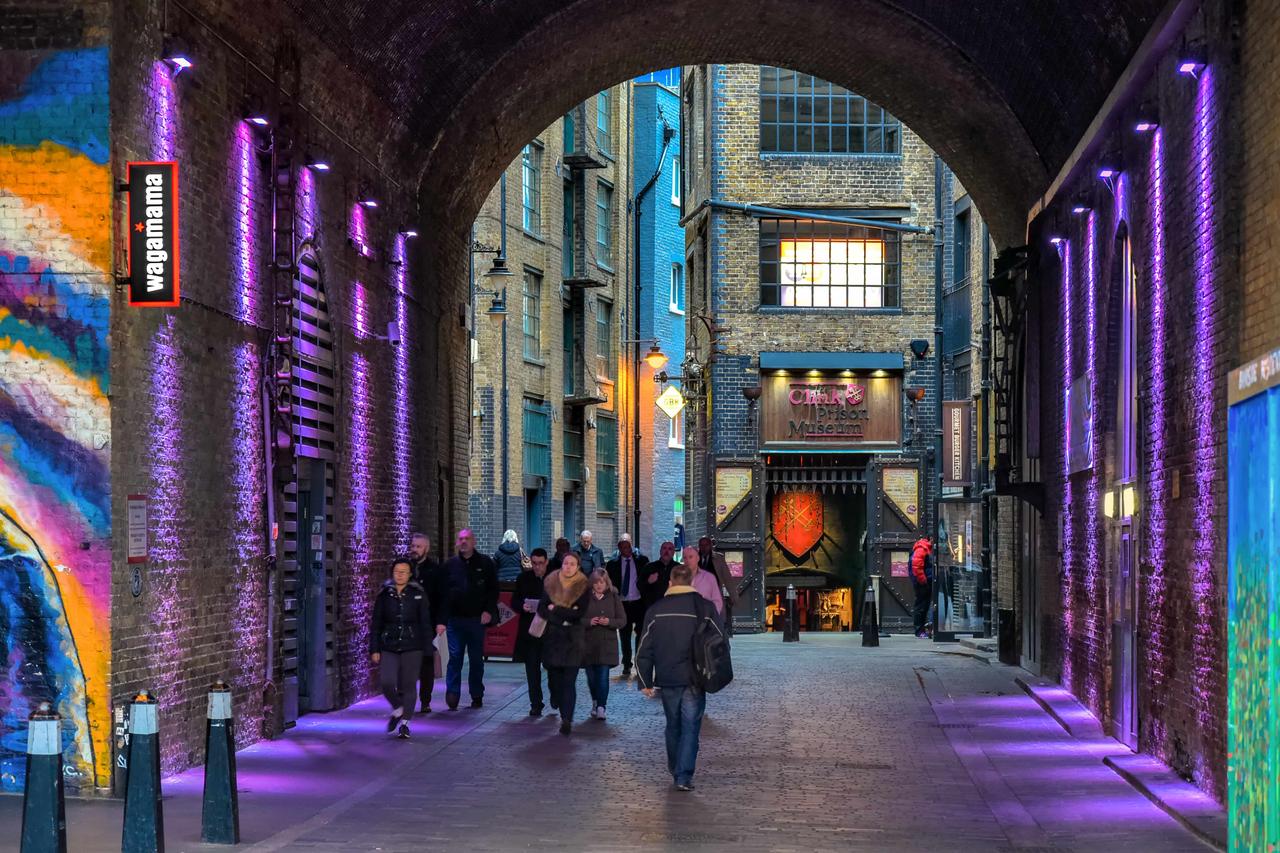
The Clink
Nestled in the historic district of Southwark, The Clink Prison Museum stands as a chilling reminder of medieval justice and punishment. The museum is located near the site of the original Clink Prison, which operated for over six centuries, from the 12th to the 18th century, and played a crucial role in England’s legal history. The Clink was established by the Bishop of Winchester, who wielded considerable power, including the ability to imprison those who defied the church or failed to pay taxes.
This notorious prison became synonymous with harsh conditions and corruption, where guards exploited inmates to supplement their meager wages. Wealthy prisoners could bribe the guards for better accommodations, such as beds, blankets, and food, while those without money languished in squalor. The prison’s fortunes changed in 1649 when Winchester Palace was sold to developers, and the area was transformed into residential and commercial properties. Despite this, The Clink continued to operate until it was destroyed during the Gordon Riots of 1780, a period of anti-Catholic unrest that swept through London.
Today, The Clink Prison Museum offers visitors an immersive experience into the grim realities of medieval incarceration. Through interactive exhibits and historical artifacts, the museum brings to life the brutal conditions and punishments that were commonplace during its operation. Visitors can learn about the social dynamics of the era, which saw imprisonment often influenced by wealth and status. The legacy of The Clink lives on in the English language, with the term "in the clink" still used to describe being in jail. As one of London’s most intriguing historical sites, the museum provides a unique perspective on the evolution of justice and the enduring impact of social inequalities throughout history.
Any feedback for this story?