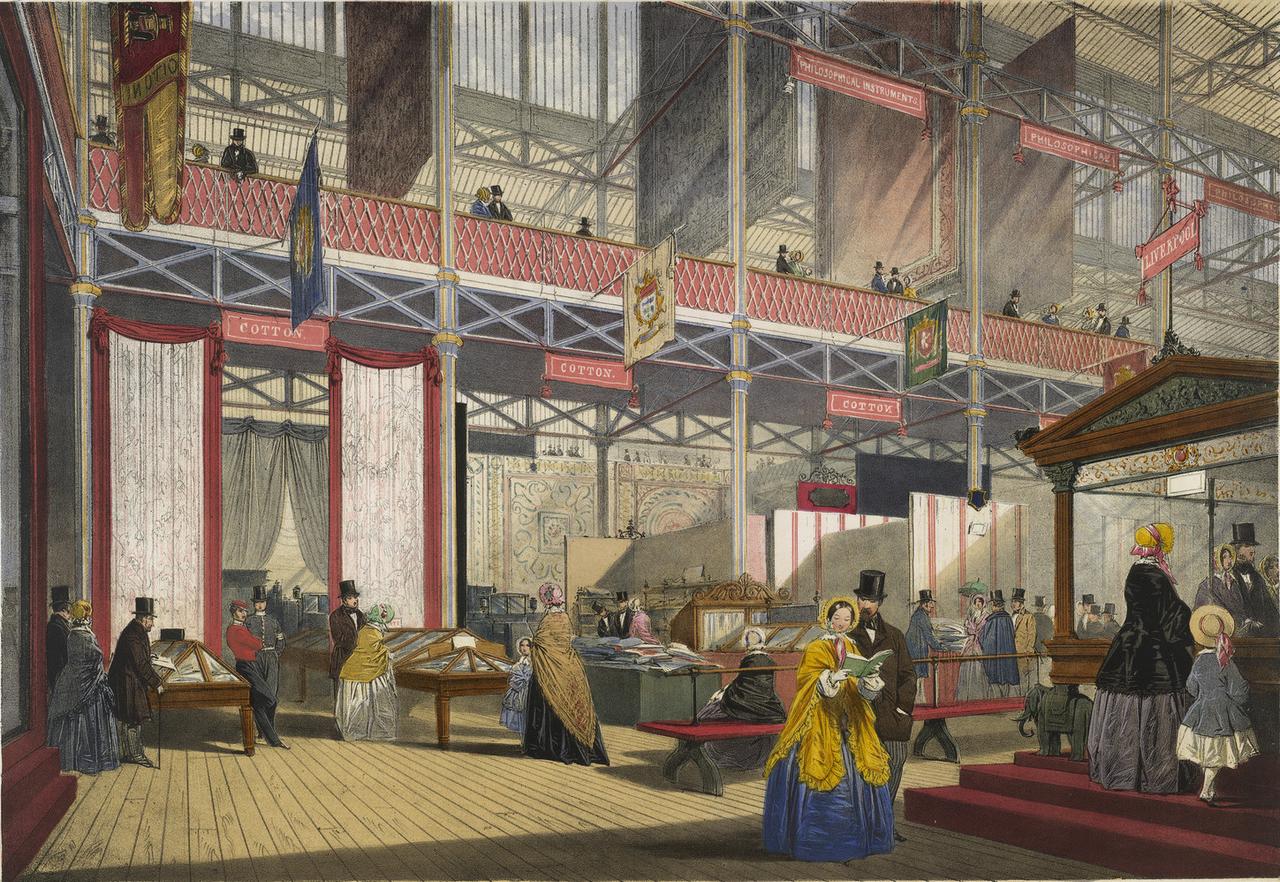
The Great Exhibition
When the Crystal Palace opened its doors to the Great Exhibition, it marked a turning point in showcasing the wonders of the Industrial Revolution. This remarkable event was organized by Prince Albert and Henry Cole, who aimed to celebrate the technological advancements and cultural achievements from around the globe. The Great Exhibition was not only a display of British innovation but also an invitation to other nations to present their finest creations. The Crystal Palace, designed by architect Joseph Paxton, was a marvel in its own right.
Constructed of iron and glass, it spanned 563 meters in length and 138 meters in width, and it was built in an astonishing nine months. This stunning structure in Hyde Park symbolized the ambition and progress of the Victorian era, providing a fitting venue for the exhibition’s displays. Inside, visitors encountered over 100,000 exhibits from more than 15,000 contributors, representing countries from across the British Empire and beyond. The exhibits ranged from cutting-edge technology like steam engines, telegraphs, and hydraulic presses to art, crafts, and raw materials, offering a comprehensive view of the world’s industrial and cultural accomplishments.
Over its six-month run, the Great Exhibition drew more than six million visitors, including luminaries and dignitaries from around the world. The event was a celebration of human ingenuity, fostering international collaboration and cultural exchange. It demonstrated the potential for innovation to bridge distances and connect economies, highlighting the shared progress of humanity.
The exhibition's financial success led to the establishment of several museums in South Kensington, including the Victoria and Albert Museum and the Science Museum, which continue to inspire and educate future generations. The Great Exhibition of 1851 remains a defining moment in history, setting the standard for future world fairs and exhibitions. It celebrated the spirit of innovation and progress, leaving a legacy that continues to influence how we view and appreciate technological and cultural achievements today.
Any feedback for this story?