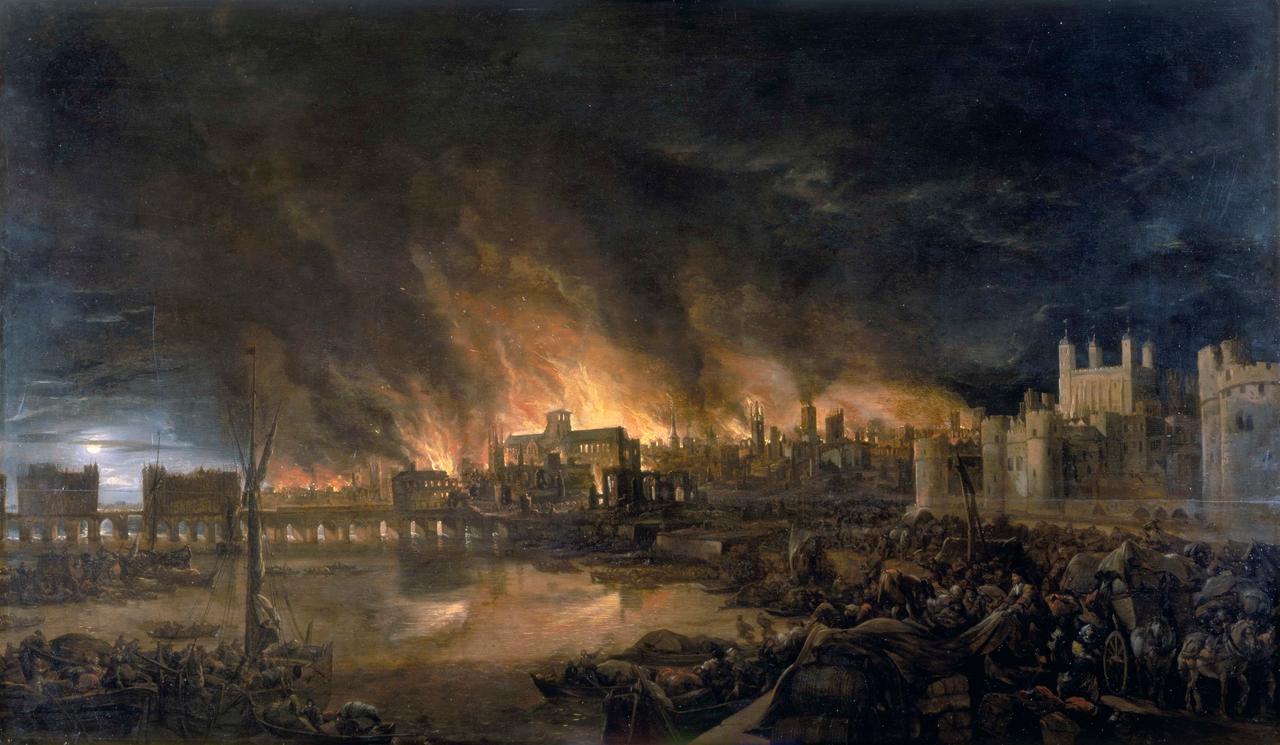
The Great Fire of London
On the night of September 2, 1666, a baker on Pudding Lane left his oven smoldering too long. By morning, London was in flames. The city at that time was a tightly packed labyrinth of narrow lanes and timber-framed houses leaning over each other, dry as kindling after a long hot summer. The fire didn't spread so much as it leapt, swallowing street after street with terrifying speed.
Within 24 hours, 300 homes were gone. Within five days, four-fifths of the entire City of London had been reduced to ash. Nearly 90 churches burned, including the great St. Paul's Cathedral. Hundreds of thousands of Londoners fled carrying whatever they could grab, sometimes relocating their belongings multiple times as the fire shifted direction. King Charles II, who ruled England at the time, reportedly joined bucket brigades in person to help fight the blaze.
When the smoke finally cleared, architect Christopher Wren was given the task of rebuilding the city from scratch. His redesigned St. Paul's Cathedral still dominates the skyline today. The disaster also led to a ban on wooden construction in the city, reshaping London into something far more durable.
The official death toll was somewhere between six and fifteen people, which, given the scale of destruction, is the most London thing imaginable: catastrophic chaos, somehow survived with a stiff upper lip.
Any feedback for this story?