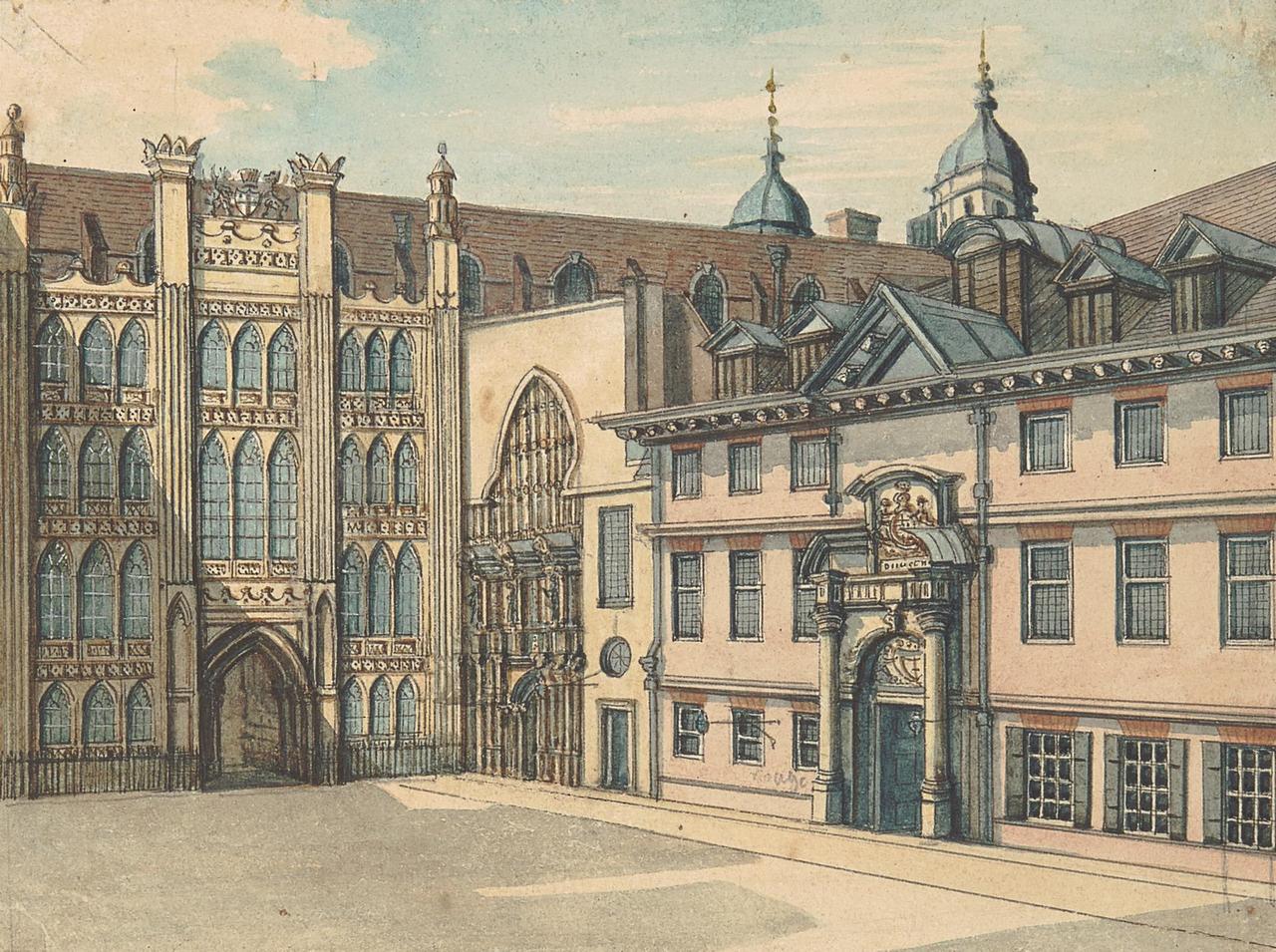
The Guildhall
The ground beneath your feet here at the Guildhall has been at the center of London's story for far longer than most people realize. Before this building existed, before medieval merchants walked these streets, Roman crowds gathered on this very spot to watch gladiators fight in the largest amphitheater ever built in Roman Britain.
That amphitheater was only discovered in 1988, during excavations ahead of the construction of the Guildhall Art Gallery next door. You can see its remains in the gallery's basement, and if you glance down at the pavement outside, a dark curved line in the stone traces the outline of the original arena.
The Guildhall itself first appears in written records in 1128, though it almost certainly existed before that. The Great Hall, the grand medieval space that still dominates the building, was completed in 1440 and remains in use today for ceremonies and civic events. Despite the name, the Guildhall has no direct connection to London's trade guilds. The word actually comes from the Anglo-Saxon "gild," meaning payment, because this was where Londoners came to settle their taxes.
So this building has essentially been collecting money from Londoners for nearly a thousand years. Some things never change.
Any feedback for this story?