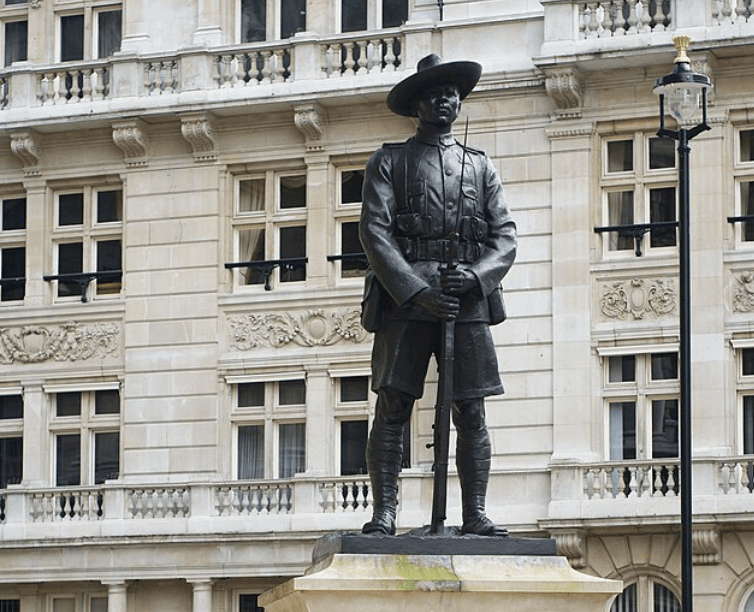
The Gurkha Memorial
The bronze figures standing before you represent one of the most remarkable military partnerships in history. Since the early 1800s, Gurkha soldiers from Nepal have served in the British Army with a reputation for fearlessness and discipline that few fighting forces in the world can match. Traditionally led by British officers, these regiments fought across two World Wars, in the Falklands, and in countless other conflicts around the globe.
Yet despite centuries of service, Britain had never formally honored them with a dedicated memorial on home soil. That changed on December 3, 1997, when Queen Elizabeth II unveiled this monument on Horse Guards Avenue. The sculptor was Philip Jackson, a London-based artist also responsible for the Bobby Moore statue outside Wembley Stadium and the Queen Mother Memorial on The Mall.
The timing carried extra meaning. Earlier that year, Britain had handed Hong Kong back to China, and the Gurkha Brigade relocated its headquarters from Hong Kong to London. A new chapter in a very old story.
The Gurkhas are known for carrying a curved blade called a kukri, and there is an old saying in the British Army: if you hear a Gurkha draw his kukri, he had better use it. Apparently, he always does.
Any feedback for this story?