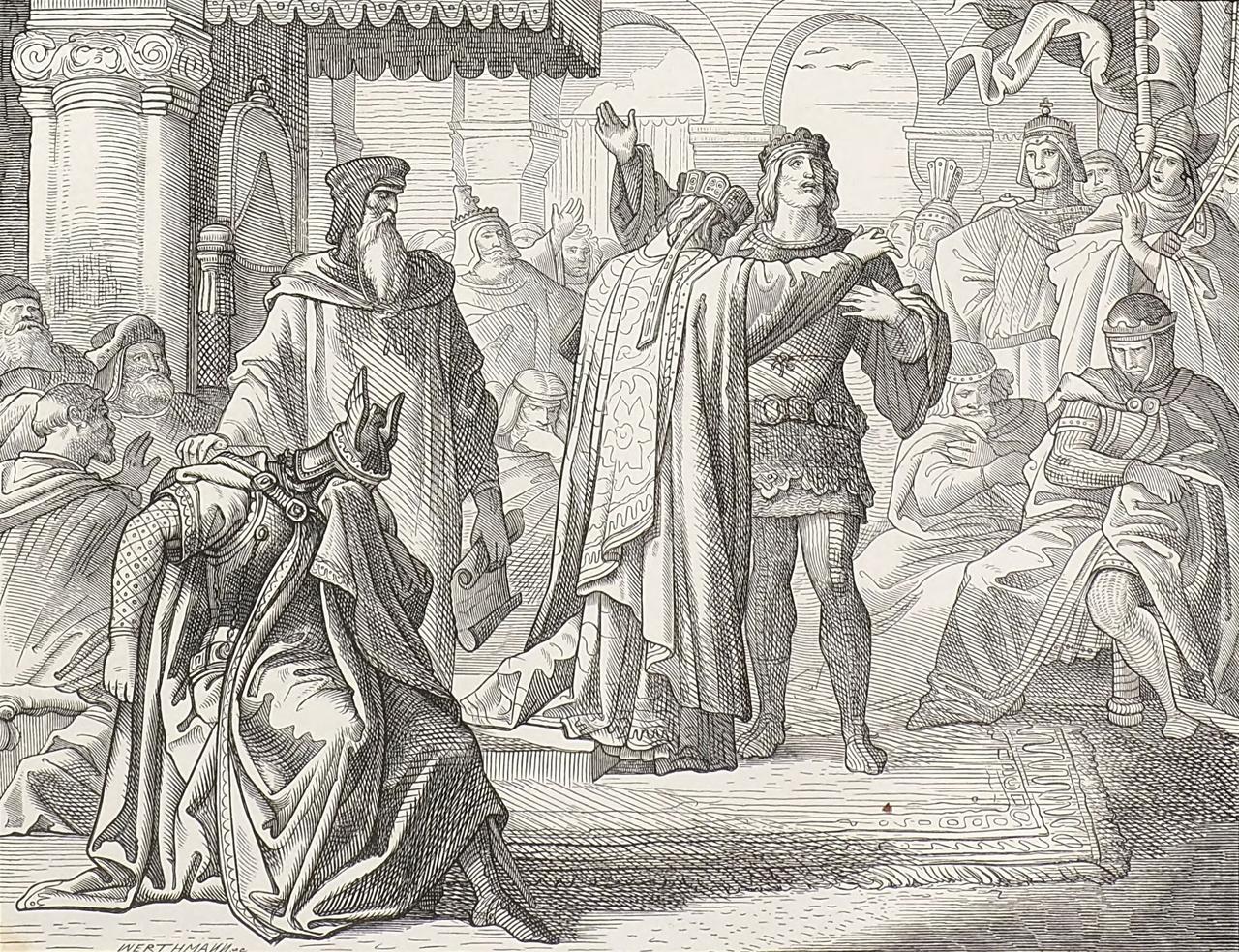
The History of the Royal Family / Origins of the Monarchy
The British monarchy's origins are a tapestry of legend, conquest, and transformation, tracing back over a millennium. The early roots of the monarchy are often linked to the legendary King Arthur, though historical records become clearer with the establishment of the Anglo-Saxon kingdoms in the early Middle Ages. The true foundation of the British monarchy began with the Norman Conquest of 1066, when William the Conqueror defeated King Harold II at the Battle of Hastings.
William established a centralized feudal system, solidifying his control over England and laying the groundwork for the future monarchy. The Plantagenet dynasty, beginning with Henry II in 1154, expanded the monarchy's influence, and his son Richard the Lionheart's exploits during the Crusades further cemented the crown's prestige. The turbulent Wars of the Roses in the 15th century saw the houses of Lancaster and York vying for the throne, culminating in the rise of the Tudor dynasty with Henry VII in 1485. Henry VIII, one of the most transformative monarchs, severed ties with the Roman Catholic Church, establishing the Church of England and asserting royal supremacy. His daughter, Elizabeth I, navigated religious tensions and external threats, ushering in the Elizabethan era, known for its cultural and economic prosperity.
The Stuart period brought further upheaval, including the English Civil War and the temporary abolition of the monarchy under Oliver Cromwell. The restoration of Charles II in 1660 and the subsequent Glorious Revolution of 1688, which established parliamentary sovereignty, significantly reshaped the monarchy's role. The Hanoverian dynasty, beginning in 1714, saw Britain become a global power, with Queen Victoria’s long reign marking the zenith of British imperialism. The modern era of the monarchy, characterized by the House of Windsor, has seen the crown adapt to democratic principles while retaining its symbolic significance, ensuring its survival into the 21st century.
Any feedback for this story?