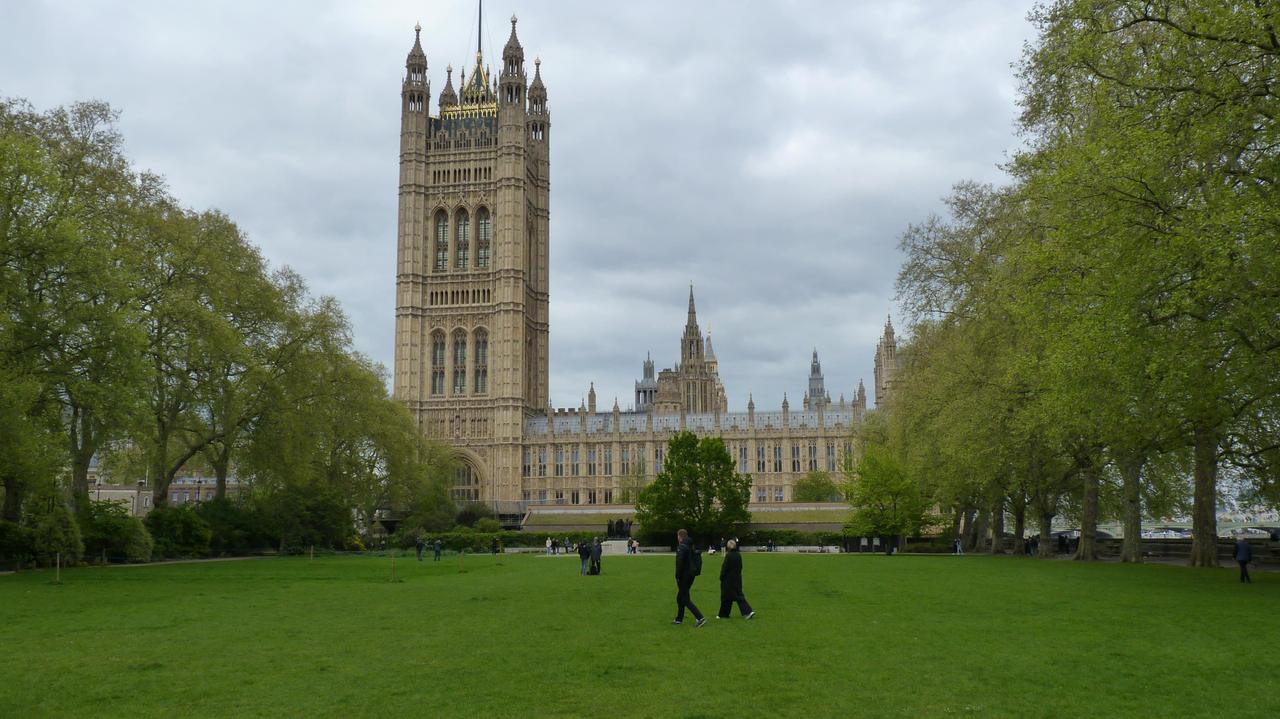
Victoria Tower Gardens
We are standing where freedom fighters are remembered in bronze and stone. This narrow riverside park, stretching along the Thames between the Houses of Parliament and Lambeth Bridge, is Britain's smallest Royal Park, yet it holds the nation's most powerful monuments to human rights. Before 1867, whale oil merchants and industrial wharves dominated this waterfront.
The government purchased the land to protect Parliament from fire, but newspaper magnate William Henry Smith saw a greater purpose. He donated 1,000 pounds to create public gardens, which opened in 1881 as part of engineer Joseph Bazalgette's ambitious Thames Embankment project that also brought the city a modern sewer system. Walk through this 2 hectare space and you encounter three remarkable monuments. The ornate Victorian Gothic Buxton Memorial, moved here in 1957, celebrates the 1833 abolition of slavery in British territories.
Auguste Rodin's bronze sculpture The Burghers of Calais, installed in 1914, depicts six men who sacrificed themselves to save their city during medieval times. The 1930 statue of Emmeline Pankhurst honors the suffragette leader who fought tirelessly for women's voting rights. The gardens expanded southward in 1914. In 1956, workers removed the central shrubbery to open views of Parliament's iconic tower.
Any feedback for this story?