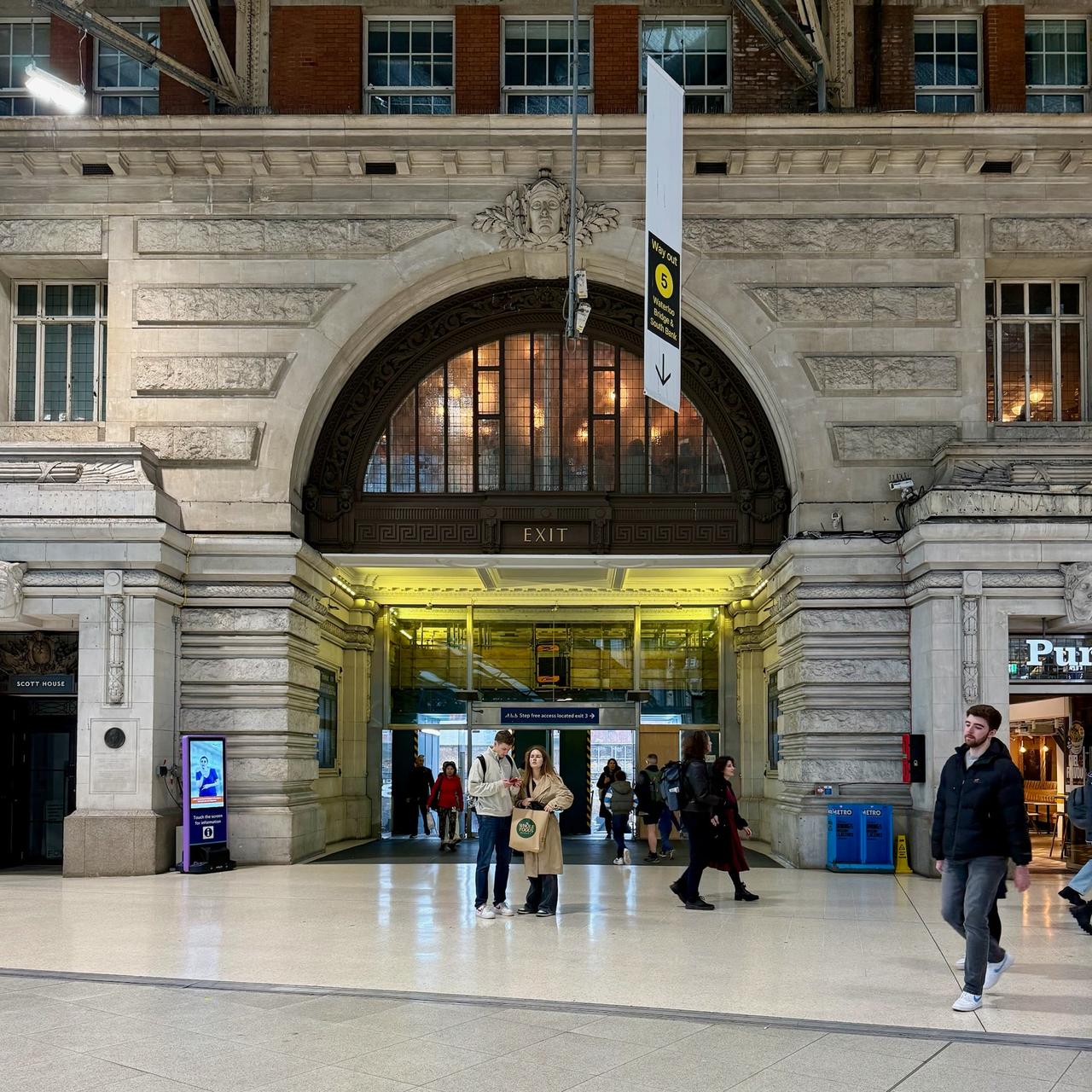
Waterloo Station
This place was home to Britain's most unusual railway line: a dedicated train service that transported thousands of dead bodies for 87 years. Standing on the south bank of the Thames, near Waterloo Bridge and Westminster Bridge, this massive railway terminus opened on July 11, 1848. Architect William Tite designed what was originally called Waterloo Bridge Station, named after the nearby bridge commemorating the 1815 Battle of Waterloo.
The current building, completed in 1922, features the striking Victory Arch entrance, a war memorial honoring railway employees who died in World War I. The strangest chapter began in 1854 when the city's graveyards became dangerously overcrowded. The London Necropolis Railway operated from a separate station right next to this one, running funeral trains to Brookwood Cemetery in Surrey. Up to 2,000 bodies were transported annually, stored in railway arches while awaiting departure. Mourners traveled in carriages segregated by social class and religion, accompanying their loved ones on this final journey.
The service ran almost daily until April 16, 1941, when German bombs destroyed the funeral station. With 24 platforms, this is Britain's largest station by floor space. From 1994 to 2007, it served as the Eurostar terminus, though French passengers protested arriving at a station named after their military defeat.
Any feedback for this story?