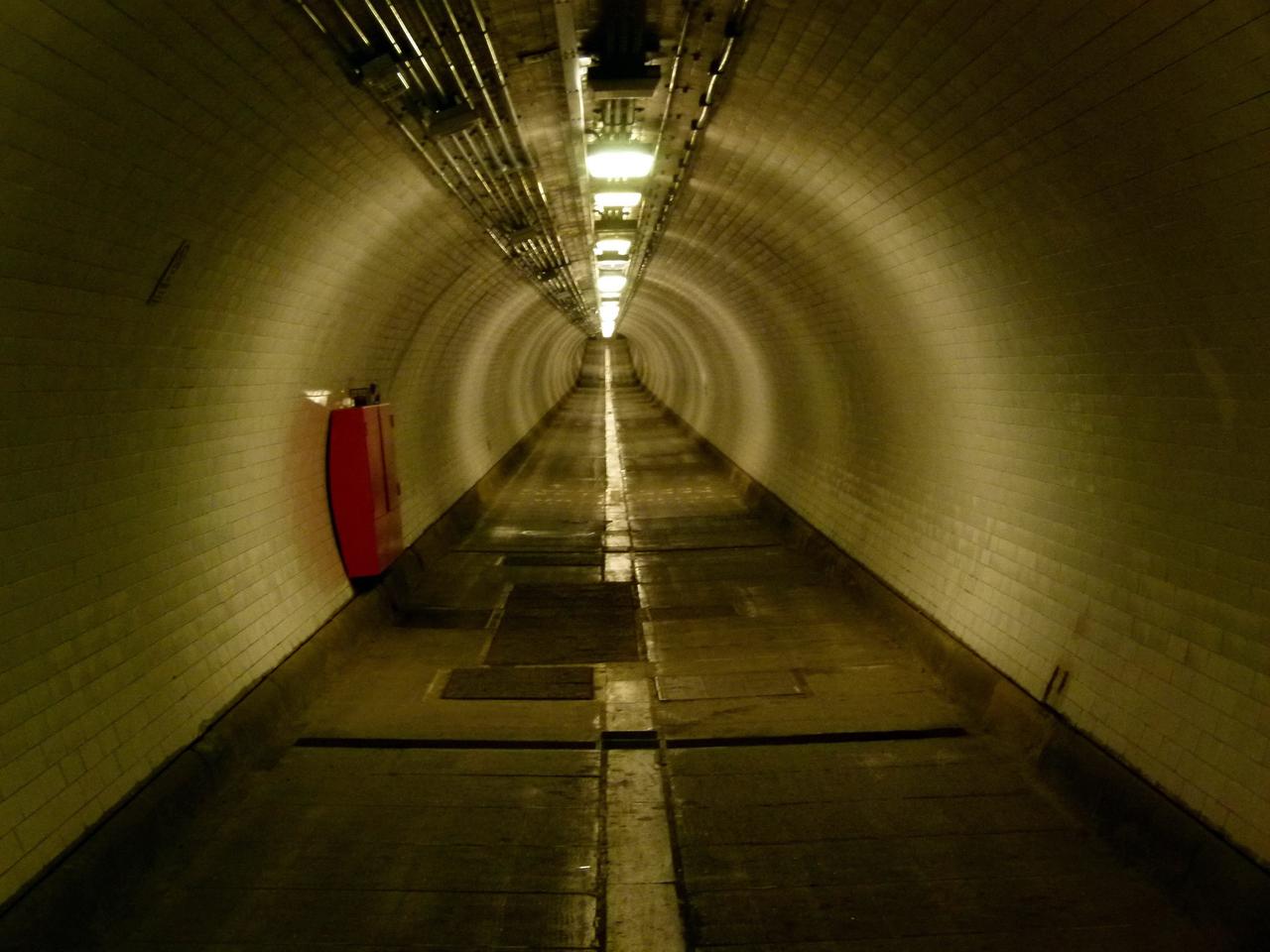
Woolwich Foot Tunnel
Here lies a hidden passageway beneath the Thames, where over a million footsteps pass through darkness each year. The Woolwich Foot Tunnel is a 504 metre underground corridor connecting both riverbanks, built when crossing the water meant the difference between earning a living and going hungry. This pedestrian tunnel opened on 26 October 1912, carved entirely by hand through river clay. Before it existed, dockworkers living south of the Thames faced a daily struggle.
Thick fog regularly stranded ferry services, leaving thousands unable to reach the Royal Docks and shipyards across the water. Missing work meant missing wages. Will Crooks understood this hardship firsthand. A former dockworker who became a politician, he fought through the London County Council to build a free, reliable crossing. His vision became reality under engineer Sir Maurice Fitzmaurice, whose portfolio included the Rotherhithe Tunnel and Egypt's Aswan Dam.
Construction teams worked round the clock in 8 hour shifts, advancing roughly 10 feet through the riverbed every 24 hours. The project cost 84,000 pounds and took two years to complete. The southern entrance stands near the riverside, tucked behind the Waterfront Leisure Centre. This distinctive red brick rotunda is the oldest surviving building along this stretch of waterfront. Both tunnel entrances are now protected as Grade II listed structures.
Any feedback for this story?