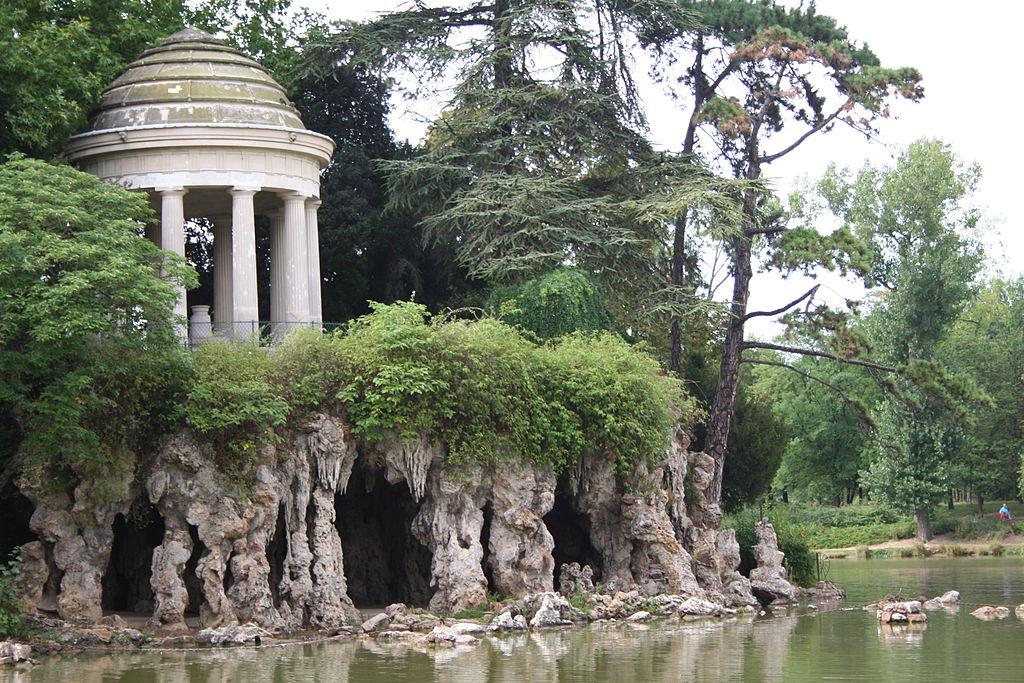
Bois de Vincennes
We are at the eastern edge of Paris, in the vast Bois de Vincennes—with nearly 1,000 hectares, the city’s largest public park. Originally part of an ancient forest around Lutetia, it served for centuries as royal hunting grounds. Around 1150, King Louis VII built a hunting lodge here, followed by walls and residences for monarchs such as Philip Augustus and Charles V.
In the 17th century, avenues and pathways were laid out, and in 1731 the iconic pyramid at the central crossroads was erected. During the French Revolution, the land lost its aristocratic status. It became state property and was used as a military training ground with barracks and firing ranges.
Under Emperor Napoleon III, between 1855 and 1866, it was transformed into a public park with artificial lakes like Lac Daumesnil and Lac des Minimes, landscaped gardens, promenades, and romantic architecture. In the 20th century, it hosted a variety of events: Olympic cycling competitions in 1900 and 1924, major colonial exhibitions in 1907 and 1931, and the opening of the Vincennes Zoo in 1934.
The Grande Pagode, housed in a pavilion left from one of these exhibitions, still stands today as a distinctive monument. Now, Bois de Vincennes is a green oasis with four lakes, an arboretum, a botanical garden, a racecourse, and countless walking and cycling paths
Any feedback for this story?