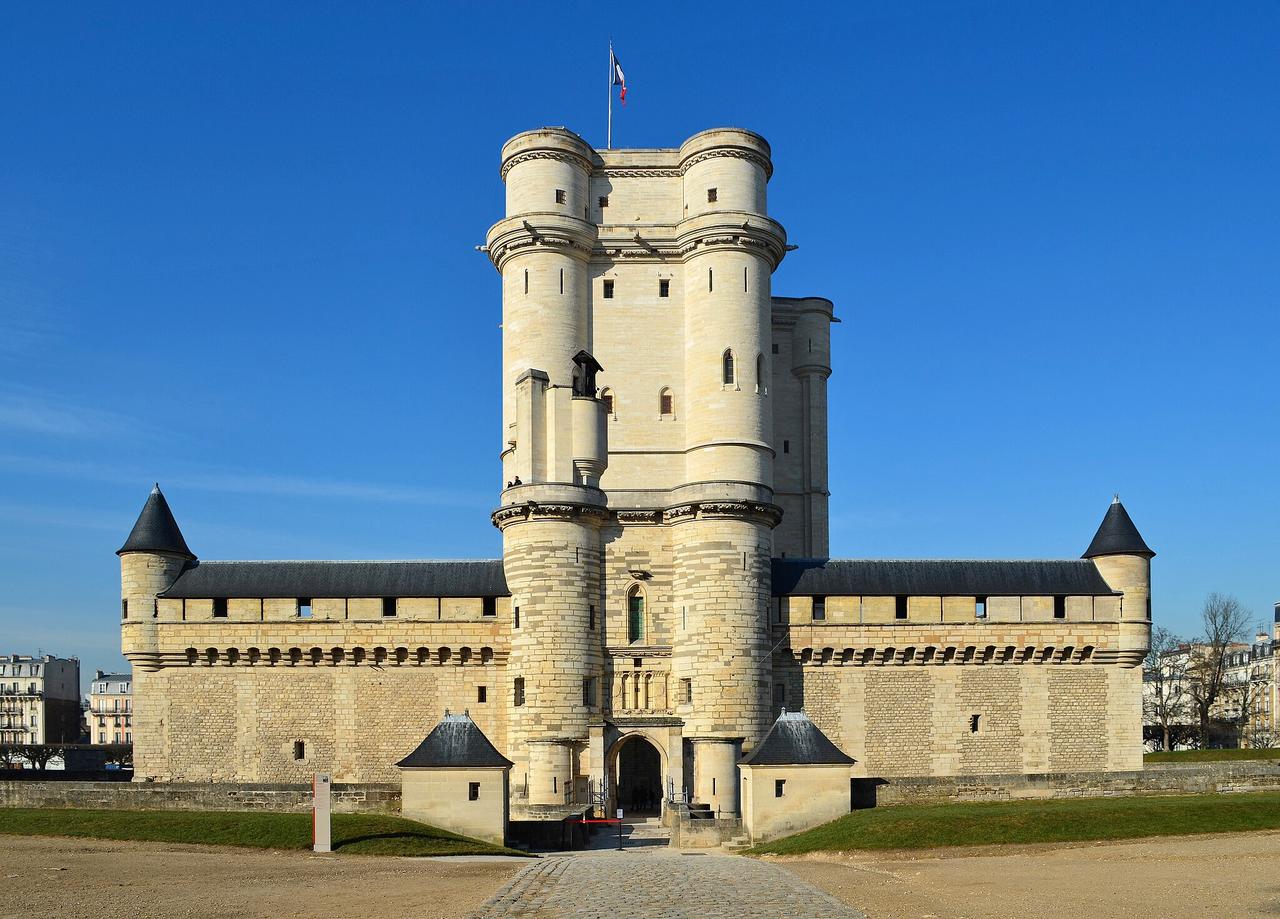
Chateaux de Vincennes
We now stand before the formidable Château de Vincennes, on the eastern edge of Paris. Beginning as a royal hunting lodge built by Louis VII around 1150, it expanded into a powerful fortress under Charles V in the fourteenth century, complete with its famous keep – the tallest medieval tower in Europe, completed around 1369, encircled by walls, moat, and residence wings.
During the late Middle Ages, Vincennes served as a royal residence, the setting for marriages and deaths of monarchs. In the seventeenth century, architect Louis Le Vau added classical pavilions for the King and Queen. However, after 1682, the court moved permanently to Versailles, and the château lost its central role as royal domicile. From the sixteenth century onward, the château also functioned as a prison for high-profile detainees like the Marquis de Sade, Diderot, and the Duke of Enghien, known for its isolated torture chambers and harsh confinement.
In the nineteenth century, it became a military complex and storage facility, and during World War II it was used by German forces as a prison and staff headquarters. One of its most dramatic chapters was during the Paris Commune of May 1871, when the château became the last stronghold of the Communards. After their defeat, several officers were executed in the moat—marking the end of the uprising. Today, the château is managed by the French Monuments Authority and houses military archives and a museum.
Any feedback for this story?