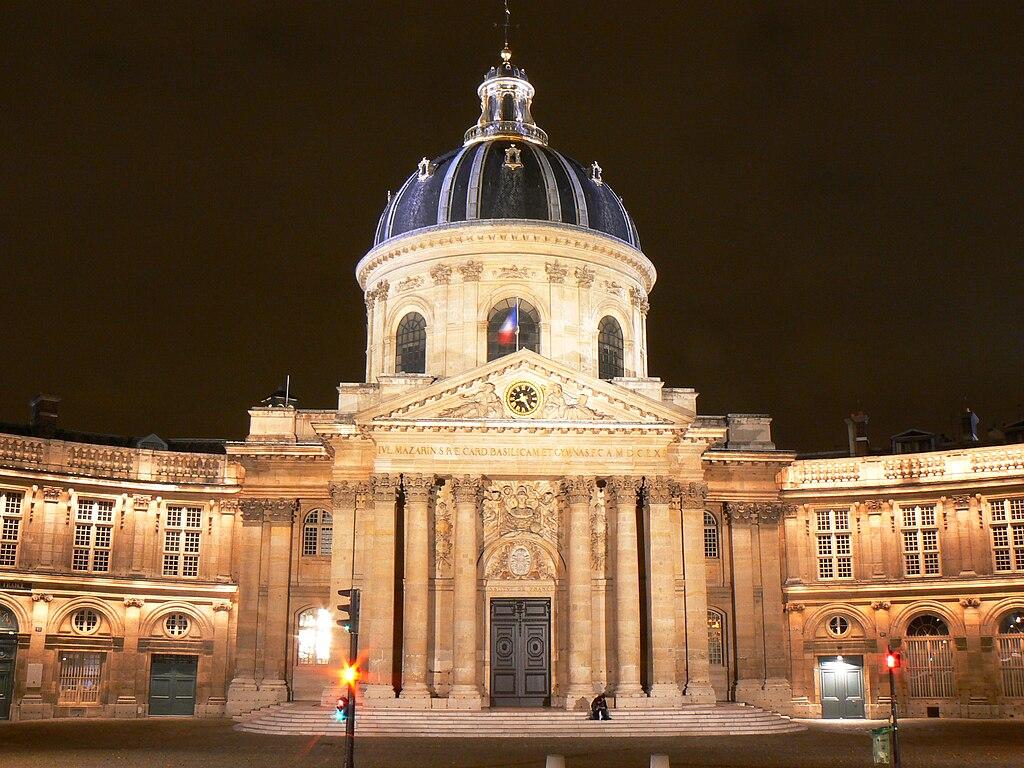
College des Quatre Nations
The Collège des Quatre‑Nations stands on the banks of the Seine, commissioned by Cardinal Mazarin and constructed between 1662 and 1674. He envisioned an educational institution for sixty young men from four provinces – Artois, Hainaut, Alsace, and Roussillon – offering a prestigious curriculum.
Architect Louis Le Vau initiated the project, later completed by François d’Orbay. Built in the Italian Baroque style, atypical at the time in Paris, the chapel showcases a dome roughly forty‑four meters high, adorned with sculptures of the twelve apostles and Biblical inscriptions. Inside lies Mazarin’s tomb surrounded by statues representing virtues such as Prudence, Peace, and Fidelity.
In 1795 architect Antoine Vaudoyer repurposed the building for the Institut de France, uniting five learned academies. He adapted the chapel to host public sessions. Today the building remains in use for the annual opening ceremony of the academies each October. Visitors witness a fusion of Baroque architecture, intellectual history, and societal ambition: a monument linking education, power, and art beside the river.
Any feedback for this story?