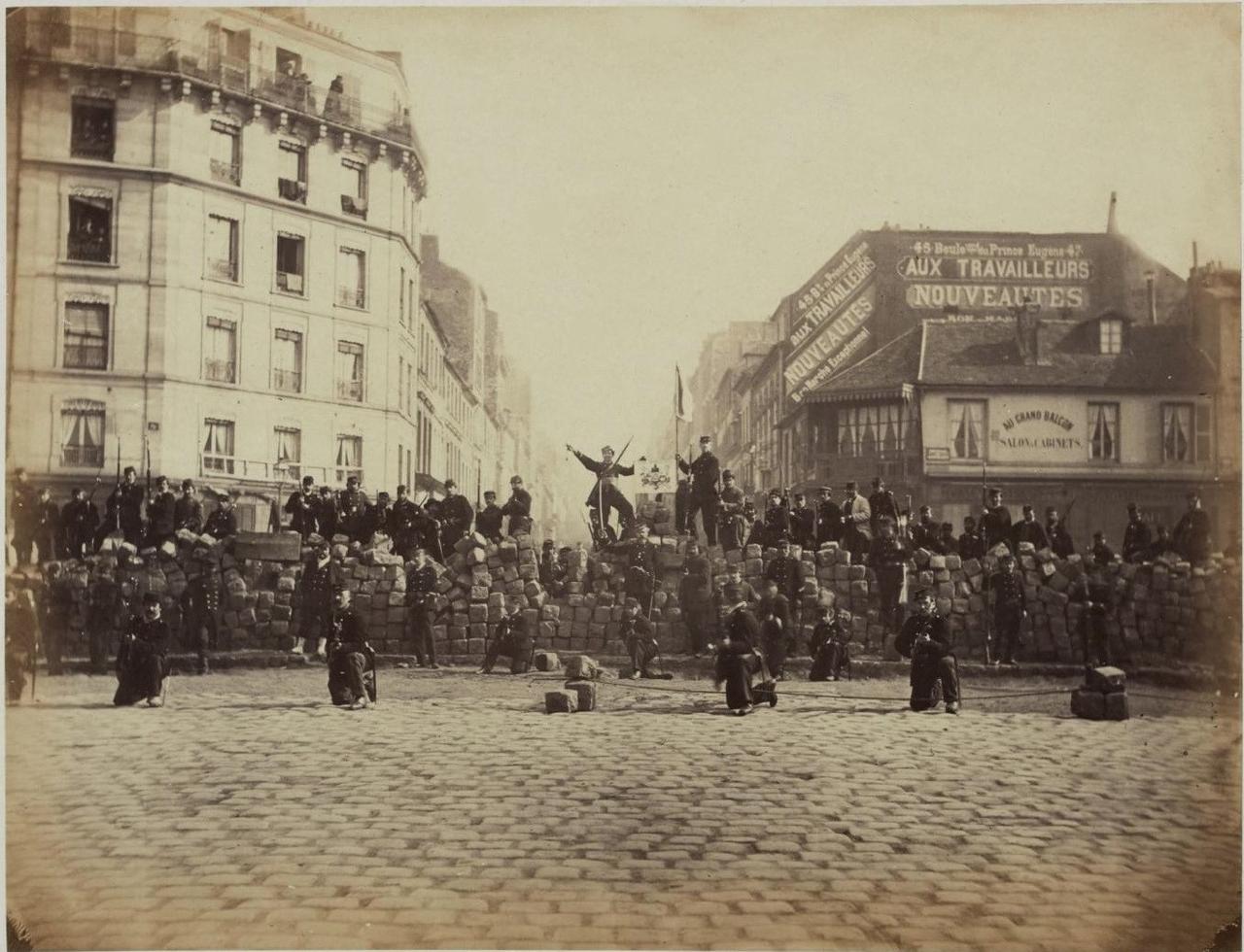
De Parijse Commune
We stand in Ménilmontant, a working‑class neighborhood on the hill in the 20th arrondissement – once the beating heart of the Paris Commune. After France’s defeat in the Franco‑Prussian War in 1870, anger spread among workers and radicalized members of the National Guard. When on 18 March 1871 an attempt was made to remove Montmartre’s cannons, locals and the Guard resisted: two generals were killed and the Commune seized power in the city.
Ménilmontant played a central role: the Commune relocated its command to the area and organized defense around Belleville and Ménilmontant against Versailles forces. Intense street fighting raged up to the “semaine sanglante” in late May, especially near Père Lachaise. The neighborhood’s barricades and old mine shafts delivered formidable resistance. The Commune purported to govern Paris from 18 March until 28 May 1871, founded by a coalition of Blanquists, Jacobins, Proudhonists, and feminist groups.
Their program included rent remission, free public education, seizure of empty housing and factories, the abolition of child labor, and separation of church and state. Women like Louise Michel and Elisabeth Dmitrieff were prominent participants. The repression was brutal: during bloody week from 21 to 28 May thousands died and tens of thousands were arrested; many were executed or exiled. Ménilmontant remains in memory as a symbol of courage and idealism.
Any feedback for this story?