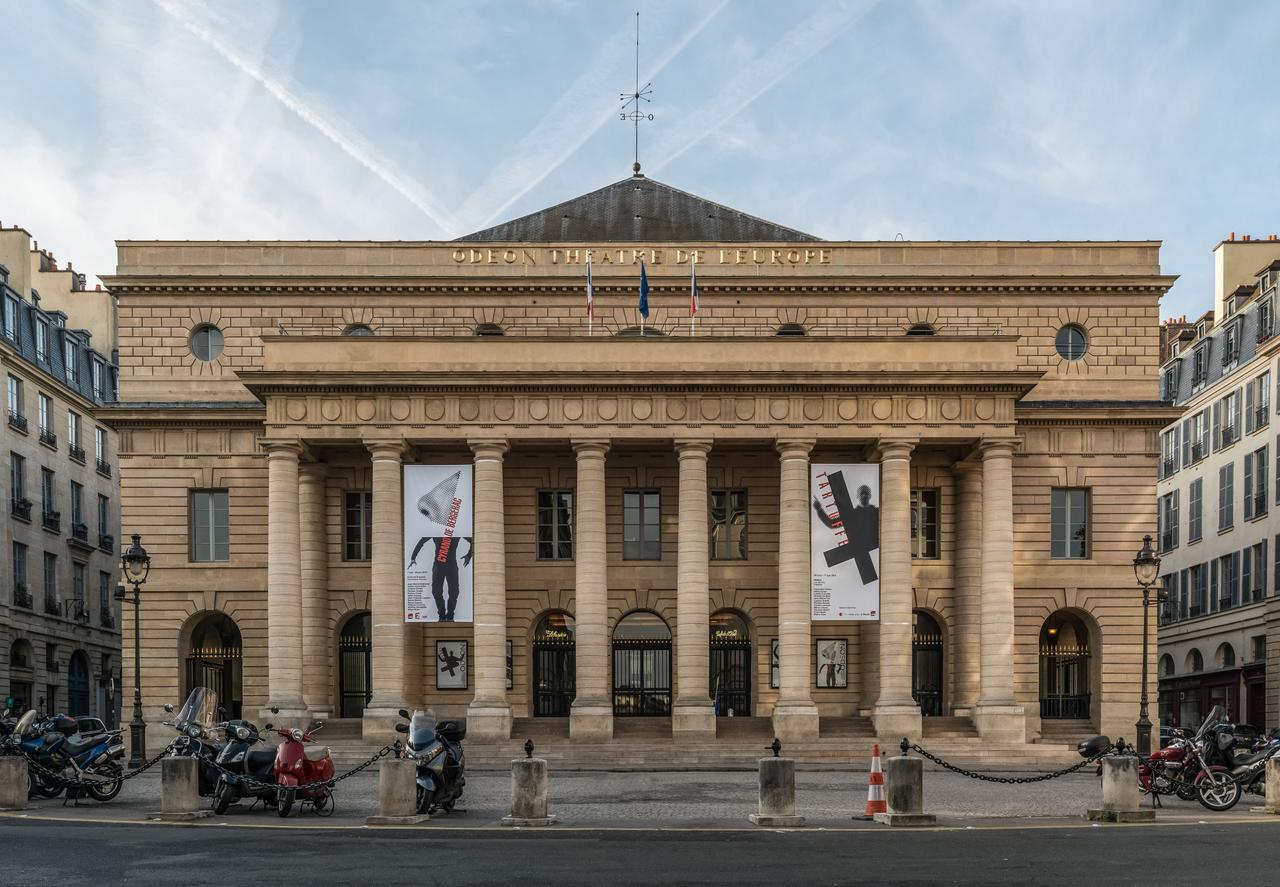
Odéon-Théâtre de l'Europe
The theater in front of you opened in 1782 with the world premiere of Beaumarchais' Le Mariage de Figaro, an evening that sent shockwaves through Paris. Louis XVI had banned the play for three years because it was too subversive, and when he finally lifted the ban, the house packed out immediately. That first night already set the tone for everything that would follow.
The building has carried more names than almost any other in Paris: Théâtre-Français, Théâtre de la Nation, Théâtre Égalité, Théâtre du Peuple, and several others, before finally settling on Odéon-Théâtre de l'Europe. Each rename tracks a political upheaval, which tells you something about how much this place has always sat at the heart of French public life.
The neoclassical facade you see today has been here since the beginning, though the interior was extensively renovated between 2002 and 2006. It now holds 776 seats and focuses on European collaboration in the performing arts, welcoming international productions from across the continent.
So in a way, the theater that once scandalized a king has grown into a meeting place for European culture.
Any feedback for this story?