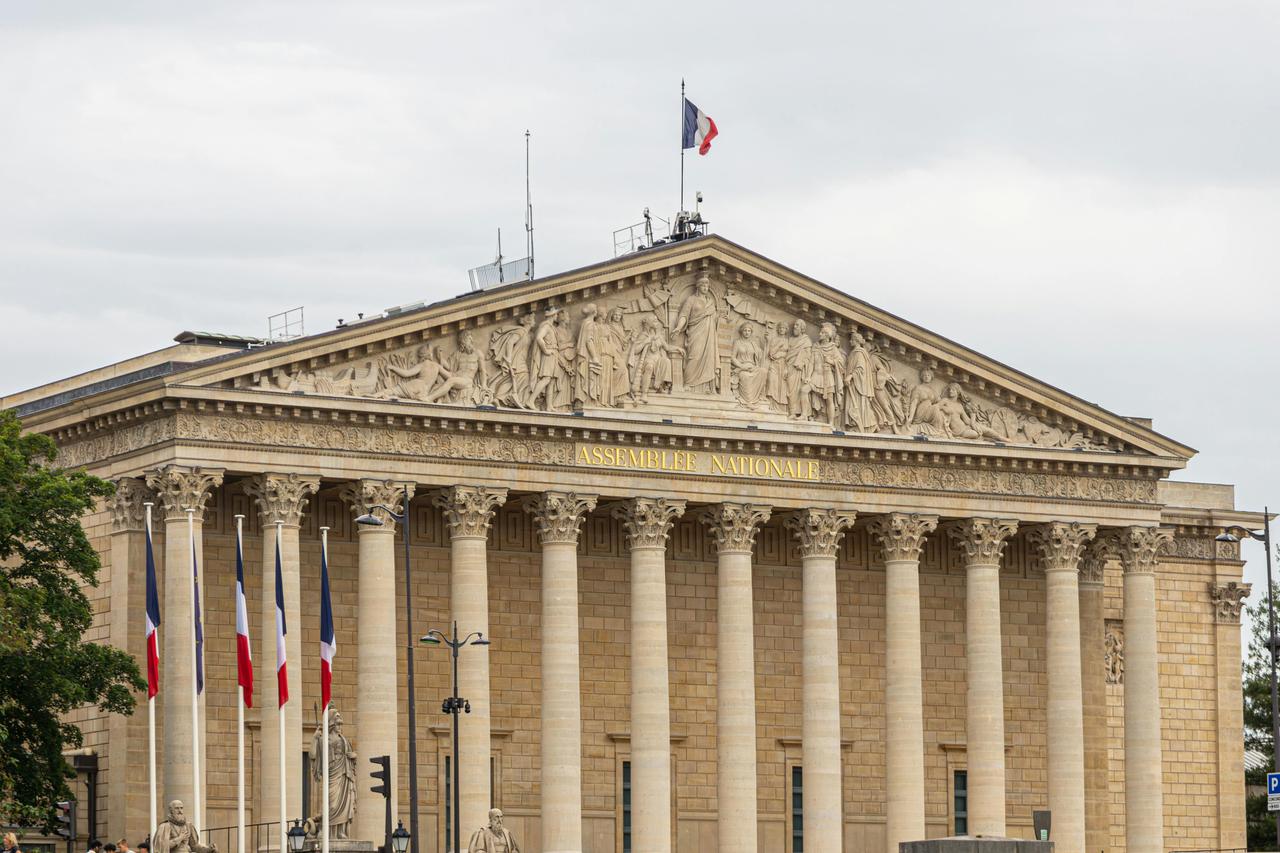
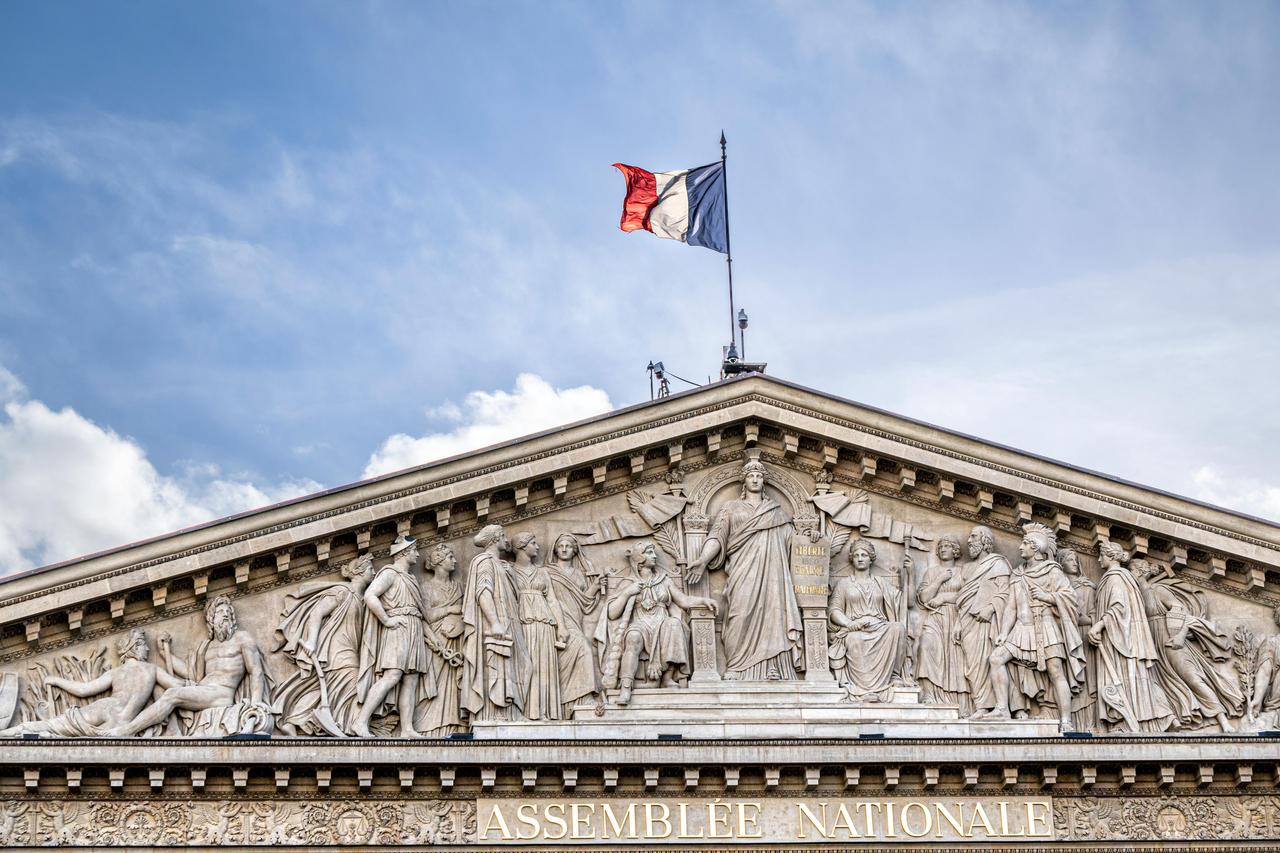
Palais Bourbon: Home of the Assemblée Nationale
What you're looking at right now began as something entirely personal. In 1722, Louise Françoise de Bourbon commissioned this palace for herself on what was then a marshy patch at the edge of Paris. She was the illegitimate daughter of Louis XIV and his famous mistress Madame de Montespan, and she wanted a home worthy of her royal blood, even if the paperwork said otherwise.
The Revolution changed everything. When the aristocracy fled France, their libraries were confiscated, and those books ended up here. Today the Palais Bourbon holds a collection of 700,000 works, including handwritten manuscripts by Rousseau, the trial minutes of Joan of Arc, and an Aztec manuscript. Not bad for a building that started as a private residence.
Then came 1940. After France's capitulation, German forces seized the building. A portrait of Hitler and a Nazi flag hung in the very hemicycle where French deputies debate today. The red seats of the Republic temporarily disappeared under the symbols of the Third Reich.
And speaking of power and protocol: the French president, one of the most powerful figures in Europe, is constitutionally forbidden from entering this building without a formal invitation. Democracy, it turns out, has a very firm doorman.
Any feedback for this story?