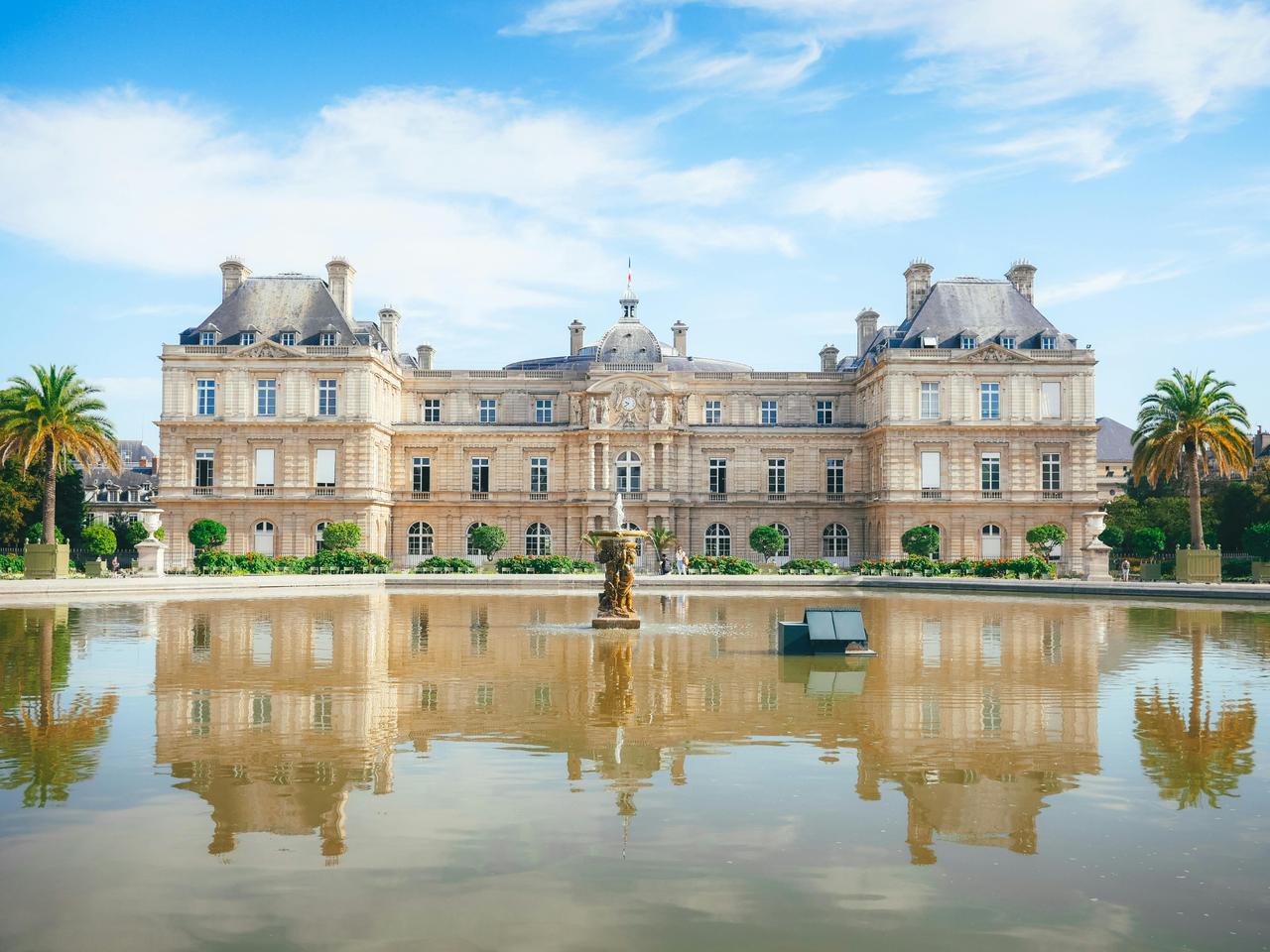
Palais du luxemburg
Located at the northern edge of the Jardin du Luxembourg, the Palais du Luxembourg was built in the 1620s for Marie de Médici, widow of Henry IV, who wanted a palace reminiscent of the Pitti Palace in Florence. Since 1958, it has been the seat of the French Senate. During the French Revolution, the palace was used as an overflow prison, holding famous figures such as Danton and Desmoulins before their execution in April 1794.
In December 1830, a protest at the palace was violently suppressed after demonstrators objected to the lenient treatment of Charles X’s ministers. After the February 1848 revolution, the Workers’ Commission was established in the palace. Although workers called for a Minister of Labour, Louis Blanc became head of the commission. Other members included Albert and followers of Fourier, such as Victor Considerant and François Vidal.
Pierre Marie de Saint-Georges, in charge of the National Workshops, also worked at the palace. On June 22, a confrontation between Pierre Marie and workers’ representatives, led by Louis Pujol, sparked the June 1848 uprising. In May 1871, during the crushing of the Paris Commune, hundreds of Communards were sentenced to death by a military tribunal in the palace and executed in the adjacent gardens.
Thanks to Victor Hugo, the Communards received amnesty in July 1880 via the Senate. During the German occupation in World War II, the palace became Luftwaffe headquarters, was visited by Hermann Goering, and served as both an administrative center for POWs and a lavish apartment for a Field Marshal. In August 1944, during the Liberation of Paris, the palace was one of the last German strongholds and surrendered to resistance fighters and Allied forces on August 25, 1944.
Any feedback for this story?