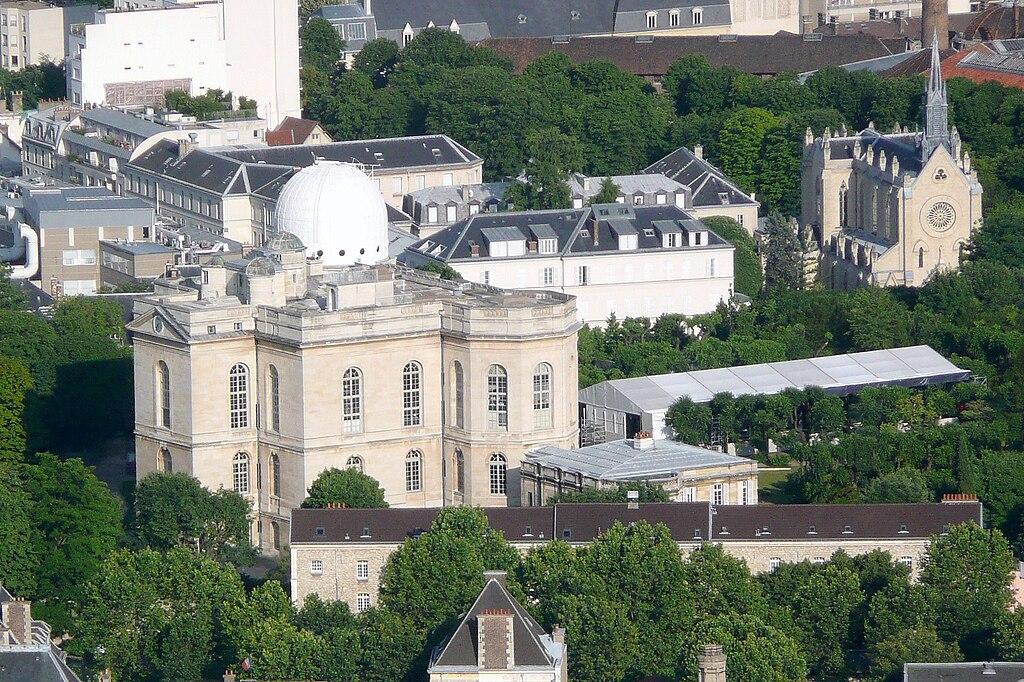
Paris Observatory
You’re standing before the historic building of the Observatoire de Paris, founded in 1667 under Louis XIV and Colbert. What you see is more than a scientific institute: this is where France’s scientific revolution began, with the drawing of the Paris meridian on the day of the summer solstice. The original building, designed by Claude Perrault, served as a scientific citadel, from the start linked to the Académie des sciences.
It soon became a hub of discovery: discoveries of Saturn’s moons, measurements of the speed of light, and the creation of the first national almanac. Over the centuries, the observatory expanded with sites in Meudon and Nançay, continuing groundbreaking work like radio astronomy and legal timekeeping. Inside the Meridian Room lies a bronze meridian line in the floor – the zero point for maps and timekeeping for a hundred years across epochs.
Later, the complex gained monumental character with the addition of giant telescopes, including the famous Arago telescope from the 19th century, blending science and beauty. Attached is a photo from the early 18th century, showing the original tower and instruments – proof that over three centuries of science have been present since its founding.
Any feedback for this story?