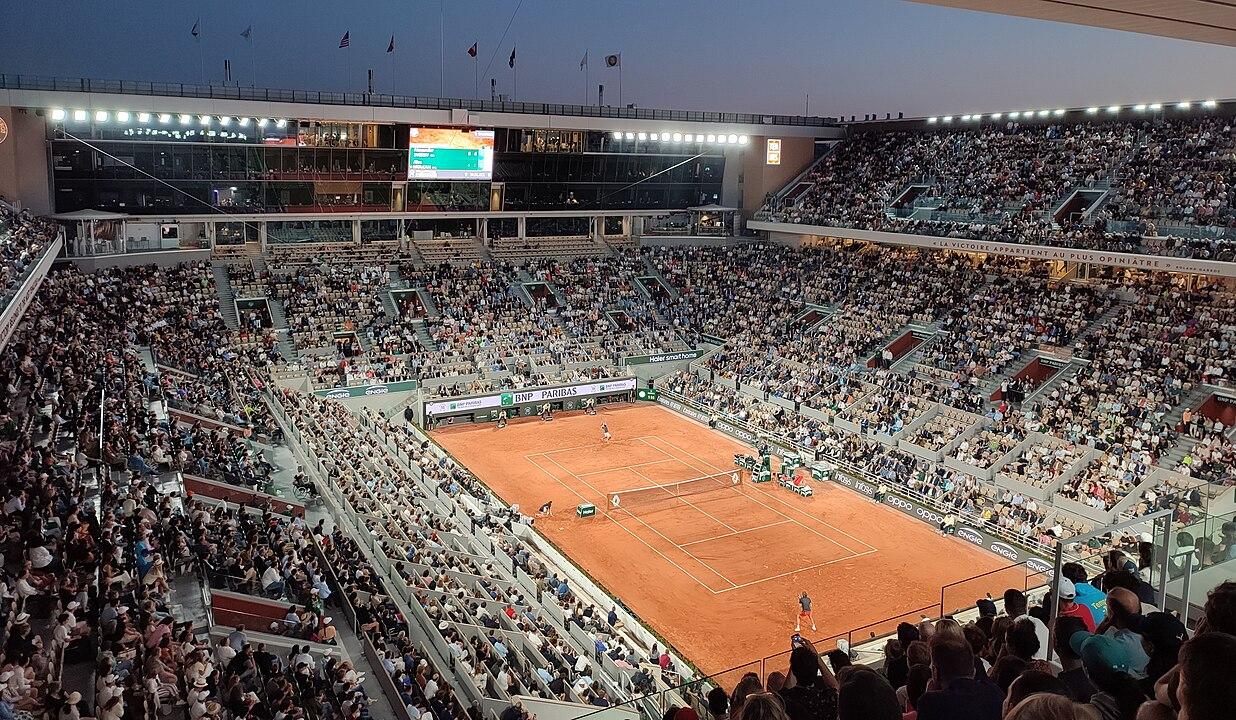
Roland Garros Stadium
Roland Garros is best known today as Paris’s iconic clay-court tournament, but the name holds deeper meaning. The Stade Roland Garros was built in 1928 to give France a worthy venue for its Davis Cup champion team, the famous Four Musketeers.
Located on the edge of the Bois de Boulogne, it began with just three courts but has grown into a complex of 21 clay courts and three major arenas. Court Philippe‑Chatrier is the heart of the tournament, seating 15,000 spectators and featuring a retractable roof since 2020. The name honors not a tennis player but Roland Garros, a French aviation pioneer. In 1913, he became the first to fly solo across the Mediterranean Sea.
During World War I, he served as a fighter pilot and became known for inventing a synchronized machine gun that could fire through a propeller. He was killed in 1918, just before the end of the war. Beyond the main finals, the grounds are steeped in history.
Court Suzanne‑Lenglen is named after the French tennis legend of the 1920s, and the modern Court Simonne‑Mathieu lies semi‑sunken within botanical greenhouses, honoring a doubles champion and WWII resistance fighter.
Any feedback for this story?