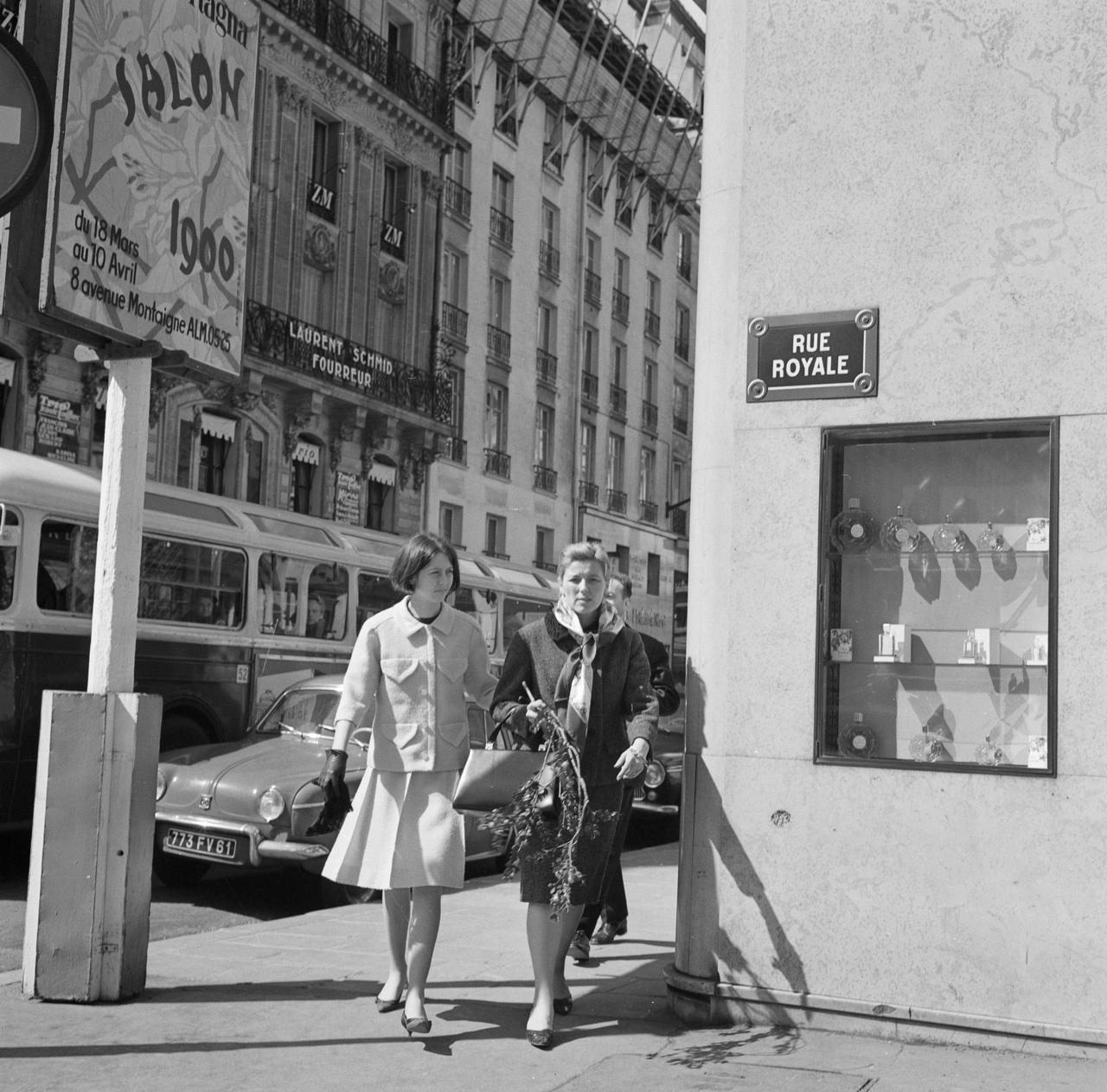
Rue du Faubourg Saint-Honoré
Right now you're standing on a street that was, in the early 1700s, little more than a dirt path outside the city walls, dotted with thatched cottages and kitchen gardens. It only officially joined Paris in 1860. Hard to believe, given what surrounds you now.
The land here changed hands fast after the death of Louis XIV, when wealthy bankers and speculators snapped up plots using the new paper money issued by John Law, a Scottish economist who effectively invented France's first modern banking system. That paper money eventually collapsed into worthlessness. The land did not.
Hermès arrived at number 24 in 1880, though Thierry Hermès had started the house back in 1837 as a saddler, making harnesses and bags for horses and coachmen. Jeanne Lanvin opened her first boutique here in 1889, originally as a hat shop, before building the first fashion house to sell perfume, cosmetics and lingerie all under one name. This street was the incubator of nearly everything we now call French luxury.
It's also home to the Élysée Palace at number 55, the US Embassy, and the French Ministry of Interior. A street that started as a swamp and ended up running the country. Hermès would call that a very good return on investment.
Any feedback for this story?