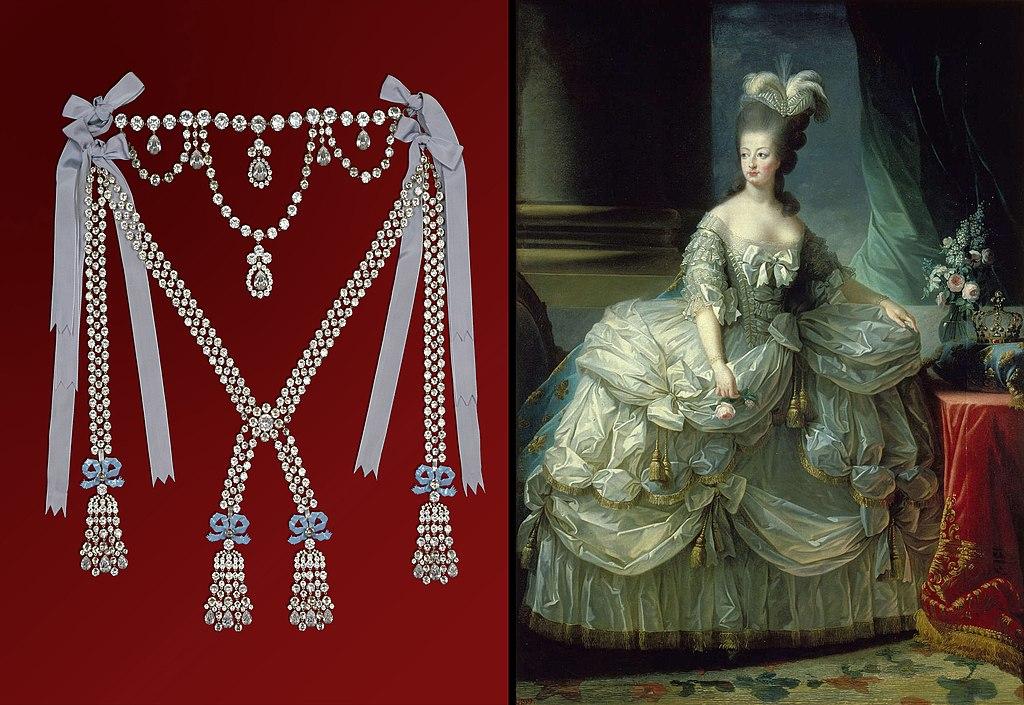
The Affair of the Diamond Necklace
Paris, 1785. A dazzling necklace with more than six hundred diamonds, originally commissioned for Madame du Barry, mistress of Louis XV, became the centre of a scandal that permanently tainted the reputation of Queen Marie‑Antoinette. The jewelers Böhmer and Bassenge tried to sell the piece to the queen, but she refused. It was too expensive and too closely tied to Du Barry’s past.
Yet Jeanne de la Motte, an ambitious schemer, saw an opportunity. Posing as a confidante of the queen, she convinced Cardinal Louis de Rohan, desperate to regain Marie‑Antoinette’s favor, that he should secretly acquire the necklace on her behalf. Through forged letters and a staged meeting at Versailles, she made him believe he was acting for the queen. The cardinal handed the necklace to Jeanne, who immediately had the diamonds dismantled and sold.
When the jewelers demanded payment, the fraud was exposed. The scandal became a sensation: although Marie‑Antoinette had no part in it, the public saw her as complicit, reinforcing the image of a corrupt, extravagant queen. The trial ended with Jeanne de la Motte’s exile and Cardinal de Rohan’s humiliation. But the damage was done: the queen was dubbed “Madame Deficit,” and the affair helped fuel the anger that soon erupted into the Revolution.
Any feedback for this story?