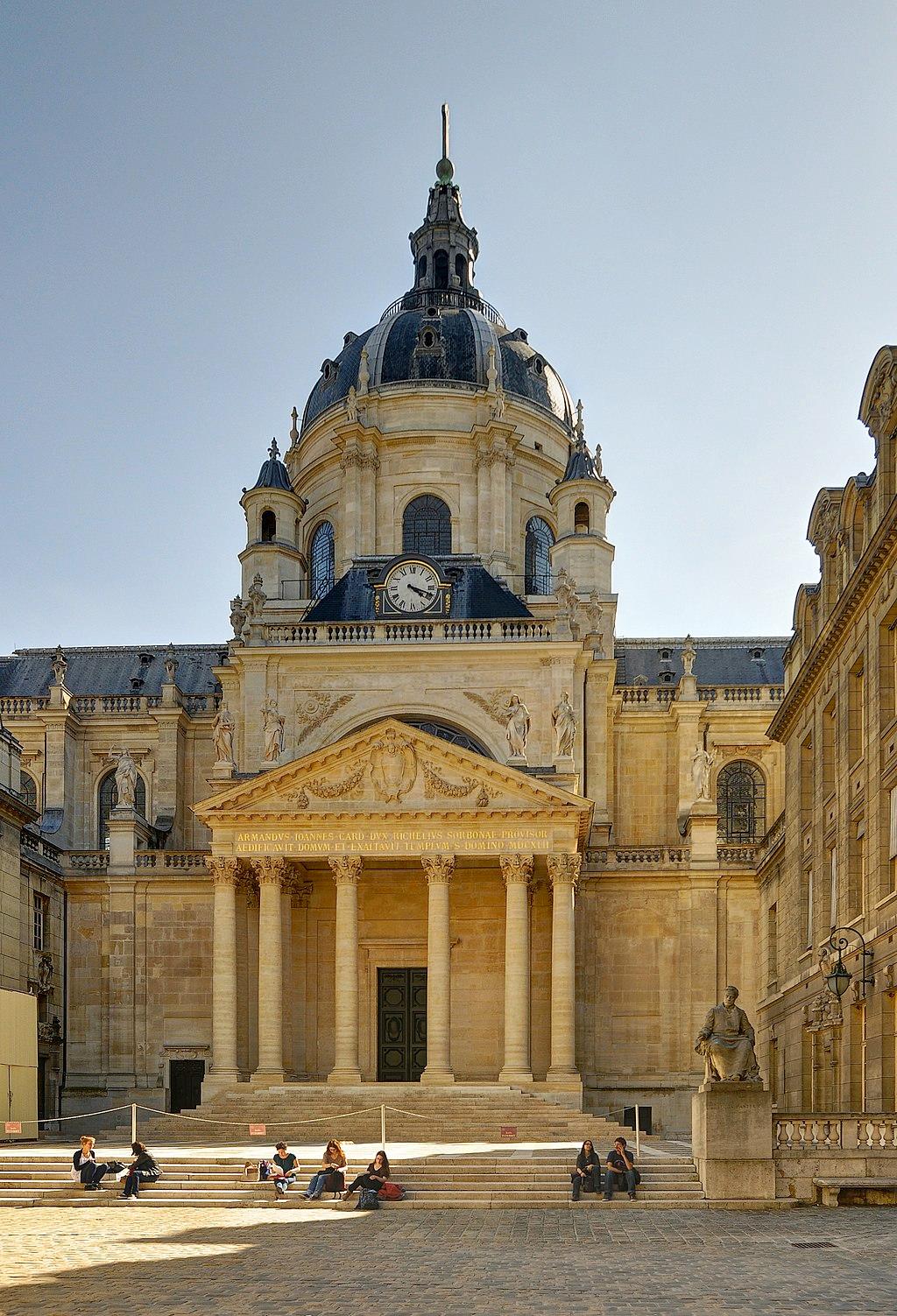
The Sorbonne
The building you see today was completed in 1901, blending neo-Renaissance elegance with classical French style, decorated with plaques naming the cities and academies of France. But the story behind these walls stretches back to 1253, when a chaplain named Robert de Sorbon convinced King Louis IX to fund a school for students who couldn't afford an education.
That humble idea grew into one of Europe's greatest universities.
The Sorbonne has witnessed some remarkable moments. In 1431, its own theologians helped condemn Joan of Arc as a heretic, sealing her fate at the stake. Twenty-five years later, the same institution reversed that verdict.
Then there is Marie Curie. When her husband Pierre died in 1906, she stepped into his lectureship here, becoming the first woman ever to hold a professorship at the Sorbonne. When she walked into the auditorium, the audience rose and applauded.
Cardinal Richelieu renovated the university in the 17th century. The Revolution shut it down. Napoleon reopened it. Today four autonomous universities operate under this roof, still drawing students from across the world, just as they did 800 years ago.
Any feedback for this story?