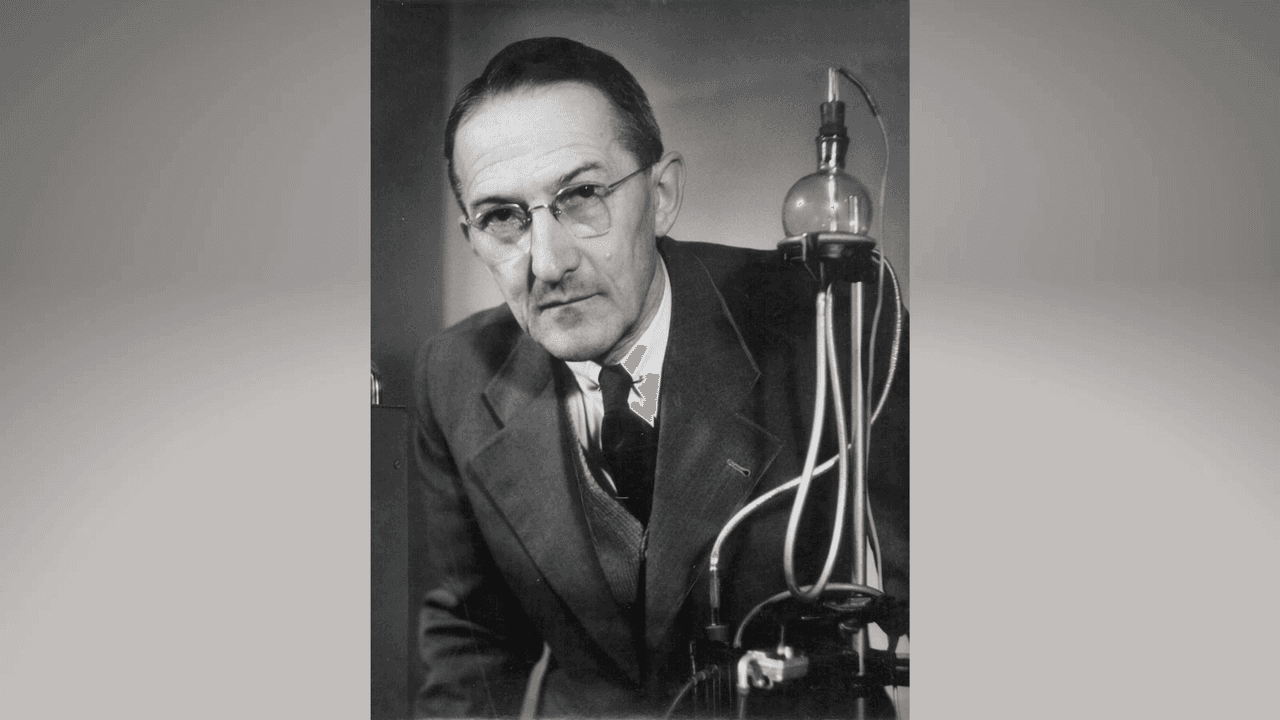
Heyrovský and the Nobel Prize
--:--
--:--
In this street stands the institute where a quiet revolution in chemistry began, one that would earn Czechoslovakia its first Nobel Prize in the sciences. Jaroslav Heyrovský spent decades here perfecting polarography, a method that changed how scientists analyze the invisible world of molecules. Before his invention, chemists struggled to detect tiny amounts of substances in solutions. Heyrovský's technique used electrical currents to identify and measure chemicals with unprecedented accuracy.
He started his experiments in 1922 at Charles University, observing how mercury droplets in solutions could reveal the composition of unknown substances. By the 1930s, his polarograph device was being used in laboratories across Europe to test everything from vitamin content in food to toxic metals in water. Pharmaceutical companies adopted the method to ensure drug purity, while environmental scientists used it to monitor pollution.
The Swedish Academy awarded Heyrovský the Nobel Prize in Chemistry in 1959, recognizing how his work had become fundamental to modern analytical chemistry. The J. Heyrovský Institute of Physical Chemistry now occupies this building in the Holešovice area, where researchers continue exploring electrochemistry. His laboratory notebooks and original equipment remain preserved here, showing how persistent experimentation in a single location transformed scientific practice worldwide. The technique he developed is still taught in chemistry courses and used in laboratories today.
Any feedback for this story?