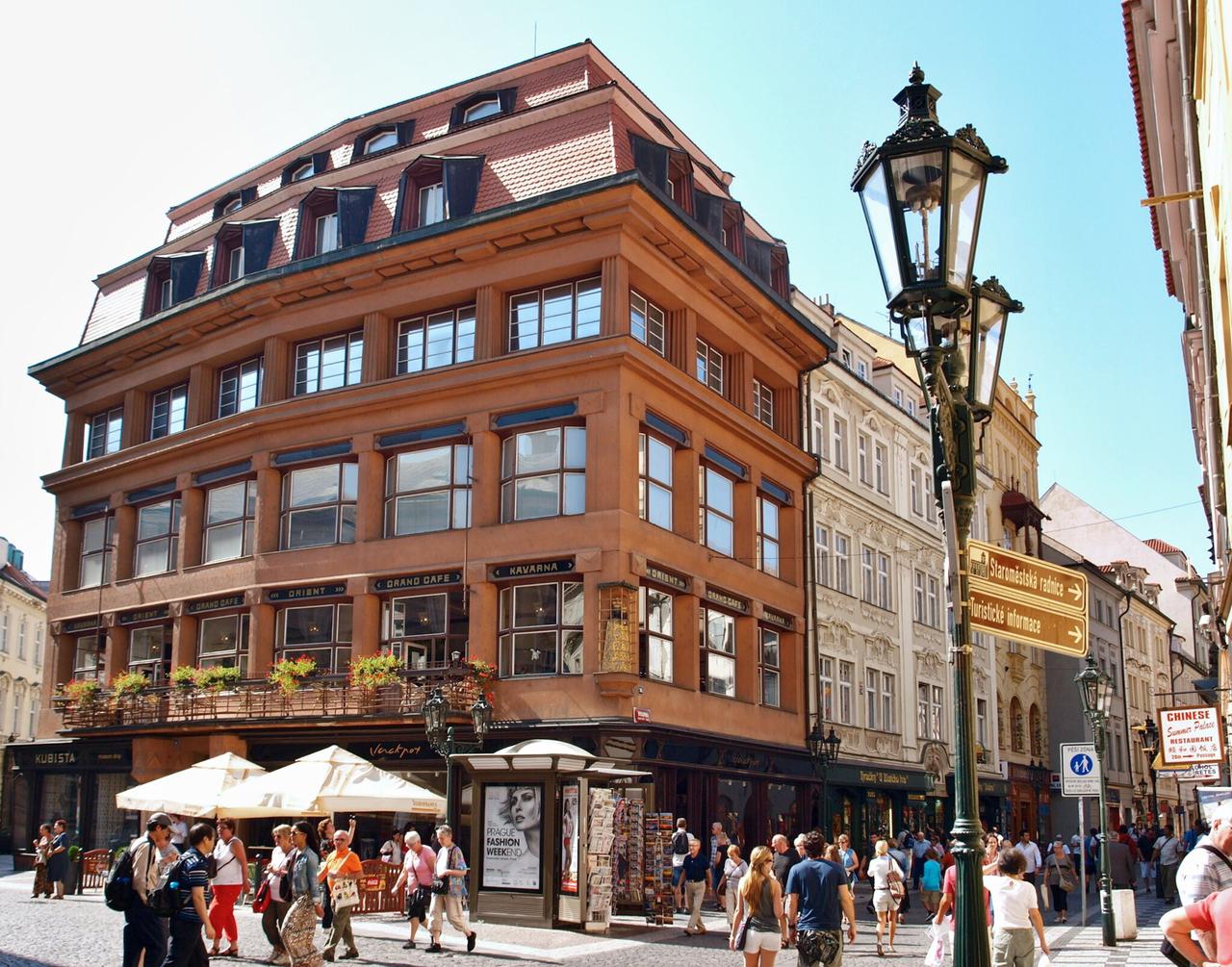
House of the Black Madonna
--:--
--:--
This building at the corner of Celetná Street and Ovocný trh became the birthplace of an architectural movement that existed nowhere else on Earth. In 1911, a 31 year old architect named Josef Gočár received a commission to design a department store for wholesale merchant František Josef Herbst, but what he created changed the course of modern design forever.
Gočár transformed the project into the world's first Cubist building, completed in 1912. The structure takes its name from a Baroque statue of the Black Madonna mounted on its corner, carefully preserved from the earlier building that once stood here. Instead of the flowing lines popular at the time, Gočár introduced sharp angles, geometric facades, and triangular forms that had never been seen in architecture before.
This was the spark that ignited Czech Cubism, a movement unique to these lands where artists applied Cubist principles not just to paintings but to furniture, ceramics, and entire buildings. Gočár used revolutionary reinforced concrete construction methods inspired by Chicago skyscrapers, allowing him to create the first floor café without any interior support pillars, which amazed engineers of the era.
The building houses the Museum of Czech Cubism on its upper floors, while the Grand Café Orient on the ground level features angular furniture and geometric designs that recreate the original 1912 Cubist café atmosphere.
Any feedback for this story?